Showing posts with label addictions. Show all posts

Tuesday, March 10, 2026

The Outsmarters (Deborah Ellis)


Originally, I was thinking this book is not the same as Deborah Ellis' other books. Most of her books are about kids in difficult political situations. Thinking about it a little more, maybe this one is about that. Krate is a girl who has had to grow up quickly. She is being raised by her grandmother because her mother is an addict. Her grandmother teaches her that we can't outclass others, nor can we out spend them....so we will have to outsmart them. Krate realizes she's going to have to figure out the system (ie get her GED) and look after herself. Even her name was symbolic of accepting her situation. She was always called Kate - but then she found her birth certificate and realized her mother, high on something, wrote down Krate...and even though her grandmother wants to forbid it, she starts to go by that name. 

Gran owns a junkyard and makes Kate do chores and pay for anything she gets. She is relentless on her boundaries with Kate....for a good reason. She knows how important boundaries are because of her drug addicted daughter, Kate's mother. Kate decides to open a philosophy booth (made me think of Lucy from Charlie Brown) to earn money. I loved all the references to great authors, wise leaders and well respected people.

The whole idea of the value of things - and how they take people's junk and make something useful of it was a fascinating topic. A librarian friend also recommended some other books along the same theme:
The One Thing You Save 
Just One Gift
 - both by Linda Sue Parks
The Outcasts of 19 Schuyler Place (EL Konisburg)
Also the website: The Burning House

I'm not sure what grade I'd recommend this book for. I don't think it would suit elementary with it's heavy topics nor would I recommend it as a read aloud. However, if there were a kid with addiction in their family or other similar issues, they might really relate to this book. Not sure. There are some tough topics.


Kate, I mean Krate, discovering she is going to have to go do some kind deeds for her grumpy neighbor and her grumpy grandmother's direction: "Once upon a time," Gran says, "when I was a child, I thought as a child, I spake as a child, I was nice like a child. But now I'm a hard-hearted old broad. I've put away childish things."
I'm not sure what the Bible verse really says, but whatever. My bleak days just got bleaker.


p.74"Yes, well, Doris and I grew up together. Best of friends. When we were your age, we had such adventures, riding our bikes all over town. Then we got older."
"No more adventures?"
"We changed," Jean says. "We became boring. We became timid. What are we do afraid of?"
"Is that your question?" I ask. I'm actually curious.
"No," says Jean. I know what we're afraid of. We're afraid of looking foolish. We're afraid of admitting that we've wasted time on things that aren't important and that we don't even truly enjoy.  They are such small things, not even real things. There are many people in this world who really do have things to be afraid of."


Section quote p. 149: If you want a picture of the future, imagine a boot stomping on a human face - forever. - George Orwell (gulp!) 

Goodreads says:

Kate opens a Philosophy Booth ("Get answers to life's big and little questions -- $2 a question") and ends up asking some tough questions of her own. Suspended from school and prone to rages, twelve-year-old Kate finds her own way to get on with her life, despite the messed-up adults around her. Her gran, for one, is stubborn and aloof -- not unlike Kate herself, who has no friends, and who's been expelled for "behavioral issues," like the meltdowns she has had ever since her mom dumped her with her grandmother three years ago. Kate dreams that one day her mother will return for her. When that happens, they'll need money, so Kate sets out to make some. Gran nixes her idea to sell psychiatric advice like Lucy in Peanuts ("You're not a psychiatrist. You'll get sued."), so Kate decides to open a philosophy booth to provide answers to life's big and small questions. She soon learns that adults have plenty of problems and secrets of their own, including Gran. When she finds that her grandmother has been lying to her about her mother, the two have a huge fight, and Gran says she can't wait for Kate to finish high school so she'll be rid of her at last. Kate decides to take matters into her own hands and discovers that to get what she wants, she may have to reach out to some unexpected people, and find a way to lay down her own anger.


Wednesday, November 19, 2025

Dopamine Nation (Anna Lembke, MD)


I've been trying to understand why some people don't or seem to be unable to change. This has a lot of good answers to that question.


Notes:

Lessons of the Balance

1. The relentless pursuit of pleasure and the avoidance of pain, leads to pain.

2. Recovery begins with abstinence.

3. Abstinence resets the brain's reward pathway, and with it our capacity to take joy in simple pleasures.

4. Self-binding creates literal and metacognitive space between desire and consumption, a literal necessity in our dopamine overloaded world

5. Medications can restore homeostasis, but consider what we lose by medicating away our pain.

6. Pressing on the pain side re-sets our balance to the side of pleasure.

7. Beware of getting addicted to pain.

8. Radical honesty promotes awareness, enhances intimacy and enhances a plenty mindset.

9. Pro-social shame affirms that we belong to the human tribe.

10. Instead of running away from the world, we can find escape by immersing ourselves in it.

Goodreads says:

This book is about pleasure. It's also about pain. Most important, it's about how to find the delicate balance between the two, and why now more than ever finding balance is essential. We're living in a time of unprecedented access to high-reward, high-dopamine stimuli: drugs, food, news, gambling, shopping, gaming, texting, sexting, Facebooking, Instagramming, YouTubing, tweeting... The increased numbers, variety, and potency is staggering. The smartphone is the modern-day hypodermic needle, delivering digital dopamine 24/7 for a wired generation. As such we've all become vulnerable to compulsive overconsumption.

In Dopamine Nation, Dr. Anna Lembke, psychiatrist and author, explores the exciting new scientific discoveries that explain why the relentless pursuit of pleasure leads to pain...and what to do about it. Condensing complex neuroscience into easy-to-understand metaphors, Lembke illustrates how finding contentment and connectedness means keeping dopamine in check. The lived experiences of her patients are the gripping fabric of her narrative. Their riveting stories of suffering and redemption give us all hope for managing our consumption and transforming our lives. In essence, Dopamine Nation shows that the secret to finding balance is combining the science of desire with the wisdom of recovery.

Friday, September 26, 2025

[Un]Intentional (Doug Smith)


This was an audio book I decided to listen to while delivering flyers for the food bank drive (hours and hours of walking!) It was really good. He has a Biblical approach to the problems with screens. The people creating social media are very intentional at capturing our attention and as a result, we have started to live our lives in unintentional ways. I was quite persuaded by his argument that we have to take back the control and be in charge of our own lives and one of the key ways to do that is to break the screen addiction. I was quite persuaded by the author's approach to this topic. I know I'm much happier and contended when I spend time reading and listening to good podcasts and audio books. The pull of social media is really strong and easy to get sucked into as a time waster.

Goodreads says:

Most of us are unintentional with screens, but tech industry architects intentionally make their content distracting, manipulative, and addictive.

[Un]Intentional shows how our obsession with screens often takes us—unintentionally—to places we regret. It reveals the way many apps, games, and videos are designed to entice us to make decisions and form harmful habits that profit the creators at our expense.

[Un]Intentional helps you break free by guiding you through proven biblical practices to reclaim your thought life, make good decisions, and fulfill your God-given mission.

Friday, December 27, 2024

The Elephant Keeper's Daughter (Shilpa Raj)


I love stories of women changed by education.

It is almost unbelievable to read about the lives women lead around the world. There is more work to do to create equality. Education is the key.


This is a great read.


"Women in these families have little or no control over their destinies; they suffer innumerable cruelties and lead lives regulated strictky by men. This way of life is not something I amp prepared to accept as a natural order"

“I see myself as a product of two disparate worlds, and each has given me a reason to love, to be kind, and to grow strong. My education has given me the ability to choose what I want for myself and the confidence to aspire to greater goodness. I have chosen to favour my new world, and hope to change the one I left behind.”


Goodreads says:

Saved by her grandmother from being killed at birth for having been born a female, Shilpa’s life took many unexpected turns and twists through her early years. She faced abandonment by her mother, the formidable constraints placed on her by her family, and the barbs of village elders bound by hundreds of years of oppressive practices and customs that subjugate women. Shilpa is torn between the contrasting lives she leads: one of servitude and injustice experienced by her family; the other of opportunity and empowerment offered by a good education in a school started by a philanthropist.

Just when all seems settled, an unforeseen death under mysterious circumstances shatters whatever stability remains in her life. Pulled in opposite directions, and torn between despair and dreams, Shilpa finally makes a choice for her future. Is she strong enough to stand up to the people she loves, and pursue what she wants?

At its heart The Elephant Chaser’s Daughter is about hope, when all seems lost. Written with raw honesty and grit, this is a deeply moving memoir of a young girl confronting her ‘untouchable’ status in a caste-based society, and her aspirations for modernity.

Friday, June 28, 2024

Ratburger (David Walliams)


The quotes from other authors say David Walliams books are so funny. Kids do enjoy reading them. This is the second novel of his that I've read aloud. I'm not sure I'll do another one. They're just a little to crazy for me. My kids struggle with the British terms/words and I find myself having to "translate" as I read. It moved slow enough that when kids were absent, they didn't even ask about what they missed when they were absent. They were able to just continue with the story wherever we picked up. We read this one in June and didn't even finish it. No one even asked me to read it on the last day. I finished it after the kids were all gone and I have to say, I'm not sorry I didn't read the end aloud to them. It's kind of disturbing. 

I think he's trying to be a modern day Roald Dahl. That isn't helping the cause though. I'm not a huge fan of Roald Dahl either. I have enjoyed David Walliams picture books though. 


This one was a little disturbing....feeding ground up rats to kids and all. Zoe's stepmother is nasty. Her dad is absent. Kids are disturbingly mean. Maybe I'm just too old for this kind of humor. With all the books in the world, I can't say I'll encourage my students to read anymore of these.


Goodreads says:

The fifth screamingly funny novel from David Walliams, number one bestseller and fastest growing children's author in the country. Hot on the heels of bestselling Gangsta Granny comes another hilarious, action-packed and touching novel - the story of a little girl called Zoe. Things are not looking good for Zoe. Her stepmother Sheila is so lazy she gets Zoe to pick her nose for her. The school bully Tina Trotts makes her life a misery - mainly by flobbing on her head. And now the evil Burt from Burt's Burgers is after her pet rat! And guess what he wants to do with it? The clue is in the title...From the author that is being called 'a new Roald Dahl', Ratburger is not to be missed!

Monday, March 27, 2023

Hooked: How to Build Habit-Forming Products (Nir Eyal)


I really enjoyed this book. It is interesting to read about how people get addicted to social media. His theories sync with all the habit books I have read. I didn't read this because I want to build some addictive product, but mostly because I wanted to learn about how they try to draw me in, and quite successfully do, it seems.

I have now read two of his books. After reading Indistractable, I turned off all the notifications on my laptop and on my phone. What a difference. I also signed up for FocusMate...which has been an interesting experience. Mostly positive! In this book I learned about an app called FitBod that I am really interested in. I think I might even pay for a subscription. He has good information! 

I just recently read an article that really stuck with me. It was about the things you may be doing in the morning that actually ruin your day. First on the list was getting on your phone first thing. Then in the first pages of this book I read that 79% of smartphone owners check their device within 15 minutes of waking up every morning. The thought struck me: if I don't check my phone first thing in the morning, I'm ahead of 79% of the population out there! Perhaps I'm too competitive, but things like this are very motivating to me. 

Goodreads says:

How do successful companies create products people can’t put down?

Why do some products capture widespread attention while others flop? What makes us engage with certain products out of sheer habit? Is there a pattern underlying how technologies hook us?


Nir Eyal answers these questions (and many more) by explaining the Hook Model—a four-step process embedded into the products of many successful companies to subtly encourage customer behavior. Through consecutive “hook cycles,” these products reach their ultimate goal of bringing users back again and again without depending on costly advertising or aggressive messaging.


Hooked is based on Eyal’s years of research, consulting, and practical experience. He wrote the book he wished had been available to him as a start-up founder—not abstract theory, but a how-to guide for building better products. Hooked is written for product managers, designers, marketers, start-up founders, and anyone who seeks to understand how products influence our behavior.


Eyal provides readers with:


• Practical insights to create user habits that stick.
• Actionable steps for building products people love.

• Fascinating examples from the iPhone to Twitter, Pinterest to the Bible App, and many other habit-forming products.

Sunday, September 12, 2021

What Happened To You? (Oprah Winfrey and


 I listened to the audio book. It's mostly Bruce Perry but now and then Oprah interjects and asks questions as if she is interviewing him. Bruce Perry apparently has done a lot of work for her and with her with different people. One significant group was girls at the school Oprah started in Africa. He has also worked with children who survived cults as well as many other extremely traumatized individuals. It's clear he knows what he's talking about.

The gist of the book seems to be that we shouldn't be asking what is wrong with you, but instead, what happened to you. This brings about more understanding and compassion and leads to healing. 

My favorite part was the last chapter where Oprah shared her story and talked about how what happened to you can lead to your super power. Earlier in the book they had talked about how all super hero stories begin with a crisis. They become super heroes through an accidental tragedy. It's good to think of our trauma as something that can create greatness in us.

Goodreads says:

"Through this lens we can build a renewed sense of personal self-worth and ultimately recalibrate our responses to circumstances, situations, and relationships. It is, in other words, the key to reshaping our very lives.”
―Oprah Winfrey

This book is going to change the way you see your life.

Have you ever wondered "Why did I do that?" or "Why can't I just control my behavior?" Others may judge our reactions and think, "What's wrong with that person?" When questioning our emotions, it's easy to place the blame on ourselves; holding ourselves and those around us to an impossible standard. It's time we started asking a different question.

Through deeply personal conversations, Oprah Winfrey and renowned brain and trauma expert Dr. Bruce Perry offer a groundbreaking and profound shift from asking “What’s wrong with you?” to “What happened to you?” Our earliest experiences shape our lives far down the road, and What Happened to You? provides powerful scientific and emotional insights into the behavioral patterns so many of us struggle to understand.

Here, Winfrey shares stories from her own past, understanding through experience the vulnerability that comes from facing trauma and adversity at a young age. Joining forces with Dr. Perry, one of the world’s leading experts on childhood and brain development, Winfrey and Dr. Perry marry the power of storytelling with science to better understand and overcome the effects of our pasts.

In conversation throughout the book, the two focus on understanding people, behavior, and ourselves. It’s a subtle but profound shift in our approach to trauma, and it’s one that allows us to understand our pasts in order to clear a path to our future―opening the door to resilience and healing in a proven, powerful way.

Wednesday, September 30, 2020

From The Ashes (Jesse Thistle)


This is a story that many wouldn't read because there's so much that is difficult to read about - addiction, homelessness, crime. The only way to get an idea of why some people end up with the lives they do though is to read the details. It's sad and difficult but worth the time if you really want to get a perspective on this topic.

Most of this story is hard. Near the end, he finally makes it through rehab and ends up marrying someone who helps him keep his life together. It all seems to happen really fast in the book - but my guess is it wasn't really fast in real life. 

Goodreads says:

In this extraordinary and inspiring debut memoir, Jesse Thistle—once a high school dropout and now a rising Indigenous scholar—chronicles his life on the streets and how he overcame trauma and addiction to discover the truth about who he is.

If I can just make it to the next minute . . . then I might have a chance to liveI might have a chance to be something more than just a struggling crackhead.

From the Ashes is a remarkable memoir about hope and resilience, and a revelatory look into the life of a Métis-Cree man who refused to give up.

Abandoned by his parents as a toddler, Jesse Thistle briefly found himself in the foster-care system with his two brothers, cut off from all they had known. Eventually the children landed in the home of their paternal grandparents, but their tough-love attitudes meant conflicts became commonplace. And the ghost of Jesse’s drug-addicted father haunted the halls of the house and the memories of every family member. Struggling, Jesse succumbed to a self-destructive cycle of drug and alcohol addiction and petty crime, spending more than a decade on and off the streets, often homeless. One day, he finally realized he would die unless he turned his life around.

In this heartwarming and heartbreaking memoir, Jesse Thistle writes honestly and fearlessly about his painful experiences with abuse, uncovering the truth about his parents, and how he found his way back into the circle of his Indigenous culture and family through education.

An eloquent exploration of what it means to live in a world surrounded by prejudice and racism and to be cast adrift, From the Ashes is, in the end, about how love and support can help one find happiness despite the odds.

Monday, June 29, 2020

50 Ways to Soothe Yourself Without Food (Susan Albers)


I am an emotional eater and am trying to change that about myself. If you can't find a way to distract a food obsession by reading this book, there's no hope! LOL Lots of ideas! This is a good book to figure out what works for you - if you really know yourself.

I think I'm on the right track with mindfulness and meditation. I will keep working on that!

Goodreads says:

Food has the power to temporarily alleviate stress and sadness, enhance joy, and bring us comfort when we need it most. It's no wonder experts estimate that 75 percent of overeating is triggered by our emotions, not physical hunger. The good news is you can instead soothe yourself through dozens of mindful activities that are healthy for both body and mind.

Susan Albers, author of Eating Mindfully, now offers 50 Ways to Soothe Yourself Without Food, a collection of mindfulness skills and practices for relaxing the body in times of stress and ending your dependence on eating as a means of coping with difficult emotions. You'll not only discover easy ways to soothe urges to overeat, you'll also learn how to differentiate emotion-driven hunger from healthy hunger. Reach for this book instead of the refrigerator next time you feel the urge to snack-these alternatives are just as satisfying!

Monday, August 19, 2019

Hold Tight (Harlan Coben)

This was a book club pick for me. It took me a little while to get into it. I was fascinated by the premise of parents concerned about their teenager and monitoring his on-line activity - but I was also a little afraid to get too into it and find out what was going on. I think partially, I know I don't monitor my teenager's online activity very well and I was afraid to read about awful stuff happening and having to wonder if that could happen to my kid. Once I got into the story though, it was hard to put down. It was definitely a page turner.

I had trouble keeping all the characters straight. There are A LOT of characters in this book. I should have written them all down. Instead I kept them in this loose net in my mind, with some slipping through.

It made for a great discussion at book club. There were so many difficult and controversial topics: perfectionism, teenage suicide, teenage privacy versus monitoring, family secrets, etc.

I should probably read it again and see if I see hints dropped here and there that I didn't see the first time around.


Goodreads says:

Harlan Coben delivers a #1 New York Times bestseller that asks how well parents really know their children—and puts them on a technological roller coaster of their worst fears.

“We’re losing him.” With those words, Mike and Tia Baye decide to spy on their sixteen-year-old son Adam, who has become increasingly moody and withdrawn since the suicide of his best friend. The software they install on his computer shows them every Web site visited, every e-mail sent or received, every instant message. And each keystroke draws them deeper and deeper into a maze of mayhem and violence that could destroy them all...
 

Saturday, July 20, 2019

Better Than Before (Gretchen Rubin)

Strangely, I haven't blogged this book! This is a book I try to re-read every six months. I just finished a re-read and I still love it. It is a good review of how to get good habits into my life and to help them be routine...you know, like a habit should be!

What I like about Gretchen Rubin is that she accounts for differences in personalities. Everyone has their own personality quirks (although, she does put people into categories) that make it so that what works for one person does not work for another. The first part of the book is about recognizing what kind of a person you are. She has a sorting called The Four Tendencies but she doesn't just stop there. She talks about other traits:

Larks versus Owls
Marathoners, sprinters and procrastinators
Under buyers and over buyers
Simplicity and abundance lovers
finishers and openers
Familiarity lovers and novelty lovers
Promotion versus prevention focused
Small steps versus big steps.

After that, she talks about many different strategies for implementing habits:
- monitoring
- Foundation
- Scheduling
- Accountability
- Abstaining versus moderating
- Pairing
etc

She also discusses things that we do to sabotage our new good habits....
- convenience versus inconvenience
- safeguards
- loop-holing

The chapter about rewards was really interesting. It really reminded me of a lot of what I've read on children and rewards for behavior. We need to be careful about rewards.

She cites a lot of research and this time I noticed that she organizes her notes about this research in a reader friendly way.

I totally recommend this book!

Goodreads says:

The author of the blockbuster New York Times bestsellers, The Happiness Project and Happier at Home, tackles the critical question: How do we change? 
 
Gretchen Rubin's answer: through habits. Habits are the invisible architecture of everyday life. It takes work to make a habit, but once that habit is set, we can harness the energy of habits to build happier, stronger, more productive lives.
 
So if habits are a key to change, then what we really need to know is: How do we change our habits?
 
Better than Before answers that question. It presents a practical, concrete framework to allow readers to understand their habits—and to change them for good. Infused with Rubin’s compelling voice, rigorous research, and easy humor, and packed with vivid stories of lives transformed, Better than Beforeexplains the (sometimes counter-intuitive) core principles of habit formation. 
 
Along the way, Rubin uses herself as guinea pig, tests her theories on family and friends, and answers readers’ most pressing questions—oddly, questions that other writers and researchers tend to ignore: 

• Why do I find it tough to create a habit for something I love to do? 
• Sometimes I can change a habit overnight, and sometimes I can’t change a habit, no matter how hard I try. Why? 
• How quickly can I change a habit? 
• What can I do to make sure I stick to a new habit? 
• How can I help someone else change a habit? 
• Why can I keep habits that benefit others, but can’t make habits that are just for me? 

Whether readers want to get more sleep, stop checking their devices, maintain a healthy weight, or finish an important project, habits make change possible. Reading just a few chapters of Better Than Before will make readers eager to start work on their own habits—even before they’ve finished the book

Tuesday, March 19, 2019

North of Normal (Cea Sunrise Person)


I read this with my community book club. It is another book I likely wouldn't have picked up if it wasn't for book club. It was one of those books I read with one eye closed. Partially, it was because of the crudeness. Partially, it was because I couldn't stand the idea of a mother raising a child the way they did. And partially, it was because I truly can't imagine living that way.  I related to some of the one star reviews on Goodreads, but I'd have to give it more than one star, for sure. Although sad and crazy, it's a fascinating story. Cea's resilience was amazing. I was curious because they lived in areas I also lived and I could have quite easily crossed paths with this family. I read it quite quickly - in two sittings, pretty much. It's an easy read. I have to wonder at the luck she had though. How does someone grow up like that, one day decide to go be a model, and become successful at it? What are the chances??! It's a memoir though, so who am I to question her experience.


Goodreads says:

In the late 1960s, riding the crest of the counterculture movement, Cea’s family left a comfortable existence in California to live off the land in northern Alberta. But unlike most commune dwellers of the time, the Persons weren’t trying to build a new society—they wanted to escape civilization altogether. Led by Cea’s grandfather Dick, they lived in a canvas Teepee, grew pot, and hunted and gathered to survive.
Living out her grandparents’ dream with her teenage mother, Michelle, young Cea knew little of the world beyond her forest. She spent her summers playing nude in the meadow and her winters snowshoeing behind the grandfather she idolized. Despite fierce storms, food shortages and the occasional drug-and-sex-infused party for visitors, it was a happy existence. For Michelle, however, there was one crucial element missing: a man. When Cea was five, Michelle took her on the road with a new boyfriend. As the trio set upon a series of ill-fated adventures, Cea began to question both her highly unusual world and the hedonistic woman at the centre of it—questions that eventually evolved into an all-consuming search for a more normal life. Finally, in her early teens, Cea realized she would have to make a choice as drastic as the one her grandparents once had made in order to get the life she craved.
From nature child to international model by the age of thirteen, Cea’s astonishing saga is one of long-held family secrets and extreme family dysfunction, all in an incredibly unusual setting. It is also the story of one girl’s deep-seated desire for normality—a desire that enabled her to risk everything, overcome adversity and achieve her dreams.

Sunday, September 16, 2018

The Great Gatsby (F Scott Fitzgerald)


Once again, a book I would have never pushed through and read if it wasn't for being part of a book club. I feel like there is really much more to this book than I've figured out - but I did get a few things from it. This is definitely one to read again and I really look forward to the book club discussion this week.

The characters seem to have this idea that they're always chasing happiness. Gatsby thinks that if he can only have Daisy, then everything will be perfect and he'll be happy. Wrong. The American dream is about the fact that you don't have to be royal to be rich - but this book seems to beat that up.

The narrator is Nick Carraway. Care Away?? He starts off with some wise words: Reserving judgment is a matter of infinite hope - the grasp of hope or pursuit of what people want is what keeps them chasing happiness. They're all a bunch of shallow fools who are always chasing something, but never finding it. Just like in Romeo and Juliet - people who are born to privilege often run straight into disaster and it ruins them.

These characters are people who aren't willing to do the work. Nick inherited his money from someone who paid another person off so he wouldn't have to go fight the civil war for them.  Gatsby throws all the parties just for one reason: To win back Daisy (or is it to win her mansion)

Early in the book they're at a party and a guy gets in an accident. The wheel falls of his car but he keeps trying to drive it. To me, this is like Trump!! The wheels are falling off dude. It's time to get out - but just like the guy in the book, he won't get out. He will keep driving the car until it is ruined.

Gold and yellow seem to be colors given status: Gatsby's car, his tie, the button on Daisy's dress, money, the flowers that Nick says smell like pale gold. The green light at the end of Daisy's dock that Gatsby is always looking at across the bay is also similar. Gatsby thirsts for that light...the house....Daisy. Nick calls it an enchanted object - a false God, I'd say. We all have things that we chase and give honor to that aren't worth anything long term.

The yellow is actually corruption, a-morality, and in the end, death. Right now, in American politics, it seems like people really love Trump mostly because of his success with creating wealth. Just like Trump, no one came across their money honestly and there is never enough money. Everyone always wants more and more and more wealth. The car that Daisy is driving when she kills someone, is also yellow. Pursuing all that stuff makes you unhappy and maybe even evil in the end.

Daisy tells a story about a butler who used to polish silver for the rich people he worked for. He did it day and night until the silver polish ruined his nose. Lesson?! These parties won't last forever and the pursuit of money is not equal to the pursuit of happiness. In the end, Gatsby dies and no one attends his funeral or cares. They just want to pick up their shoes from the house before they're lost. Everyone wants a care-free life - but in the end, Gatsby was not ok. He was chasing happiness but never found it.

Goodreads says:
A true classic of twentieth-century literature, this edition has been updated by Fitzgerald scholar James L.W. West III to include the author’s final revisions and features a note on the composition and text, a personal foreword by Fitzgerald’s granddaughter, Eleanor Lanahan—and a new introduction by two-time National Book Award winner Jesmyn Ward.

The Great Gatsby, F. Scott Fitzgerald’s third book, stands as the supreme achievement of his career. First published in 1925, this quintessential novel of the Jazz Age has been acclaimed by generations of readers. The story of the mysteriously wealthy Jay Gatsby and his love for the beautiful Daisy Buchanan, of lavish parties on Long Island at a time when The New York Times noted “gin was the national drink and sex the national obsession,” it is an exquisitely crafted tale of America in the 1920s.
 

Wednesday, April 18, 2018

Gone Without a Trace (Mary Torjussen)

Gone Without A Trace

Every week I have my students write down the name of the book they're reading this week (an attempt at getting them in the habit of IMWAYR). I often tell them about the book I'm reading. I had just started this one on the weekend so on Monday I told them a little about it: A husband (he was actually a boyfriend...but I told them he was a husband...) disappears. I told them how everything about him was gone: her number in his phone, his email address in her contacts. Everything that was his was gone and all that was hers was put back where it was before he moved in. She tried calling him at work - but he no longer worked there. She called his mother - but she had moved. I was definitely hooked by the story line. My class was definitely hooked. They asked me if they could read it too.

SPOILER ALERT:

As the story wears on, you wonder if it was the MIL. You wonder about the people she works with. There are a few people I had my eyes on as the guilty ones. Boy was I wrong. In the end, as the story unfolds, it turns out SHE is abusive and he left to protect himself. I can't tell my students about how it ends. It was so surprising - and so dysfunctional! I'm going to have to make something up to tell my students.

This book was picked for the community book club that I joined a few months ago. It definitely made for a good discussion!

Goodreads says:

GONE WITHOUT A TRACE by Mary Torjussen is a chilling, twisty, compulsive thriller about a woman whose boyfriend has vanished. Fans of I LET YOU GO and THE GIRL ON THE TRAIN will be gripped.

No one ever disappears completely...

You leave for work one morning.

Another day in your normal life.

Until you come home to discover that your boyfriend has gone.
His belongings have disappeared.
He hasn't been at work for weeks.
It's as if he never existed.

But that's not possible, is it?

And there is worse still to come.

Because just as you are searching for him
someone is also watching you.
 

Tuesday, March 27, 2018

Daring Greatly (Brené Brown)


Reread March 27, 2018
I listened to the audio tape while driving back from Kelowna. Often when I read, I like to make connections to my studies of the gospel of Jesus Christ. I kept thinking, as I was listening, that this all relates to many lessons I have heard and studied about hope. Then, at the end, she talked about the connections to hope. 

This is a great book: well worth re-reading again.

Originally read June 29, 2016
My sister-in-law has talked a lot about this author and then I started noticing her name pop up in all sorts of different places.  The admiration is well deserved. She definitely has some good stuff in this book. It is the kind of book I should read and re-read. I bought this one because I found a book study group that was discussing it over three months. We went to the discussions. It really held me to think a little deeper about the concepts. 

Great quotes:

P. 8 Connection is why we're here. We are hardwired to connect with others, it's what gives purpose an meaning to our lives, and without it there is suffering."

"P. 25 Lynne Twist (The Soul of Money): For me, and for many of us, our first waking thought of the day is "I didn't get enough sleep." The next one us "I don't have enough time." Whether true or not...We spend most of our days.....worrying we don't have enough....this internal scarcity...lives at the very heart of our jealousies, or greed, our greed, our prejudices, and our arguments with life."

P. 53 Trust is a product of vulnerability that grows over time an requires work, attention, and full engagement. Trust isn't a grand gesture-it's a a marble collection.

P. 113 Masks make us feel safer even when they become suffocating. Armour makes us feel stronger even when we grow weary from dragging the weight around. The irony is that when we're standing across from someone who is hidden or shielded by masks and armour, we feel frustrated and disconnected. That's the paradox here: vulnerability is the last thing I want you to see in me, but the first thing I look for in you. 

P. 133 Don't let perfect be the enemy of the good (Cribbed from Voltaire). A twenty minute wake that I do us better than the four-mike run that I don't do. The imperfect book that gets published us better than the perfect book that never leaves my computer. The dinner party of take-out Chinese food is better than the elegant dinner that I never host.

P. 137 There's a crack in everything. That's how the light gets in. - Leonard Cohen

P. 231 ....fitting in and belonging are not the same thing. In fact, fitting in is one of the greatest barriers to belonging. Fitting in is about assessing a situation and becoming who you need to be in order to be accepted. Belonging, on the other hand doesn't require us to change who we are; it requires us to be who we are. 

P. 243 Sometimes the bravest and most important thing you can do us just show up.

Goodreads Summary:


Researcher and thought leader Dr. Brené Brown offers a powerful new vision that encourages us to dare greatly: to embrace vulnerability and imperfection, to live wholeheartedly, and to courageously engage in our lives.

“It is not the critic who counts; not the man who points out how the strong man stumbles, or where the doer of deeds could have done them better. The credit belongs to the man who is actually in the arena, whose face is marred by dust and sweat and blood; who strives valiantly; . . . who at best knows in the end the triumph of high achievement, and who at worst, if he fails, at least fails while daring greatly.” —Theodore Roosevelt

Every day we experience the uncertainty, risks, and emotional exposure that define what it means to be vulnerable, or to dare greatly. Whether the arena is a new relationship, an important meeting, our creative process, or a difficult family conversation, we must find the courage to walk into vulnerability and engage with our whole hearts.

In Daring Greatly, Dr. Brown challenges everything we think we know about vulnerability. Based on twelve years of research, she argues that vulnerability is not weakness, but rather our clearest path to courage, engagement, and meaningful connection. The book that Dr. Brown’s many fans have been waiting for, Daring Greatly will spark a new spirit of truth—and trust—in our organizations, families, schools, and communities.
 

Friday, December 29, 2017

Healthy Brain, Healthy Life (Wendy Suzuki)

22635869

I'm fascinated at how exercise is such a big part of every brain book I read. It makes all the difference. I can testify to that! I loved her research on how exercise helps with creativity, problem solving, mood and more. It made me want to recommit to getting my students to move more. I also think that when the school day ends, I should go for a walk around the block and think about what went great and what I need to follow up on the next day before I sit down. Perhaps I'd be more productive if I did. Her stories of voicing intentions while exercising made a lot of sense. I have read recently how important it is to use all the senses to increase memory - see it, read it, write it, say it. This fits well with what she talked about.

I really enjoyed the mix of science and personal experiences in this book. It made it much more relate-able than just straight science research.

This book made me want to work on adding meditation to my life.

I listened to this as an audio book and I have to admit I found the voice a little irritating. It was a little too bouncy and chipper (which I feel silly saying...but it's true). I liked the brain hacks (ways to implement the topics of the chapter) at the end of each chapter.


Goodreads says:

Dr. Wendy Suzuki one day woke up and realized she didn’t have a life. As an almost-40-year-old award-winning college professor, world-renowned neuroscientist, she had—what many considered—everything: tenure as a professor at New York University; her own very successful neuroscience research lab; prizes for scientific discoveries on cognition and memory; articles published in prestigious scientific journals. As a woman and a scientist, she was the envy of her peers and lauded by her superiors. On paper, she had a stellar career and an impeccable record. 

What could she possibly be missing? Everything else. 

Suzuki was overweight. She was tired. She was lonely, had strained work relationships, and for the first time in her life, completely without direction. So she resolved to change her life. The first step--get moving. 

Everyone knows that exercise makes you feel better—that when you hit the gym despite the dread, you leave in a better mood. Healthy Brain, Happy Life offers the real science of how exercise effects your mind. 

Using Wendy’s journey from frumpy, fat and frustrated to fit and fabulous as a guide, Healthy Brain offers not just the HOWS of making exercise an important part of life, but the WHYS of the benefits it brings. But movement is just the first step to being Brain Healthy. Once you get your body and mind hooked on exercise, you bring in practices in mindfullness to calm stress and allow your minds to wander to unlock creativity. As your brain begins to change (something called neuroplasticity), the benefits build--you get fitter, improve your memory, increase your ability to work quickly and move from task to task easily. 

Along with Dr. Suzuki’s 4 minute Brain Hacks, Healthy Brain, Happy Life offers a simple program for changing your life, straight from a leading scientist’s personal experience.

Saturday, September 16, 2017

Stuck (Oliver Jeffers)

11211540

Recently, I listened to a podcast by Gretchen Reuben called Happier. She loves children's literature and encouraged everyone to take some time to read some of this genre. This book is a great example of why adults should read picture books.  When I read this it made me want to sit and think about all the different want the book could be used.  I think it could be a great analogy for many RS or SS lessons. It is a great analogy for habits and problem solving. It would also be fun to hear what kids think the lesson in this book is.

I often read other people's comments on Goodreads about curious books like this. I especially loved this: 

Strangely the day after reading I picked up the Guardian and there was an article by Jeffers about the debt he owes to Maurice Sendak (that's why the boy in his first picture books has a stripey jumper, an homage to his favourite monster in Where the Wild Things Are) and also how his books are not children's books, but simply picture books. Because as he says I don't believe they are just for children. I have met countless adults that collect picture books for themselves, and they are growing in confidence about openly admitting this in a book-signing queue. It's not for my daughter, or a friend's nephew. It's for me. Exactly. 

Goodreads says:

From the illustrator of the #1 smash The Day the Crayons Quitcomes another bestseller--a giggle-inducing tale of everything tossed, thrown, and hurled in order to free a kite!

When Floyd's kite gets stuck in a tree, he's determined to get it out. But how? Well, by knocking it down with his shoe, of course. But strangely enough, it too gets stuck. And the only logical course of action . . . is to throw his other shoe. Only now it's stuck! Surely there must be something he can use to get his kite unstuck. An orangutan? A boat? His front door? Yes, yes, and yes. And that's only the beginning. Stuck is Oliver Jeffers' most absurdly funny story since The Incredible Book-Eating Boy. Childlike in concept and vibrantly illustrated as only Oliver Jeffers could, here is a picture book worth rescuing from any tree.


Friday, July 14, 2017

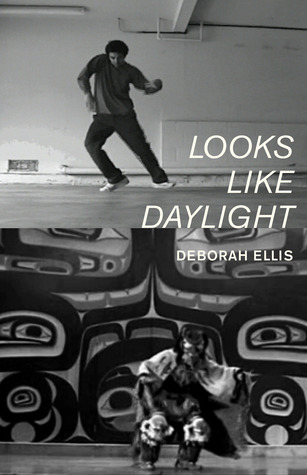
Looks Like Daylight (Deborah Ellis)

Earlier in the Spring, I went to what I thought was a reading at the Calgary Public Library. It was during the Children's Festival and Deborah Ellis was a speaker! I was so excited to go listen to her. It turned out it really wasn't about Deborah Ellis. It was about students who are doing cool projects in Calgary to better the world. Their projects were centered on First Nation's issues. I found it all quite inspiring. After the presentations, I asked Deborah Ellis if she'd ever considered writing a book about First Nations and it turns out she had! I got straight on to the library website to get a copy of the book.


17318672


This isn't a novel. It is interviews with First Nations youth that Deborah Ellis had met over the course of two years. Each chapter is a different story. Stories are told in first person. After a while, I figured I got the gist of the book, but something told me I should continue on. After reading story after story after story, there is a great impact on the reader's heart. There are so many amends to be made for all the First Nations people have gone through. I think they will rise up though. I feel like times are changing for their entire culture. Perhaps that is why it is called Looks Like Daylight. The last page is a story about Waakekom, an Ojibwe boy who is 16 from Saugeen First Nation in Ontario. He says:

 “My spirit name (“Waasekom”) means ‘when it’s night and lightning fills the sky and it suddenly looks like daylight,’”.

Like she has in the past, all the royalties from this book go to the First Nations Child and Family Caring Society of Canada (www.fnccaringsociety.com)

Some parts that really struck me:

p. 117 The US government referred to the Cochtaw Nation as one of the Five Civilized Tribes, along with the Cherokee, Creek, Chicksaw and Seminole. They were called civilized because many had begun to adopt European ways - living in log cabins, wearing European style clothing and attending school. But in 1829, President Andrew Jackson decided that assimilation wasn't good enough. He launched a plan to remove all Native Americans from the US South to places west of the Mississippi River. The idea was to move 60,000 Native Americans who had been living in the Eastern Woodlands since time immemorial and put them in an area vastly unsuited to their traditional way of life. The bulk of the Five Tribes were rounded up at gunpoint and then forced to walk, leaving behind farms and homes. One in four died along the way.


p. 151 Lacrosse originated with the people of the Ongwahonwe Haudenosaunee, or Six Nations, the people of the Longhouse....also known as The Ancient Game/the Creator's Game, its purpose was- and still is-spiritual. It's offered up to the Creator asa prayer for healing or as an expression of gratitude. Some people are given miniature lacross sticks when they are born, & when they pass, a lacrosse stick is placed beside them. 

*Lacrosse = Canada's National Sport


p. 175American Indians have a higher percentage of enrollment in the armed services than any other group. The first Native American recipient of the Medal of Honor (1869) was Co-Rux-Te-Chod-ish, or Co-Tux-Kah-Waddle, who served with the Indian Scouts. In WWI, a law was passed requiring all Native American men to register for the draft even though they were not considered citizens and could not vote .Many thousands voluntarily joined the military. Many others protested this law. In Utah, for instance, the protests were so vehement that the army was called in to stop them.More than 44,000 Native Americans served in WWII, where Navajo Code Talkers played a pivotal role. Ten thousand served in Korea and 42,000 in Vietnam. Ten thousand of those who have served have been women. 18,000 have been sent to Iraq or Afghanistan. First Nations people in Canada have also served with great distinction.In Canada, Aboriginal veterans were for a long time not entitled to the same benefits granted to soldiers of European descent. Native veterans were told that since they were not considered Canadian citizens (First Nations people did not obtain the right to vote until 1960), they were not eligible for veterans' benefits. And it wasn't until 1992 that Aboriginal vets were allowed to lay a wreath at the National War Memorial in Ottawa on Remembrance Day.At powwows, veterans are treated with special respect, and a ceremonial dance is done in their honor.


Goodreads says:

After her critically acclaimed books of interviews with Afghan, Iraqi, Israeli and Palestinian children, Deborah Ellis turns her attention closer to home. For two years she traveled across the United States and Canada interviewing Native children. The result is a compelling collection of interviews with children aged nine to eighteen. They come from all over the continent, from Iqaluit to Texas, Haida Gwaai to North Carolina, and their stories run the gamut — some heartbreaking; many others full of pride and hope.


You’ll meet Tingo, who has spent most of his young life living in foster homes and motels, and is now thriving after becoming involved with a Native Friendship Center; Myleka and Tulane, young artists in Utah; Eagleson, who started drinking at age twelve but now continues his family tradition working as a carver in Seattle; Nena, whose Seminole ancestors remained behind in Florida during the Indian Removals, and who is heading to New Mexico as winner of her local science fair; Isabella, who defines herself more as Native than American; Destiny, with a family history of alcoholism and suicide, who is now a writer and powwow dancer.


Many of these children are living with the legacy of the residential schools; many have lived through the cycle of foster care. Many others have found something in their roots that sustains them, have found their place in the arts, the sciences, athletics. Like all kids, they want to find something that engages them; something they love.


Deborah briefly introduces each child and then steps back, letting the kids speak directly to the reader, talking about their daily lives, about the things that interest them, and about how being Native has affected who they are and how they see the world.


As one reviewer has pointed out, Deborah Ellis gives children a voice that they may not otherwise have the opportunity to express so readily in the mainstream media. The voices in this book are as frank and varied as the children themselves.
 

Sunday, October 30, 2016

Shiloh Season (Phyllis Reynolds Naylor)

I'm not much of a series person, but I was quite taken by the first book. I'm not really one to get caught in a series, but I had to know what happens to that mean old nasty Judd Travers. He remains mean and nasty in this book. I guess I have to go on to book three now! Will he ever get his just dues?

If you don't like guns, this is a good book to read. There's so much risk and danger thanks to Judd and his hunting. One of the big problems is his drinking. I loved how we see Marty get what he wants through some hard work. This book is also a good lesson in how not everything is black and white. Sometimes you have to do what you think is important despite disapproval by some.

There were some inconsistencies with the first book. They now have a phone (maybe I missed where they said they got a phone...not sure). I listened to this one on a downloadable audio book and wasn't that taken by the reader. He was an older man and that didn't match in my mind since it is Marty telling the story.

I think you'd be okay to read this book without reading the first. The author reviews the details of the first book well enough to catch people up.

Goodreads summary:

After Marty Preston worked so hard to earn the dog Shiloh, he had hoped that his troubles with Judd Travers were over. He could not rescue all the dogs that Judd mistreated, but since shiloh was the one who ran away and came to him, Shiloh was the one he loved. Judd, however, has other problems. Anyone who cheats and swears and lies and kicks his dogs has troubles inside himself, and when the man starts drinking, Marty realizes that Shiloh is in danger once again. As hunting season approaches and Judd begins hunting on their land, the Prestos know that something is bound to happen.

They're right. Marty does the only thing he can think of to do, and discovers just how deep a hurt can go and how long it takes to heal.