Showing posts with label classics. Show all posts

Saturday, January 10, 2026

If I Couldn't Be Anne (Kallie George)


Lovely. This spoke to my heart. Anyone who loves Anne of Green Gables will also love this book. 

Goodreads says:

A beautiful read-aloud picture book about the power of the imagination, inspired by the best-selling Anne of Green Gables.

In this whimsical and magical picture book, Anne's boundless imagination takes flight! She imagines being all the things she loves so dearly. If I Couldn't Be Anne, Anne with an ewhat would I be . . . Anne wonders what it would be like to be the wind dancing round the treetops. A tightrope walker, breathless and brave. A princess in a palace made of apple blossoms. A magical frost fairy or a plain little wood elf. . . . But even as Anne's imagination soars far and wide, she comes back down to earth, recognizing that some things - like friendship! - are even better than the imagination.

With adorable illustrations, and a heartfelt message, this picture book is a perfect read-aloud introduction to L.M. Montgomery's beloved Anne and will delight her brand-new fans and lifelong readers alike.

Sunday, May 22, 2022

Becoming Mrs Lewis (Patti Callahan)


 I loved this book. Joy is presented as a smart and courageous woman and someone I want to be like. She was willing to ask the questions that can make and unmake a life. She loved to write and think and discuss. She was born again one night when her husband did not come home and had threatened suicide. She shows that the search for truth and the search for love is worth the complicated path of changing our life. 

Another thing I love about their relationship is that she wasn't the woman behind the man. She was was CS Lewis' equal. They loved to discuss and question and reason together. She knew that the better the question the better the answer.

This book was inspiring and interesting for me.


Tidbits:

Why CS Lewis was called Jack: When I was a young boy we had a dog named Jackie. On a warm summer day, when the world was good and right, Warnie and I were walking to town when a car came roaring around the bend and hit our dog. Killed him right there in front of us." Jack shook his head. "If I could make a request of God it would be that no young boy ever see his beloved dog killed." He shuddered then continued. "Therefore I announced my name Jack and vowed never to drive a car."

TOUGH QUESTIONS

pp. 43-44 "I think Lewis would tell you to follow Christ, not him," Chad said with a sly smile.
"Ah, but can't I follow both?" I paused before finding what I meant to say. "I'm not as traditional as Jack is, but then again, he's not as traditional as others believe him to be." I let the next words settle on my tongue before I spoke them. "I wish  could visit him as you did. I can almost feel the cool green English world. The quiet. The libraries and cathedrals hushed with sublime beauty.
Chad clasped his hands together and tented his fingers under his chin, nodded. "It was profound, I'll give you that. Maybe there will come a day when you can do the same."
"It's easier for men," I said. "It's not fair, but it's true. Wives and mothers can't just up and go to England to research and write and interview. You can go for two months and study, leave your four children with your wife, but there's some invisible and unstated law that I can't do the same."
Chad's gentle smile told me he understood. "Maybe one day Joy. Maybe one day."
"Jesus tells us not to worry about tomorrow. Do we believe him?"
"Whatever do you mean?" Chad rubbed the bridge of his nose as if his glasses were too heavy.
"What if," I said and leaned closer, my voice lowering. "What if I trust that command? What on earth would become of me if I should ever grow brave?"
Chad nodded his head. "Indeed, Joy. What would become of any of us if we were to become to brave as to believe his words?"

p. 67 I had a feeling of such lightness and gaiety that the malaise I'd been carrying for years fell off like shed skin. I wouldn't have been surprised if someone had chased me down and bellowed, "You dropped something back there."
I had left my family in America, and I knew there were neighbors and friends who didn't understand. Our church community scowled. Other women talked about me. And yet must not their should die inside? Did they not feel the anxiety that comes when the inner light rises and cries out, "Let me life"?
Perhaps our Maker had stitched us each together in such a way that this was not true of all women.

MEMORY MOMENT


AGAIN AND AGAIN


CONTRASTS AND CONTRADICTIONS

p. 49 Hopelessness was my companion and fantasy my escape.

WORDS OF THE WISER

p. 82 I believe life is more like a tree. Each branch differentiating as it grows. Each an individual choice.

AH HA MOMENT

Tuesday, April 19, 2022

As I Lay Dying (William Falkner)


I always tell my students there are three types of books:

- candy (which is fun to eat....but if you eat it all the time, you get sick. However, now and then, it's a great treat)

- just right books

- challenging books


If you read challenging books all the time, reading is not fun. However, now and then, they're great. 

This was a challenging book for me. I'd read a bit and not really understand any of it....so then I'd watch a few youtube videos with lectures on Faulkner and I'd catch a few themes or character explanations and interesting symbolism and it would motivate me to continue on. If I had read this book by myself, it would have just been garbley goop. I'm really glad I read it though! Thank you book club for pushing me on. 


We always rate books at the end of our meeting. I wanted to refrain from rating this one. I feel like it's a book that if I were reading it solely on engagement, potential for discussion and writing style, I'd give it a 1 or a 2. However, having experts explain it really helped me appreciate it more and I'm sure if I actually studied it rather than casually read it, I'd like it even more.


This book made me reflect on my experiences compared to those of people in my family as my brother struggled through a cancer diagnosis and then passed away. We each had our own unique experience and the way Faulkner captured the unique experiences of each of the people in the Bundren family is really something else.

Goodreads says:

As I Lay Dying is Faulkner’s harrowing account of the Bundren family’s odyssey across the Mississippi countryside to bury Addie, their wife and mother. Narrated in turn by each of the family members -- including Addie herself -- as well as others; the novel ranges in mood, from dark comedy to the deepest pathos. Considered one of the most influential novels in American fiction in structure, style, and drama, As I Lay Dying is a true 20th-century classic.

This edition reproduces the corrected text of As I Lay Dying as established in 1985 by Noel Polk.
 

Wednesday, February 23, 2022

John Henry - An American Legend (Ezra Jack Keats)


This one surprised us because he dies in the story! Died of working so hard!! Everyone was very captivated by the story, however. Quite a book for Ezra Jack Keats. His website says:

Long before multicultural characters and themes were fashionable, Ezra Jack Keats crossed social boundaries by being the first American picture-book maker to give the black child a central place in children’s literature.

In the books that Keats wrote and illustrated, he used his special artistic techniques to portray his subjects in a unique manner. One of these was his blending of gouache with collage. Gouache is an opaque watercolor mixed with a gum that produces an oil-like glaze.

The characters in Keats’ books come from the community around him. Many of his stories illustrate family life, the simple pleasures and more complex problems, that a child often encounters in his daily routine. To create his books, Keats drew upon his own childhood experiences, from having to flee from bullies to taking a ribbing from his pals for liking girls. But these are also the experiences of almost all children growing up in neighborhoods and communities in many parts of the world. This commonality explains the continuing popularity of Keats’ books and characters.

By the time of Keats’ death following a heart attack in 1983, Keats had illustrated over eighty-five books for children, and written and illustrated twenty-four children’s classics.

Goodreads says:

Illus. in full color. The Caldecott Medalist's powerful classic is now reissued in a handsome paperback edition, as well as a library edition. 

(Goodreads doesn't say a lot!)

Sunday, June 14, 2020

Little Women (Louisa May Alcott)


Much to my mother's surprise, I have always been a bit of a classics rebel. I picked this one up for book club and must say, I'm glad I did. I borrowed a tattered old copy from one of my nieces - which seemed appropriate and added to the nostalgia of this story. 

I'm sure I'll have more to say after our book club discussion. These are my thoughts so far:

The feminist part of me bristled at a lot of it, but there is something lovely and magical about it that kept me reading....kind of like Anne of Green Gables. My husband, on the other hand, has it on his 'Books I Regret Reading' list. LOL I did appreciate the cautious approach to marriage and the idea that it isn't the answer to everything. Apparently, Louisa herself was fiercely independent and never did marry.

I've never watched any of the movies. I think I should!

Goodreads says:

Generations of readers young and old, male and female, have fallen in love with the March sisters of Louisa May Alcott’s most popular and enduring novel, Little Women. Here are talented tomboy and author-to-be Jo, tragically frail Beth, beautiful Meg, and romantic, spoiled Amy, united in their devotion to each other and their struggles to survive in New England during the Civil War.
It is no secret that Alcott based Little Women on her own early life. While her father, the freethinking reformer and abolitionist Bronson Alcott, hobnobbed with such eminent male authors as Emerson, Thoreau, and Hawthorne, Louisa supported herself and her sisters with "woman’s work,” including sewing, doing laundry, and acting as a domestic servant. But she soon discovered she could make more money writing. Little Women brought her lasting fame and fortune, and far from being the "girl’s book” her publisher requested, it explores such timeless themes as love and death, war and peace, the conflict between personal ambition and family responsibilities, and the clash of cultures between Europe and America.


Wednesday, July 17, 2019

Who Has Seen the Wind (WO Mitchell)


On Goodreads, I gave this book a 3. Part of me says, who am I to give this a 3?! It's a classic that many people love. I didn't really love it. However, I also didn't hate it. I feel like it is one of those books that I would need to read again and again and discuss with other people who really gain a good appreciation for it. It rambled and I found it hard to follow. There were a ton of characters in the book and I had a hard time keeping them all straight.

I read this with my book club and the meeting was last night. After discussing it, I did find more reasons to appreciate it.

Favorite quotes:

p. 176 And when she was through, he looked down at her with his face slightly wry and ever so tender. What did you expect? You don't expect to be taken seriously, do you? You're only a schoolteacher. You're not the mayor, the banker, a businessman; you're not the wife even of a property owner. What you should do is pick a man of weight in town, marry him, then go to work.


Goodreads says:

When W.O. Mitchell died in 1998 he was described as “Canada's best-loved writer.” Every commentator agreed that his best – and his best-loved – book was Who Has Seen the Wind. Since it was first published in 1947, this book has sold almost a million copies in Canada. 

As we enter the world of four-year-old Brian O’Connal, his father the druggist, his Uncle Sean, his mother, and his formidable Scotch grandmother (“she belshes…a lot”), it soon becomes clear that this is no ordinary book. As we watch Brian grow up, the prairie and its surprising inhabitants like the Ben and Saint Sammy – and the rich variety of small-town characters – become unforgettable. This book will be a delightful surprise for all those who are aware of it, but have never quite got around to reading it, till now.

Sunday, September 16, 2018

The Great Gatsby (F Scott Fitzgerald)


Once again, a book I would have never pushed through and read if it wasn't for being part of a book club. I feel like there is really much more to this book than I've figured out - but I did get a few things from it. This is definitely one to read again and I really look forward to the book club discussion this week.

The characters seem to have this idea that they're always chasing happiness. Gatsby thinks that if he can only have Daisy, then everything will be perfect and he'll be happy. Wrong. The American dream is about the fact that you don't have to be royal to be rich - but this book seems to beat that up.

The narrator is Nick Carraway. Care Away?? He starts off with some wise words: Reserving judgment is a matter of infinite hope - the grasp of hope or pursuit of what people want is what keeps them chasing happiness. They're all a bunch of shallow fools who are always chasing something, but never finding it. Just like in Romeo and Juliet - people who are born to privilege often run straight into disaster and it ruins them.

These characters are people who aren't willing to do the work. Nick inherited his money from someone who paid another person off so he wouldn't have to go fight the civil war for them.  Gatsby throws all the parties just for one reason: To win back Daisy (or is it to win her mansion)

Early in the book they're at a party and a guy gets in an accident. The wheel falls of his car but he keeps trying to drive it. To me, this is like Trump!! The wheels are falling off dude. It's time to get out - but just like the guy in the book, he won't get out. He will keep driving the car until it is ruined.

Gold and yellow seem to be colors given status: Gatsby's car, his tie, the button on Daisy's dress, money, the flowers that Nick says smell like pale gold. The green light at the end of Daisy's dock that Gatsby is always looking at across the bay is also similar. Gatsby thirsts for that light...the house....Daisy. Nick calls it an enchanted object - a false God, I'd say. We all have things that we chase and give honor to that aren't worth anything long term.

The yellow is actually corruption, a-morality, and in the end, death. Right now, in American politics, it seems like people really love Trump mostly because of his success with creating wealth. Just like Trump, no one came across their money honestly and there is never enough money. Everyone always wants more and more and more wealth. The car that Daisy is driving when she kills someone, is also yellow. Pursuing all that stuff makes you unhappy and maybe even evil in the end.

Daisy tells a story about a butler who used to polish silver for the rich people he worked for. He did it day and night until the silver polish ruined his nose. Lesson?! These parties won't last forever and the pursuit of money is not equal to the pursuit of happiness. In the end, Gatsby dies and no one attends his funeral or cares. They just want to pick up their shoes from the house before they're lost. Everyone wants a care-free life - but in the end, Gatsby was not ok. He was chasing happiness but never found it.

Goodreads says:
A true classic of twentieth-century literature, this edition has been updated by Fitzgerald scholar James L.W. West III to include the author’s final revisions and features a note on the composition and text, a personal foreword by Fitzgerald’s granddaughter, Eleanor Lanahan—and a new introduction by two-time National Book Award winner Jesmyn Ward.

The Great Gatsby, F. Scott Fitzgerald’s third book, stands as the supreme achievement of his career. First published in 1925, this quintessential novel of the Jazz Age has been acclaimed by generations of readers. The story of the mysteriously wealthy Jay Gatsby and his love for the beautiful Daisy Buchanan, of lavish parties on Long Island at a time when The New York Times noted “gin was the national drink and sex the national obsession,” it is an exquisitely crafted tale of America in the 1920s.
 

Monday, April 23, 2018

Wrinkle in Time (Madeleine L`Engle)


Reread April 23, 2018
This is the third time reading this book. We did it for book club this month in conjunction with the new movie coming out. I haven`t seen the movie yet. I plan to. In the meantime, I have to say that every time I read this book I appreciate it a little bit more. It wasn`t a huge hit with our grade three students. They thought it was kind of boring. It got low ratings from all but one student (a science crazy student). 

I think there`s a lot more in this book than I even realize so far. I`m looking forward to reading it again one day!


March 15, 2015
There are so many awesome themes in this book. We read it with our grade three book club. I was a little leery to read it with them. I wasn't sure they were old enough. I can't remember how old I was when I first read A Wrinkle in Time, but I do remember that I didn't really understand it and didn't enjoy it that much. When our book club met, after reading it, I was pleasantly surprised with the number of children who read it. Not only that, we had an amazing discussion. Lesson learned. Don't underestimate!

It was a great introduction to science fiction. 

Themes: love, courage, working together, being proud to be yourself, individuality, love conquers all and more.


Later we watched the movie as well. That is an intense movie. It made me want to read the book again!

Saturday, January 6, 2018

Just So Stories (Rudyard Kipling)

34053
So this is where all those tales came from that I have heard. I remember hearing many of these stories, but they were lost to me. So glad to have found them again. The words are beautiful - poetic and magical. I found myself wanting to write down phrases and lines from the book. I loved that it is a man and his daughter in many of the stories.

I especially liked one person's review on Goodreads:

...my personal favorite was about Elephant's Child. Sometimes 'satiable curiosity doesn't kill you; it gets you a very practical appendage with which you can spank your bossy Relatives and hove them into a wasp's nest. And let's face it, O Best Beloved, we've all had that impulse.

Goodreads says:

Twelve stories about animals, insects, and other subjects include How the Camel Got His Hump. The Butterfly That Stamped, and How the Alphabet Was Made..


Thursday, January 4, 2018

Stone Fox (John Reynolds Gardiner)

817982

A few ELL students I have known have read this book as a novel study. I can see why. It's pretty short so it's a quick read but the story is great. It would make a great read-aloud. The story is similar to Iron Will. Willy saves Grandpa's farm, and Searchlight gives his life. Heartbreaking story!

Goodreads says:

John Reynolds Gardiner's classic action-packed adventure story about a thrilling dogsled race has captivated readers for more than thirty years.

Based on a Rocky Mountain legend, Stone Fox tells the story of Little Willy, who lives with his grandfather in Wyoming. When Grandfather falls ill, he is no longer able to work the farm, which is in danger of foreclosure. Little Willy is determined to win the National Dogsled Race—the prize money would save the farm and his grandfather. But he isn't the only one who desperately wants to win. Willy and his brave dog Searchlight must face off against experienced racers, including a Native American man named Stone Fox, who has never lost a race.

Exciting and heartwarming, this novel has sold millions of copies and was named a New York Times Outstanding Children's Book.

Wednesday, January 3, 2018

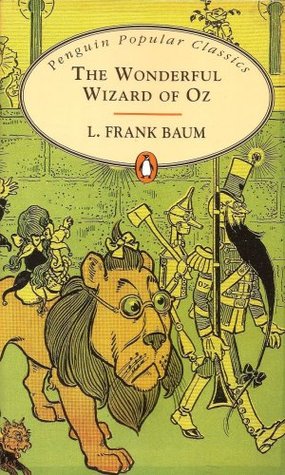
The Wonderful Wizard of Oz (Frank Baum)

236093

I recently saw a stage production of the Wonderful Wizard of Oz. I had wanted to read the book ahead of time so that I could see the differences between the original story and the stage production. Although I didn't find the book in time, I'm still glad I read it.

A lot of the book is pretty much the same as the stage production, until you get to the end. The end of the book goes on much longer after Lion and Tinman and Scarecrow receive what they're seeking. The wizard gives them a much bigger run around in the book and there seems to be a lot more violence, which is often the irony in fairy tales written for children - except for that lady who wanted to take Toto. I don't remember her in the book at all. The other thing is in the book it wasn't a dream, like the movie or the play...thank goodness! I think that is a pansy way of making sense of a story. I liked that about the book! Also, Dorothy wears silver shoes in the book, not red. There seem to be a lot more witches in the book. I couldn't keep them straight. Every point on the compass has a witch, it seems. I also couldn't keep track of all the places in Oz in the book. Mifkets? Merryland? The Land of Ev? They were also things I couldn't really keep in my head.

I'm glad I read the book.

Good reads says:

HarperCollins is proud to present its new range of best-loved, essential classics.‘“Come along, Toto,” she said. “We will go to the Emerald City and ask the Great Oz how to get back to Kansas again.”’Swept away from her home in Kansas by a tornado, Dorothy and her dog Toto find themselves stranded in the fantastical Land of Oz. As instructed by the Good Witch of the North and the Munchkins, Dorothy sets off on the yellow brick road to try and find her way to the Emerald City and the Wizard of Oz, who can help her get home.With her companions the Scarecrow, the Tin Woodman and the Cowardly Lion, Dorothy experiences an adventure full of friendship, magic and danger. A much-loved children’s classic, The Wizard of Oz continues to delight readers young and old with its enchanting tale of witches, flying monkeys and silver shoes.

Wednesday, March 30, 2016

I Know Why the Caged Bird Sings (Maya Angelou)


This is one of those books I had thought I should read for a long time. It's also a book that it's great that we read it for book club because I got so much more out of discussing it than just reading it on my own. Some books do not foster a lot of discussion. This book is the exact opposite! There were so many themes to discuss. At our book club meeting, we didn't really get past segregation and prejudice. Those are big ones! 

Other potential great discussions:

Home: Maya and her brother live in many different homes. They are mainly raised by their grandma but have times where they try living with their mother and with their father, who are not together. Many pivotal moments occur because of their lack of a "home".

Rising from the ashes: Maya isn't penned in by the beliefs of society and the people around her. She is matter of fact about her optimism to do anything anyone else can do.

Matriarchal Society: Men in this story are not positive role models in Maya's life (except for her brother, Brother and her Uncle). Women forge on and succeed despite their place in society.

Literature: Books save Maya. Her first love is William Shakespeare. She is well read and highly influenced by literature.

Beauty: Maya thinks she is ugly. She wishes to be whiter in order to be more beautiful. 


I think we could have had a couple of book club meetings on this book!


Sent by their mother to live with their devout, self-sufficient grandmother in a small Southern town, Maya and her brother, Bailey, endure the ache of abandonment and the prejudice of the local "powhitetrash." At eight years old and back at her mother’s side in St. Louis, Maya is attacked by a man many times her age—and has to live with the consequences for a lifetime. Years later, in San Francisco, Maya learns that love for herself, the kindness of others, her own strong spirit, and the ideas of great authors ("I met and fell in love with William Shakespeare") will allow her to be free instead of imprisoned.

Poetic and powerful, I Know Why the Caged Bird Sings will touch hearts and change minds for as long as people read.
 

Goodreads summary about Maya's life:

Maya Angelou, born Marguerite Ann Johnson April 4, 1928 in St. Louis, Missouri, was an American poet, memoirist, actress and an important figure in the American Civil Rights Movement. In 2001 she was named one of the 30 most powerful women in America by Ladies Home Journal. Maya Angelou is known for her series of six autobiographies, starting with I Know Why the Caged Bird Sings, (1969 which was nominated for a National Book Award and called her magnum opus. 

Friday, March 4, 2016

Madeline (Ludwig Bemelmens)


I got Madeline from the library. Many of the kids said, "I know that movie!" when they saw it. I had one student who had read both of these books before.  He read the Frankenstein one a I read Madeline. We had a good chuckle. Some commented that the Frankenstein boom is more for boys and the Madeline book is more for girls.  I guess I still have some work to do with the idea that anyone can read anything - there are no BOYS books and GIRLS books :)


Madeline is a classic. Everyone should read it! However, I have to say, it is even better next to Frankenstein.

Goodreads summary: 

Madeline is one of the best-loved characters in children's literature. Set in picturesque Paris, this tale of a brave little girl's trip to the hospital was a Caldecott Honor Book in 1940 and has as much appeal today as it did then. The combination of a spirited heroine, timelessly appealing art, cheerful humor, and rhythmic text makes Madeline a perennial favorite with children of all ages. 


Friday, February 5, 2016

Little Red's Riding Hood (Peter Stein)


A great take on a classic story, with a fun twist for kids who really love vehicles! I know of a bunch of little boys who'd really love this one. We all had a good chuckle as we read it. My class did a lot of work last year on different versions of stories, so they really love this kind of story.


Goodreads Summary:

When Little Red's Granny Putt Putt gets sick, the tiny moped scooter races over the river and through the dark woods to bring her a basket of get-well goodies.

But when Little Red crosses paths with Tank, the biggest, loudest, meanest machine around, that no-good monster truck has plans of his own.

Why, Granny, what big wheels you have!
Why, Granny, what big headlights you have!
Why, Granny, what a big hood you have!

From the sparkplug, creative minds of Peter Stein and Chris Gall comes a full-throttle version of the classic LITTLE RED RIDING HOOD tale that will have everyone revving for more.

Wednesday, July 15, 2015

Longbourn (Jo Baker)


I really loved this book and it's perspective. This is the story of the servants from Pride and Prejudice. I don't have much patience for people with money who are so concerned about things that really don't matter, especially the women who are so focused on looks and clothes and appearing to be proper and meet the approval of other fancy folk and the biggest goal of all: marriage. I have little patience for it all! I do, though, relate quite well to the feelings, work ethics and opinions of the servants!

The story is called Longbourn because that is the name of the house. The characters from Pride and Prejudice are background in this story. I would say that Mr. Bennett probably has the biggest role, while still remaining in the background. There are entertaining twists that add to the original story of Pride and Prejudice.

All of the story is not chronilogical. It is in the first two parts, but the third part rewinds and tells you the story behind James Smith. I was a little lost there when I read that, but it eventually is clear. You know really have to know Pride and Prejudice well to enjoy this book.

The servants are: 
Mrs. Hill - she basically runs the house
Mr. Hill - kind of an absent and seemily dotty old man. In the end we discover that theirs was a marriage of convenience as Mr. Hill was gay.
Polly - an orphan lucky enough to be spared the bleak fate that otherwise often awaited such girls (the streets, the poorhouse, a life of virtual slavery).
Sarah - a housemaid
James Smith - the footman who joins the "family" 


If Elizabeth Bennet had the washing of her own petticoats, Sarah often thought, she’d most likely be a sight more careful with them.
 
In this irresistibly imagined belowstairs answer to Pride and Prejudice,the servants take center stage. Sarah, the orphaned housemaid, spends her days scrubbing the laundry, polishing the floors, and emptying the chamber pots for the Bennet household. But there is just as much romance, heartbreak, and intrigue downstairs at Longbourn as there is upstairs. When a mysterious new footman arrives, the orderly realm of the servants’ hall threatens to be completely, perhaps irrevocably, upended. 

Jo Baker dares to take us beyond the drawing rooms of Jane Austen’s classic—into the often overlooked domain of the stern housekeeper and the starry-eyed kitchen maid, into the gritty daily particulars faced by the lower classes in Regency England during the Napoleonic Wars—and, in doing so, creates a vivid, fascinating, fully realized world that is wholly her own. 

Passages I want to remember:

There is great excitement about a new servant that has come to Longbourne:

Page 34 He looked at her now. She met his look, and raised her eyebrows. Then she spun away and strode off to help Polly lay the kitchen table. She had succeeded in drawing his attention at last. It gave her surprisingly little satisfaction.

P. 39 Sarah, reflecting on James: He was such an exciting mixture of helpfulness, courtesy and in civility that she could indeed form no clear notion of him. One thing, though, she was certain: he was lying. He as not what he pretended to be. He might have fooled everybody else at Longborurn, but he did not fool her. Not for one minute.

P. 45 But now there was this, the invitation to a Family Dinner, and Mrs. B. was already in a fluster about fish and soup, because a Family Dinner was of course more difficult to get right than a formal one. You had to impress, but at the same time you had to look like you were not trying to impress at all. It had to be excellent, and it also had to seem as though it was how they were all used to dining every day.

The girls who work at Longbourn watch the life their employers have. They work very hard and long for some of the pleasures they see.
P. 55 Sarah dropped her voice, whispered, "That's what I mean: somewhere you could just be, and not be obliged to do, somewhere where you could be alone, and nobody wants or expects anything of you, just for a while, at least."

Love the description of discovering a  gift of time: 
P. 36 Polly sat down at the table and rested her cheek on her folded arms. Sarah, still dozy herself, took up the hearth brush and was about to hunker down and sweep the fallen cinders, but then she stopped short. The hearth was clean, the range gleamed, the fire was bright and crackling with new wood. She glanced at the log basket. It was full.

Someone had been up early.

Water next. She leaned into the scullery to lift her yoke. Candlelight fell through the open doorway, and caught on the inner shelsls of the wide wooden pails. She crouched to touch: her fingers came away wet. Straightening, she brushed her hand down her apron, then crossed over to the water-tank and laid her hand on the lead. She could feel the cold weight of water pressing out against the metal skin. Someone had mended the fire, and then fetched the water; they had filled the tank right up to the brim.

A brownie. A helpful little lubber fiend. They'd never had one if them before....

..and then she take this little gift (from James Smith, by the way!) to enjoy the beauty of the morning


On the handicaps of being too well off:
P. 57  It was one of those handicaps that afflicted gentlefolk, that they could not open a door for themselves nor get in or out of a coach without someone to assist them.

On people who think they are indispensable:
p. 104

....Behind her, in her absence, the house was grinding along, its cogs turning and teeth linking, belts creaking, and there must come a moment - any moment now - when a cog would bite on nothing, and spin on air: some necessary act would go unperformed, some service would not be provided; the whole mechanism would crunch and splinter and shriek out in protest, and come to a juddering halt, because she was not here. All the time she was pulling further and further away, like a spindle twisting out upon a thread of flax. Pull far enough, twist and stretch it too thing, and the thread would snap.

(It doesn't. But she does get a slap upside the head for not being where she was supposed to be.)

....she was off with Ptomely! ...and even tried smoking! :)

Even though their life is hard, the servants seems mostly satisfied with it. Sarah seems to express the most discontent, although, Mrs. Hill does here and there:
p. 108 And yet, and yet, the feeling still could not quite be quelled: there was also the fact of her, herself. Would she, at some time, have the chance to care for his own things, her own comforts, her own needs, and not just for the other people's? Could she one day have what she wanted rather than rely on the glow of other people's happiness to keep her warm?

Later Mrs. Hill says:
p. 269 Life was, Mrs. Hill had come to understand, a trial by endurance, which everybody, eventually, failed.

It's interesting to see the different take by Sarah to things most people consider accepted. She is taking to a minister:
p. 112 "I work hard." she shifted on her feet. "I try to be good. I do as I am told."
"Well, you do your duty then, and that's just as it should be. Work is sanctified and sanctifying. Consider the Parable of the Vineyard."
She nodded, though uncertain. That story was about being as well rewarded for doing very little as you were doing a great deal: it always made Sarah feel dispirited, and hopeless.
"But what about Martha?" she asied. "From Marths' story don't we learn hat there must be pause, that there must be time to listen and be still, and to learn."
"Ah, yes -" His eyes narrowed at her.
"And what about the Lilies of the field, that neither toiled nor spun nor did anything very much at all?"
"Yes, yes, but - you must see that to work is your duty, and like all of us you will find satisfaction in doing your duty."
"But it doesnot make me satisfied -" Sarah wanted to stamp. "It makes me feel tired and sore, and though I work so hard, it seems I cannot even take a moment, even a moment's pleasure, but I am scolded and found to be in he wrong."
"Pleasure?" Mr. Collins moved towards her, eyes wide now. He smelt of bed, and hair-oil and bad teeth. "Have you committed some error, my child?"

He goes on to question her as to what she might have done that wasn't proper. She considers life recently and confesses that she spoke with the neighbour's footman - but he can't seem to find much fault with that.

It wasn't wrong and it wasn't really a pleasure, but it makes her realize that pleasure could be something she could seek. It changes her attitude towards her duty and makes her want more from life.

While delivering a message, she hitches a ride with Ptomely, the neighbor's footman. She has been told to ignore him, so clearly she is not following what she has been told, but she delights in her little rule breaking.
P. 120 She trudged up to the village street, huddled inot herself; it was like a poke of hot chestnuts to carry with her, the knowledge that she had done this. She had done what she had been forbidden to do, and she had got away with it unseen, and nobody at Longbourn would ever know! She was so wrapped up in gleeful contemplation of her misdeed, that she did not notice the figure on the high path through the fields, who stood in a sodden coat, watching her from beneath a dripping hat brim.
(It was James Smith!)

It is interesting how some of these people aren't even noticed by the people of Pride and Prejudice. James Smith is a character that Jo Baker created. In the story he goes away. Sarah longs to know where he went and asks. When she asks the Bennet girls they hardly know who she is talking about.
p. 280 Relaying trays to and from Mrs. Bennet, running into Meryton to leave or collect letters, brushing past the neighbours and the neighbours' servants in the street, all of them looking for a nugget, a crumb, some little thing to help sustain the lumbering gossip-golem that Lydia's actions had conjured into being, and all he time with the loss of James gnawing at her: this had all become quite normal.
"No one even mentions him at all now," she said, one day, to Mrs. Hill. "He may as well have never been here at all."
"This is certainly not true."
"But he was somebody. He was."
"Sarah, I know."
"But you don't do anything." Sarah pushed back her chair. "I'm going looking for him."


Friday, July 3, 2015

Life of Zarf (Rob Harrell)


As I read this, I could imagine my son chuckling away at the humour. I can't wait to share it with him! This book makes me think teaching middle school would be really fun :) They would really get a kick out of this humour.

This is kind of a mix of Diary of a Wimpy Kid and classic fairy tales. There is a troll (lowest in the middle school totem pole) named Zarf who gets teased because his names rhymes with barf. He has a bad temper and ends up beating up one of his classmates - the not so charming prince. The lunch lady at school is Goldilocks (yup, school lunches always involve porridge). Zarf's two best friends are a pig named Kevin (get it? Kevin Bacon??) who is a huge worrier and the Jester's son, Chester, whose jokes are just terrible. Their adventures together are hilarious. I hope there are more of these books to come!

Some of my favourite funny moments:

- Their cell phone provider is Grimm. "They are the worst!"

- The troll, the pig and the jester all go on an adventure. One night they end up staying with a family whose son has a nervous tic. Every twenty or so minutes he yells, "Wolf!" Of course, this doesn't go over well with Kevin the pig.


- Along the way they find a candy house!! They start indulging until suddenly it strikes them....Hansel and Gretl made this same mistake! In the end it turns out the lunch lady goldilocks bought the house from the original owner. The owner has. Now moved to Cabo and opened a tiki bar.m


One question I had:
Why does TrollPower always have a copyright symbol after the words? (I.e. P. 252)

Goodreads Summary: 

Shrek meets Wimpy Kid in this epically funny tale of a troll trying to figure out how to be more popular

It’s not easy being Zarf. As a troll, he's stuck at the bottom of the middle school hierarchy, way below
the prince and knights (populars), ogres and giants (jocks), and even the lowly minstrels (band geeks). Plus, trolls aren't exactly known for their brain power or cool demeanor. But it gets worse. When the king disappears and Zarf's archenemy, the prince, ascends the throne, he makes Zarf's life even more miserable. And so it is that Zarf and his two sidekicks (a neurotic, mutton-obsessed pig and the not-funny son of the court jester) set out to find the missing king as well as their way to middle school heroism. (Okay, the heroism part might be wishful thinking.)

The first book in this brilliant new illustrated series from comics creator Rob Harrell has the perfect mix of real world and fairy tale.


Thursday, December 25, 2014

Three Men in a Boat (Jerome K Jerome)


Reading this book was kind of like watching a Seinfeld episode....every day mundane things that everyone can relate to and told in a way that just makes you chuckle....only not quite as much as Seinfeld.

It was one of those books I would have never read were it not for book club. It wasn't an easy read for me though. I am not a natural reader of old books or classics. It is good to read classics. Right? 

One weird thing about this book (was it something common in the time?): I think they used to think end punctuation was for paragraphs. So many one sentence paragraphs! Oy!!

It's kind of funny, but not really funny enough to be considered a comedy. Or it could be that it is British humor....which I tend to think is an oxymoron. This book reminds me of one of those family parties where you see around and listen to stories that your kooky relatives tell and you feel obliged to sit and listen politely. When it all begins you think, " Oh brother, do we really have to listen to this? And then, eventually, you all have smiles on your faces and you're chuckling away at their gift of storytelling.

It rambles. The stories have no point and are put together in odd ways. Not sure how he decided what constitutes a chapter. Usually a chapter has an event or moves a story along. These were just rambling words. Although, maybe that is how the boat experience was. I don't know.

All in all, I am really glad I read it. Now, on to something I will really enjoy!!


Updated: January 29
We met for book club last night. I was so inspired by the discussion I had to add to this post. I didn't even notice the themes in the story: hypocrisy, class distinction, morality and happiness. They're subtle, yet brilliant! So glad for book club friends who help me see a little further!


Quotes: 

Chapter 6

It was a glorious morning, late spring early summer, as you care to take it, when the dainty sheen of grass and leaf is blushing to a deeper green; and the year seems like a fair young maid, trembling with  strange, weakening pulses on the brink of womanhood.
--Whaaaat???


Chapter 9: 

I do not wish to be insulting, but I firmly believe that if you took an average towline, and stretched it out straight across the middle of the field, and then you and then turned your back on it for 30 seconds, that, when you look around again, you would find that it had got itself altogether in the heap in the middle of the field, and had twisted itself up, and tight itself into knots, and lost its two ends, and become all loops; and it would take a good half hour, sitting down there on the grass and swearing all the while, to disentangle it again.

Chapter 10

It is very strange, this domination of our intellect by our digestive organs. We cannot work, we cannot sync, unless her stomach will so. It dictates to us our emotions, our passions. After eggs and bacon, it says, "Work!" After beefsteak and porter, it says, "Sleep!" After a cup of tea (two spoonfuls for each cup and don't let it stand more than three minutes), it says to the brain, "now, rise, and show your strength. Be eloquent, and deep, and tender; see, with the clear I, into nature and into life; spread your white wings of quivering thought, and sore, a godlike spirit, over the whirling world beneath you, up through long lanes of flaming stars to the gates of eternity!"
After hot muffins, it says, "Be dull and soulless, like a beast of the field - a brainless animal with listless eye, unlit by any ray of fancy, or of hope, or fear, or love, or life." And after brandy, taken in sufficient quantity, it says, "Now, come, fool, grin and tumble, that your fellow-men may laugh - drivel in folly, and splutter in senseless sounds, and show what a helpless ninny is the poor man whose wit and will are drowned, like kittens, side by side, in half an inch of alcohol.
We are but the veriest, sorriest slaves of our stomach.


Wednesday, July 30, 2014

Charlotte's Web (E.B. White)


I can't believe I never thought to read this book aloud right at the beginning if the school year before. It's on my list for this fall. Love this story.  Wonderful example of the power of influence and how anything can happen if you will it.

I bought a couple copies of this book because we are reading it for a book club at church with our kids. The copy I bought has a forward by Kate DiCamillo, which I loved! She is brilliant. I had to wonder, after reading her intro, if authors like E.B. White weren't a big influence on the books she writes.


Monday, May 27, 2013

A Tree Grows in Brooklyn (Betty Smith)


It always feels good to read a classic. I have wanted to read this book for a while, so my month to pick the book club book seemed like the perfect opportunity. It is kind of like The Seinfeld Show - a book about nothing. Nothing spectacular happens. It's just the story of a girl who isn't very well off who just struggles and continues to make it in life. There is a tree that grows near her house - one tree amidst all the cement. The tree survives and thrives despite people neglecting it, abusing it, even trying to ruin it.....just like Francie and her family always survive.

I really liked that the mother is a strong character in this story, as is Francie. I loved that they realized that the way out of their struggled was through learning and through reading.

There are some strange characters in the book. Francie's dad is a lovable, handsome and fun guy - but never much of a provider for the family. His mother had three sons. Two died and one got married - which was about as good as dying to her. She was kind of bizarre:

Johnny, Francie's dad, is an interesting sort. He's a drunk who makes his money singing. He never really did want a family, but he does stick around mostly. His mother had all boys and had a hard time not having them around. When Johnny and his wife announced they were having a baby she wailed, "Now she's got you good. You'll never be able to come back to me."


Odd. Sort of. Some mothers have a hard time letting go of their boys.

I loved all the talk of school and learning and reading.

Katie deeply wants her children to have a better life than hers. On her mother's advice, she reads to them every day from Shakespeare and from The Bible. It does make a difference in Francie's life - although not always positive. Sometimes it causes her to be too different from her friends.

Francie finds a school she wants to go to instead of the one in the district where she lives. She and her dad conjure up a "white lie" so she can attend that school.
"It was a good thing that she got herself into this other school. It showed her that there were other worlds beside the world she had been born into and that these other worlds were not unattainable." (chapter 23, p. 176)

One chapter that really struck me was when Francie decides that she will never have female friends. This decision is thanks to a bunch of women who taunt and shun and make fun of a girl who has a baby out of wedlock. Francie even shuns this girl by looking at her cold-faced when she smiles at her. However, when the women inadvertently injure the baby by throwing rocks at the mother, Francie is horrified.

p. 237 (chapter 30) Remember Joanna. Remember Joanna. Francie could never forget her. From that time on, remembering the stoning women, she hated women. She feared them for their devious ways, she mistrusted their instincts. She began to hate them for this disloyalty and their cruelty to each other. Of all the stone-throwers, not one had cared to speak a word for the girl for fear that she would be tarred with Joanna's brush. The passing man had been the only one who spoke with kindness in his voice.

Most of the women had the one thing in common: they had great pain when they gave birth to their children. This should make a bond that held them all together; it should make them love and protect each other against the man-world. But it was not so. It seemed like their great birth pains shrank their hearts and their souls. They stuck together for only one thing: to trample on some other woman....whether it was by throwing stones or by mean gossip. It was the only kind of loyalty they seemed to have.

Men were different. They might hate each other but they stuck together against the world and against any woman who would ensnare one of them.

Francie opened the copybook which she used for a diary. She skipped a line under the paragraph that she had written about intolerance and wrote:

"As long as I live, I will never have a woman for a friend. I will never trust any woman again, except maybe Mama and sometimes Aunt Evy and Aunt Sissy."


And she never did.


There's something magical about this book. I think anyone could read it and find themselves in it. It's a story where women stand up for themselves. It's a story where extended family sticks together. It's a story where despite the odds, they do slowly get ahead. There are no quick fixes. There is a lot of heart ache, hard work, patience and going without along the way.

It's definitely a book I'd recommend!