Showing posts with label education. Show all posts

Saturday, April 25, 2026

The Coddling of the American Mind (Greg Lukianoff, Jonathan Haidt)


This book started from an article published in The Atlantic.  It makes for a great audio book. I quite enjoyed it. They have a website: www.thecoddling.com 

They talk a lot about cognitive behavioral therapy (CBT), which is great. Cognitive distortions are something we should all review, often, I think! 

I've often looked for something to read about how to discuss tricky topics like politics and religion. In this book, I realized that actually, there aren't any tricks. It just needs to be happen. We need to be able to hear and discuss things we disagree about.

This book discusses and emphases three important quotes:

  • Prepare the child for the road, not the road for the child. (unknown) 
    • ....in other words, helicopter parenting is not healthy. 
  • Your worst enemy cannot harm you as much as your own thoughts unguarded. But once mastered, no one can help you as much, not even your father or your mother (Budda)
  • The line dividing good and evil cuts through the heart of every human being (Aleksandr Solzhenitsyn)
    • ...in other words, no one is simply evil, everyone has good ideas


Goodreads says:

Something is going wrong on many college campuses in the last few years. Rates of anxiety, depression, and suicide are rising. Speakers are shouted down. Students and professors say they are walking on eggshells and afraid to speak honestly. How did this happen?

First Amendment expert Greg Lukianoff and social psychologist Jonathan Haidt show how the new problems on campus have their origins in three terrible ideas that have become increasingly woven into American childhood and what doesn’t kill you makes you weaker; always trust your feelings; and life is a battle between good people and evil people. These three Great Untruths are incompatible with basic psychological principles, as well as ancient wisdom from many cultures. They interfere with healthy development. Anyone who embraces these untruths—and the resulting culture of safetyism—is less likely to become an autonomous adult able to navigate the bumpy road of life.

Lukianoff and Haidt investigate the many social trends that have intersected to produce these untruths. They situate the conflicts on campus in the context of America’s rapidly rising political polarization, including a rise in hate crimes and off-campus provocation. They explore changes in childhood including the rise of fearful parenting, the decline of unsupervised play, and the new world of social media that has engulfed teenagers in the last decade.


This is a book for anyone who is confused by what is happening on college campuses today, or has children, or is concerned about the growing inability of Americans to live, work, and cooperate across party lines.

https://youtu.be/IUePfXsuHLE?si=aBrJ8rSd7vhhhtEA 


Sunday, March 1, 2026

Why Fascists Fear Teacher (Randi Weingarten)


Bottom line: Fascists don't want people to read or learn
Trump: Fascist
Alberta is headed that way too.
Well worth the read!

Goodreads says:

America’s most influential teacher’s union leader tells the anti-fascist history of public education, warning that American teachers today are under a new fascist assault--from book bans to culture wars and organized groups of “concerned” parents dictating what can be taught.

In 1940, as Hitler was gaining power and territory across Europe, a Nazi puppet government was put in power in Norway.  Teachers were among the first to publicly resist their rule—and they were winning. Frustrated that their attempts to recruit teachers into the party failed, the Nazis barged into Norway’s schools, beating teachers and students. When they still refused to submit, the Nazis closed the schools.  But the teachers figured out how to teach in private.  Increasingly incensed, the fascist government sent 1,300 teachers to concentration camps and 500 others to forced labor camps.  Even there, teachers kept teaching--and students kept learning how to think for themselves.  

As the head of one of the largest teacher’s union in the country, Randi Weingarten sees firsthand how today’s teachers are guarding American democracy against the threat of fascism. Drawing on history and decades of experience in the American public school system, she argues that teaching students to think critically is the key to defeating would-be dictators. She encourages teachers to continue promoting difference and healthy debate in their classrooms, and warns against censorship and complacency, looking to history to warn us all about what can happen if we devalue teachers and public schools.

Part history and part call to arms, Why Fascists Fear Teachers is a manifesto for American teachers from the author that Trump-appointed former Secretary of State Mike Pompeo once called “the most dangerous person in the world.” This deeply researched, urgent book from teachers’ greatest champion is necessary reading for our times.

Monday, December 1, 2025

The Anxious Generation (Jonathan Haidt)


Sometimes I hear people talk negatively about this book....that he doesn't really offer any real solutions or that he's catastrophizing. I, however, think he has a pretty compelling argument. I think I subconsciously keep choosing books like this because I want to be on my phone less. 

I should probably do something to deal with the guilt about all the things I did wrong with my own kids and cell phones.....

Some of his suggestions:
1. No cell phones until middle school. (A basic phone watch should suffice until then, if necessary.)
2. No SMART phones until high school.
3. No social media until 16 (18 would be better, but the author acknowledges that might be hard to do.)
4. More outside and free play.
5. Parents should supervise their kids more vigilantly online, but way less in the real world. (Helicoptering and over-controlling are also affecting our kids' development in negative ways.)
6. Schools should be entirely phone-free and provide phone lockers where kids can park their phones at the start of the day and pick them up at the end. There is plenty of evidence to suggest this can drastically improve focus during class as well as school culture. It's not enough to say kids can't have phones during class. Studies have shown that even having it put away in their bag to look at between classes still decreases attention and focus, and contributes to a toxic school culture.


Goodreads says:

A must-read for all parents: the generation-defining investigation into the collapse of youth mental health in the era of smartphones, social media, and big tech—and a plan for a healthier, freer childhood.

“With tenacity and candor, Haidt lays out the consequences that have come with allowing kids to drift further into the virtual world . . . While also offering suggestions and solutions that could help protect a new generation of kids.” —Shannon Carlin, ,i>TIME, 100 Must-Read Books of 2024

After more than a decade of stability or improvement, the mental health of adolescents plunged in the early 2010s. Rates of depression, anxiety, self-harm, and suicide rose sharply, more than doubling on many measures. Why?

In The Anxious Generation, social psychologist Jonathan Haidt lays out the facts about the epidemic of teen mental illness that hit many countries at the same time. He then investigates the nature of childhood, including why children need play and independent exploration to mature into competent, thriving adults. Haidt shows how the “play-based childhood” began to decline in the 1980s, and how it was finally wiped out by the arrival of the “phone-based childhood” in the early 2010s. He presents more than a dozen mechanisms by which this “great rewiring of childhood” has interfered with children’s social and neurological development, covering everything from sleep deprivation to attention fragmentation, addiction, loneliness, social contagion, social comparison, and perfectionism. He explains why social media damages girls more than boys and why boys have been withdrawing from the real world into the virtual world, with disastrous consequences for themselves, their families, and their societies.

Most important, Haidt issues a clear call to action. He diagnoses the “collective action problems” that trap us, and then proposes four simple rules that might set us free. He describes steps that parents, teachers, schools, tech companies, and governments can take to end the epidemic of mental illness and restore a more humane childhood.

Haidt has spent his career speaking truth backed by data in the most difficult landscapes—communities polarized by politics and religion, campuses battling culture wars, and now the public health emergency faced by Gen Z. We cannot afford to ignore his findings about protecting our children—and ourselves—from the psychological damage of a phone-based life.


Tuesday, July 22, 2025

First Day Around the World (Ibi Zoboi)


This book is beautiful! There is a ton of information. It isn't so much about the first day of school, but about school and children around the world. 


Topics/activities that could emerge:

  • non-fiction texts don't have a beginning, middle and end. You could jump around and read stories from countries that the children were interested in
  • We could do a writing assignment about their first day of school or maybe even what their parents remember from school when they were growing up, especially if many of the children are from another country.
  • Mapping activity - break the story apart and make a big map that shows all their experiences on an annotated map


Goodreads says:

From award-winning, New York Times bestselling author Ibi Zoboi and artist Juanita LondoƱo, this lyrical celebration of the first day of school across every continent explores what going back to school looks like for children in countries around the world!

How do children around the world spend their first day of school?

Some eat warm akara for breakfast in Nigeria, while others unwrap lunches of kluski in Poland. In China, they practice intricate characters in special notebooks, and in Argentina, they learn each other's names in a sing-song memory game. No matter where in the world, every student has something new to look forward to on their first day!

From Ethiopia to Germany to India to Brazil, this lyrical text introduces young listeners to the breakfast-to-bedtime routines, cultures, and landscapes that connect people across all continents.

Friday, April 4, 2025

The Power of Mindful Learning (Ellen J Langer)


If it wasn't Spring Break, I likely would not have read this book. However, it wasn't a long one so I soldiered on. I am very interested in mindfulness and so was curious about her take. The preface started on about the problems with assessment, which is what caused me to not want to continue. However, in the space of mindfulness, I can see what the author was saying. Sometimes it was light and easy reading and sometimes I got quite bogged down in the details of studies she cites and my interest would wane. Overall, I can see that this would be a good topic for an education degree and she had some good things to consider. Many times, however, I disagreed with some of her assertions because of experiences I've had with good teaching....for example: Wrote learning. I have found that my students can learn math facts by repeated practice and a bit of searching for patterns, which is a small leap from wrote memory. If I can get them to do that prior to doing our multiplication unit which focuses a lot on the why's of multiplication and methods for figuring it out, they learn it much quicker. If they have those facts already in their head, suddenly the why makes sense.

There were many other topics in here I had a "Ya but...." comment that would be interesting to discuss with the author. However, time to move on to something that will absorb my interest as a reader! 


Goodreads says:
Radical in its implications, this original and important work may change forever the views we hold about the nature of learning. In The Power of Mindful Learning, Ellen Langer uses her innovative theory of mindulness, introduced in her influential earlier book, to dramatically enhance the way we learn. In business, sports, laboratories, or at home, our learning is hobbled by certain antiquated and pervasive misconceptions. In this pithy, liberating, and delightful book she gives us a fresh, new view of learning in the broadest sense. Such familiar notions as delayed gratification, ”the basics”, or even ”right answers”, are all incapacitating myths which Langer explodes one by one. She replaces them with her concept of mindful or conditional learning which she demonstrates, with fascinating examples from her research, to be extraordinarily effective. Mindful learning takes place with an awareness of context and of the ever-changing nature of information. Learning without this awareness, as Langer shows convincingly, has severely limited uses and often sets on up for failure.With stunning applications to skills as diverse as paying attention, CPR, investment analysis, psychotherapy, or playing a musical instrument, The Power of Mindful Learning is for all who are curious and intellectually adventurous.

Thursday, April 3, 2025

True or False (Cindy L. Otis)


This was a really timely read with an election going on in Canada right now. It was fascinating to read about how far back people have been sharing fake news. The first part of the book is a history and the rest is tips on how to not be tricked.

Before you share something on social media:

1. Read the whole article! Don't get sucked in by click bait headlines.

2. Even once you've read the article, don't go with your gut. Your gut isn't always the most reliable source because all of our personal biases are at play. Also, don't dismiss something as fake news simply because you don't agree with it. 

3. Check the URL for the article and check the domain name carefully. 

.com are for business. Are they trying to sell you something

.edu Students can use this as well as education organizaitons

.gov is usually a government organization

.org are usually non-profit, however, anyone can buy a .org domain

.biz, .info. .net .xyz etc These are for sites that don't fit somewhere else. Most legitimate news outlets would not use these kinds of domains

4. Check the date! Sometimes fake news starts with someone recycling old news.

5. Investigate the source. Where is this news coming from? Is it written by a journalist or a news organization? A company pushing a product? Or an individual? Most legitimate websites have an 'about us' section to tell you about the people in their organization.

6. Do an internet search on the sources background. If you cannot find anything about the source, be skeptical.

7. Sometimes fake news quotes people that don't actually exist. Google experts they quote.

8. Spelling mistakes are a big sign you have stumbled on fake news or a personal blog/website. Reputable outlets have multiple layers of editors

9. See if other news outlets are reporting on it. Sometimes fake news outlets have more than one website and will publish something across all their websites. Check outlets you're familiar with and are legit.

10. Identify who is telling the story and why. You should be able to click on the author's name and what else they have written. Is this someone who has an expertise on the topic discussed in the article?

11. Check the sources used. If there are not sources listed, be leery. If sources are anonymous, legitimate outlets will explain why they're anonymous.

12. Check out hyperlinks to other articles.

13. Ask yourself if there is more to the story. Fake news writers often copy parts of an article. If important context is missing, it is likely fake. 

14. Fake news often makes up quotes and attributes them to real people or copies quotes that they've previously said and they take it out of context to fit what they want to say.

15. Go to fact checking websites that debunk hoaxes and conspiracies. 


Goodreads says:

"If I could pick one book to hand to every teen—and adult—on earth, this is the one. True or False is accessible, thorough, and searingly honest, and we desperately needed it." —Becky Albertalli, author of Simon vs. the Homo Sapiens Agenda

"Though billed for young adults, this is a book that every adult should read." --The Washington Post

A former CIA analyst unveils the true history of fake news and gives readers tips on how to avoid falling victim to it in this highly designed informative YA nonfiction title.

"Fake news" is a term you've probably heard a lot in the last few years, but it's not a new phenomenon. From the ancient Egyptians to the French Revolution to Jack the Ripper and the founding fathers, fake news has been around as long as human civilization. But that doesn't mean that we should just give up on the idea of finding the truth.

In True or False, former CIA analyst Cindy Otis will take readers through the history and impact of misinformation over the centuries, sharing stories from the past and insights that readers today can gain from them. Then, she shares lessons learned in over a decade working for the CIA, including actionable tips on how to spot fake news, how to make sense of the information we receive each day, and, perhaps most importantly, how to understand and see past our own information biases, so that we can think critically about important issues and put events happening around us into context.

True or False includes a wealth of photo illustrations, informative inserts, and sidebars containing interesting facts and trivia sure to engage readers in critical thinking and analysis.

Friday, December 27, 2024

The Elephant Keeper's Daughter (Shilpa Raj)


I love stories of women changed by education.

It is almost unbelievable to read about the lives women lead around the world. There is more work to do to create equality. Education is the key.


This is a great read.


"Women in these families have little or no control over their destinies; they suffer innumerable cruelties and lead lives regulated strictky by men. This way of life is not something I amp prepared to accept as a natural order"

“I see myself as a product of two disparate worlds, and each has given me a reason to love, to be kind, and to grow strong. My education has given me the ability to choose what I want for myself and the confidence to aspire to greater goodness. I have chosen to favour my new world, and hope to change the one I left behind.”


Goodreads says:

Saved by her grandmother from being killed at birth for having been born a female, Shilpa’s life took many unexpected turns and twists through her early years. She faced abandonment by her mother, the formidable constraints placed on her by her family, and the barbs of village elders bound by hundreds of years of oppressive practices and customs that subjugate women. Shilpa is torn between the contrasting lives she leads: one of servitude and injustice experienced by her family; the other of opportunity and empowerment offered by a good education in a school started by a philanthropist.

Just when all seems settled, an unforeseen death under mysterious circumstances shatters whatever stability remains in her life. Pulled in opposite directions, and torn between despair and dreams, Shilpa finally makes a choice for her future. Is she strong enough to stand up to the people she loves, and pursue what she wants?

At its heart The Elephant Chaser’s Daughter is about hope, when all seems lost. Written with raw honesty and grit, this is a deeply moving memoir of a young girl confronting her ‘untouchable’ status in a caste-based society, and her aspirations for modernity.

Monday, April 29, 2024

Kenneyism (Jeremy Appel)


I've never been a big fan of Jason Kenney. Jeremy Appel REALLY isn't a fan of Jason Kenney. He actually makes him seem dangerous. Sometimes I had to roll my eyes at the hate-on he had for Jason Kenney. For example, in the chapter on immigration, I at first thought there was nothing wrong with Jason Kenney's policies...only let people who have skills in industries we need apply for immigration status. However, as he goes on to explain the underlying policies Kenney put in place, I was rather horrified. I also think he totally got it wrong with education, specifically with charter schools. It drives me crazy how so many news outlets go to the SOS (Save our Schools) organization to get comments about the problems with charter schools. They spew misinformation and fear. 

I have to say, Jason Kenney is a bit of a mystery. He claims to be a loyalist to the crown and a hard-core Catholic....but he sure has harsh policies for the citizens....which doesn't seem congruent.

Goodreads says:

The harsh moralistic worldview of Jason Kenney has spurred right-wing populism to the mainstream in Canadian politics, but he unleashed forces he couldn’t control.

From Jason Kenney’s days as an anti-abortion activist at the University of San Francisco, and through his years as a Canadian Taxpayers Federation lobbyist, Reform MP, top cabinet minister in the Harper government, and Alberta premier, he has been single-mindedly driven to bring his harsh moralistic worldview into the mainstream.

Kenney took on the old guard of Canada’s liberal consensus and won, playing a key role in shifting the country’s political discussion to the right. But the very right-wing populist forces Kenney cultivated would come back to haunt him.

Jeremy Appel has observed Alberta politics and reported on various aspects of Kenney’s agenda since 2017, when Kenney made his way across the province in his big blue pickup truck to rile up aggrieved conservatives. Kenneyism examines Kenney's political beliefs, his rise through federal political ranks, and his ultimate resignation from the leadership of the United Conservative Party.

Saturday, July 4, 2020

In Conclusion, Don't Worry About It (Lauren Graham)

Quick read full of lots of great little quotes to keep!

Listened to the audio book.

Goodreads says:

NEW YORK TIMES BESTSELLER • Advice for graduates and reflections on staying true to yourself from the beloved Gilmore Girls actress and New York Times bestselling author of the memoir Talking as Fast as I Can and the novel Someday, Someday, Maybe.

“If you’re kicking yourself for not having accomplished all you should have by now, don’t worry about it. Even without any ‘big’ accomplishments yet to your name, you are enough.”

In this expansion of the 2017 commencement speech she gave at her hometown Langley High, Lauren Graham, the beloved star of Gilmore Girls and Parenthood, reflects on growing up, pursuing your dreams, and living in the here and now. “Whatever path you choose, whatever career you decide to go after, the important thing is that you keep finding joy in what you’re doing, especially when the joy isn’t finding you.” In her hilarious, relatable voice, Graham reminds us to be curious and compassionate, no matter where life takes us or what we’ve yet to achieve. Grounded and inspiring—and illustrated throughout with drawings by Graham herself—here is a comforting road map to a happy life.

“I’ve had ups and downs. I’ve had successes and senior slumps. I’ve been the girl who has the lead, and the one who wished she had the bigger part. The truth? They don’t feel that different from each other.”

Thursday, January 9, 2020

It Began With a Page (Kyo Maclear)


We learned about segregation when we read the story of Jackie Robinson. My students were stunned to learn about Japanese internment camps from this story.  She also wanted to write and illustrate books that had babies with all colors of skin. This was not popular in her time, but eventually, people started to see it her way.

It teaches a great lesson: even if everyone seems to accept something as just the way it is, one person can make a difference by standing up for what they know to be right.

We were stumped by the genre of this book. It is a true story but it was in the fiction section. I even asked the librarian at the public library and she was stumped too. We went an email to the author to ask her if she knows why. The information on the inside cover from the Library of Congress doesn't seem to say to me that it should be fiction or non-fiction.

Goodreads says:

Gyo Fujikawa's iconic children's books are beloved all over the world. Now it's time for Gyo's story to be told -- a story of artistic talent that refused to be constrained by rules or expectations.

Growing up quiet and lonely at the beginning of the twentieth century, Gyo learned from her relatives the ways in which both women and Japanese people lacked opportunity. Her teachers and family believed in her and sent her to art school and later Japan, where her talent flourished. But while Gyo's career grew and led her to work for Walt Disney Studios, World War II began, and with it, her family's internment. But Gyo never stopped fighting -- for herself, her vision, her family and her readers -- and later wrote and illustrated the first children's book to feature children of different races interacting together.

This luminous new book beautifully and openly touches on Gyo's difficult experiences and growth. Through Julie Morstad's exquisite illustrations, alternating between striking black-and-white linework and lush colour, and Kyo Maclear's artful and accessible writing, the story of this cherished figure is told at last.
 

Friday, November 16, 2018

Rockbound (Frank Parker Day)


This is another one of those books I would have never read if it weren't for Book Club, however, I'm glad I read it.

Truthfully, I found it hard to follow. The dialogue made it especially difficult and I found myself needing to read it aloud to even come close to understanding it. I'm not patient enough to read and re-read lines to try to figure it out. The accept though was really reminiscent of how my husband talks about Nova Scotia from the time he spent there on his mission.

Apparently, when the book was written, people from the area were angry about it because they felt like they were portrayed negatively. I can see why they'd feel that way. The superstition, the lack of education and survival mentality is heavy. I did love the parts about the teacher coming to the island and David wanting to learn to read. I'm not sure he was really successful though.

The Maritimes is a harsh and unforgiving place. Interestingly, it continues. This was a news article from today:

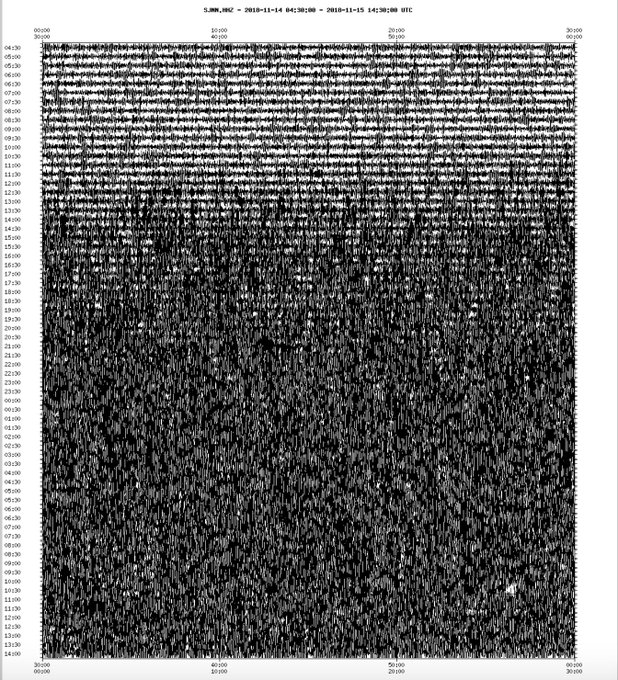
Seismic records show Newfoundland was literally shaking from wind and waves

Seismometer in St. John's shows how intense Thursday's winds were

Heavy seas crash into the land at the Drook, a spot on the road to Cape Race. (Submitted by Clifford Doran)
The waves crashing into the rugged shoreline of Newfoundland and Labrador this week led to waves of a different kind.
The squiggly black lines produced by a Natural Resources Canada seismometer show the seismic activity of a vicious windstorm that whipped across the province on Wednesday and Thursday.
The wind and waves were so strong, the island was shaking.
"What we saw over the past 48 hours was quite a dramatic change in [activity]," said John Cassidy, an earthquake seismologist with Natural Resources Canada. 
"It was very noticeable and in our seismic data, our plots, it just jumped off the page. You could just see that shaking."
The federal government has seismometers — tools that measure earth movements — all across the country.
Cassidy said each year, a handful of storms will produce winds and waves strong enough to record seismic activity on the east and west coast.
And over time, as these weather events impact older infrastructure, it just breaks down.- Randy Oram, Karwood Homes
With winds gusting between 100 and 140 km/h, the conditions were just right to get the Rock rocking.
"It's that combination of the wind, that incredible wind, and the waves that were hitting the island," Cassidy said. 
"Both of those, the waves and the wind, gets trees shaking, rocks shaking ... And all of that can be recorded by our seismometers on the island."

Homebuilders association reacts

Randy Oram, president of the Newfoundland and Labrador branch of the Canadian Home Builders' Association, said people have to prepare for these earth-quivering storms to be the new normal.
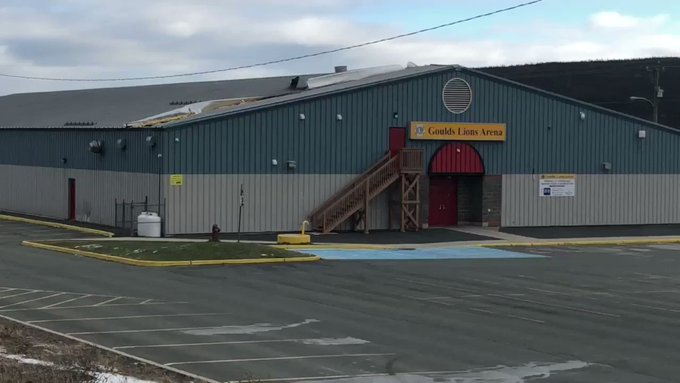
There was damage reported to home and businesses across the province, but Oram said his company, Karwood Homes, has yet to receive any reports of damage.
When asked why some homes suffer damage and others go unscathed, Oram said it has to do with location and age.
"With these weather events, some of the extremes can be localized," he said. "And over time, as these weather events impact older infrastructure, it just breaks down."​
Oram said the industry is changing as the weather worsens, and contractors need to keep up with the standards.
"You look at shingles we were using 15 years ago, they were rated for 97 km/h winds. What we're using nowadays, 210 kilometres is what they're rated for. As climate change happens, building products advance."
It was very noticeable and in our seismic data, our plots, it just jumped off the page. You could just see that shaking.- Seismologist John Cassidy
 
Randy Oram, president of the Newfoundland and Labrador branch of the Canadian Home Builders' Association, said standards are changing to meet climate change. (Paula Gale/CBC)
Part of the industry is regulated by Natural Resources Canada, which is currently working on a five-year project on adaptations to home building for climate change.
Where it used to study historical weather events, Natural Resources Canada is now trying to model future storms and set standards based on what is expected to happen, Oram said.
"They're actually looking at where the weather is going in the future, and testing new products and codes for the future."
With files from the St. John's Morning Show