Showing posts with label feminism. Show all posts

Monday, July 20, 2026

The Lion Women of Tehran (Marjan Kamali)


I loved this story. I read for hours. It was very captivating. It is a great story of friendship and has many twists and turns in their friendship. 

The story starts out in 1981 and then goes back to the 1950's to tell the story that leads up to 1981. There is a Epilogue set in 2022 to wrap things all up nicely.

Notes:

Characters:
Ellie (full name: Elaheh, means goddess) - is a descendant of royalty - a fact that is really important to her mother

Mehrdad - Ellie's husband

Homa - Ellie's best friend. They meet on the first day of school. Ellie's mother always looks down her nose on this friendship, thinking Homa isn't quite fancy enough for her to associate with. Her name is a type of bird that never rests on the ground (p. 20). Homa really never does rest on the ground. She doesn't worry about being like anyone else. She has her passions and pursues them. She is a true friend to Ellie and a breath of fresh air again and again.

Ellie's father dies early on in her life. She thinks he died of turbuculosis. Ellie begrudges her mother for not ever telling her much about her father - until one day they have a good heart to heart and Ellie learns the truth about him (infidelity, etc)

Uncle Massoud - Ellie's uncle who marries her mother as per the tradition in their culture. He is a good husband to her mother and kind to Ellie. He has another brother but he married a Russian and settled there and is never a part of the story again. Uncle Massoud seems like a conselation prize - but that might be because of Ellie's mother's snootiness.

Friendship theme:

- Women's friendships are important and the little things we do for each other and give each other are continual reminders of these wonderful friends.

p. 4 Earlier that morning, in our apartment on the Upper East Side of Manhattan, my husband, Mehrdad, had tried to comfort me with breakfast. He prepared toast with feta cheese and cherry jam. He brewed bergamot tea. But I couldn't eat or drink. The jam was made from Homa's recipe. The bergamot tea in the white teapot adorned with two pink roses reminded me of her. With the arrival of her letter, her absence dominated my life all over again

There was a lot of description about the food - which I kind of expected to play a bigger part - but it never really did. It felt like a bit of a tangent. Perhaps the author really loves the Iranian food and wanted to share that love. Not sure.

Words of the wiser:

From Ellie's mother (a complicated figure in her life!): Jealousy has powerful energy. It can swirl in the air and destruct true happiness. 

- This advice is interesting because in many ways, Ellie's mother was so difficult. So toxic. However, she was right with this advice!

p. 126 From Ellie's mother: "Even those who love you most can ruin your life, you know, Ellie." Mother said.  "Even the ones you trust the most."

- She always had a damper on Ellie's wonderful moments.

p. 155 I would teach my own children differently. I would teach them that the world is filled with people who care deeply about them and want to see them thrive. Imagine that. Imagine if I could not just outgrow my own toxic vices but also transmit to my children the best of traits. Yes, I would raise secure, confident people. I would break the cycle of suspicion and superiority and paranoia that seemed to run in my family line.

The burden of a complaining mother:

p. 28 Sarah, I had a feeling she wasn't the kind of mother who complained to her children about her woes (Ellie's mother was that kind of mother)

Again and again:

Jealousy is something that comes up again and again.

p. 28 I (Ellie) adored her (Homa). 

I was already jealous of her.

p, 46 When Homa had found out I was First-in-Class, she had beamed with excitement, squeezed me hard, and even lifted me off the ground by a few centimeters. And I burdened with my own stupid personality traits, was jealous of her ability not to be jealous.

- p. 191 Poor Ellie keeps having pregnancy loss: Mother made potions of saffron dissolved in bone broth for me to drink. She took to praying five times a day to somehow entreat God to change y rate. Too little, too late was her transformation into someone devout. Her prayers didn't work. Her potions didn't materialize what we most wanted.

Mother claimed it was the evil eye at work. "All those people," she said, "jealous of our health and wealth. All those envious souls casting a hex on us."

Rituals to be rid of:

p. 187 When Mehrdad and Ellie marry, he negotiates not continuing a ritual:

Mehrdad's mom, gracious and calm as ever, agreed that we would be left alone and forgo the old-fashioned handkerchief hoopla surrounding the marriage night. With the mother of the groom decreeing it, the rest of the close female relatives - even my social - climbing mother - gave in. I breathed a sight of relief that I wouldn't be forced to prove that Mehrdad was my first in every way. He was, of course, but the entire "proof" theatre felt so demeaning. I was happy to skip it.

Goodreads says:

In 1950s Tehran, seven-year-old Ellie lives in grand comfort until the untimely death of her father, forcing Ellie and her mother to move to a tiny home downtown. Lonely and bearing the brunt of her mother’s endless grievances, Ellie dreams for a friend to alleviate her isolation.

Luckily, on the first day of school, she meets Homa, a kind girl with a brave and irrepressible spirit. Together, the two girls play games, learn to cook in the stone kitchen of Homa’s warm home, wander through the colorful stalls of the Grand Bazaar, and share their ambitions of becoming “lion women.”

But their happiness is disrupted when Ellie and her mother are afforded the opportunity to return to their previous bourgeois life. Now a popular student at the best girls’ high school in Iran, Ellie’s memories of Homa begin to fade. Years later, however, her sudden reappearance in Ellie’s privileged world alters the course of both of their lives.

Together, the two young women come of age and pursue their own goals for meaningful futures. But as the political turmoil in Iran builds to a breaking point, one earth-shattering betrayal will have enormous consequences.

Thursday, July 9, 2026

Atmosphere (Taylor Jenkins Reid)


I saw lots of social media posts with people crying and talking about how this was the best book they ever read....at least Taylor Jenkins Reid best book. I can't say I was that hooked by it. Space: not really my thing. All the way through it, I kept trying to figure out what is the main point of this? Is it about being strong women? Is it about speaking out for LGBTQ+ rights? Is it about not being afraid to be yourself. Is it about standing up for what is right and being a good person even when your family is brutal? Is it about friendship. 

I think it's about all those things. 

And the last 30 pages about tore my heart out. What an ending. I don't often cry when I read. This made me gasp....then the tears.

Great quotes:

Bravery is being unafraid of something other people are afraid of. Courage is being afraid, but strong enough to do it anyway.

Happiness is so hard to come by. I don't understand why anyone would begrudge anyone else for managing to find some of it.

Because the world had decided that to be soft was to be weak, even though in Joan’s experience being soft and flexible was always more durable than being hard and brittle. Admitting you were afraid always took more guts than pretending you weren’t. Being willing to make a mistake got you further than never trying. The world had decided that to be fallible was weak. But we are all fallible. The strong ones are the ones who accept it.

Just the act of falling in love was to agree to a broken heart.


Goodreads says:
Joan Goodwin has been obsessed with the stars for as long as she can remember. Thoughtful and reserved, Joan is content with her life as a professor of physics and astronomy at Rice University and as aunt to her precocious niece, Frances. That is, until she comes across an advertisement seeking the first women scientists to join NASA’s space shuttle program. Suddenly, Joan burns to be one of the few people to go to space.

Selected from a pool of thousands of applicants in the summer of 1980, Joan begins training at Houston’s Johnson Space Center, alongside an exceptional group of fellow candidates: Top Gun pilot Hank Redmond and scientist John Griffin, who are kind and easygoing even when the stakes are highest; mission specialist Lydia Danes, who has worked too hard to play nice; warmhearted Donna Fitzgerald, who is navigating her own secrets; and Vanessa Ford, the magnetic and mysterious aeronautical engineer, who can fix any engine and fly any plane.

As the new astronauts become unlikely friends and prepare for their first flights, Joan finds a passion and a love she never imagined. In this new light, Joan begins to question everything she thinks she knows about her place in the observable universe.

Then, in December of 1984, on mission STS-LR9, it all changes in an instant.

Fast-paced, thrilling, and emotional, Atmosphere is Taylor Jenkins Reid at her best: transporting readers to iconic times and places, creating complex protagonists, and telling a passionate and soaring story about the transformative power of love—this time among the stars.

Sunday, November 23, 2025

The Only Woman In The Room (Marie Benedict)


I didn't know about Hedy Lamar before reading this book. I enjoyed reading about her. I have liked some of Marie Benedict's other books. I found this one a little forced though. The dialogue was weird....no one talks like that.

Goodreads says:


Her beauty almost certainly saved her from the rising Nazi party and led to marriage with an Austrian arms dealer. Underestimated in everything else, she overheard the Third Reich's plans while at her husband's side and understood more than anyone would guess. She devised a plan to flee in disguise from their castle, and the whirlwind escape landed her in Hollywood. She became Hedy Lamarr, screen star.

But she kept a secret more shocking than her heritage or her marriage: she was a scientist. And she had an idea that might help the country fight the Nazis and revolutionize modern communication...if anyone would listen to her.

A novel based on the true story of the glamour icon and scientist whose groundbreaking invention revolutionized modern communication.

Sunday, July 27, 2025

Enigma Girls (Candace Fleming)


I was especially struck that these girls/women did not say anything about their experience for 30+ years! This is another example of women's stories going untold. They were compelled to be silent about their experience because of the war - but it is interesting how long they maintained their silence! At Bletchley Park there were over 8000 employees, 75% of which were female.

The stories are compelling. The chapters are short. It fills a gap in our understanding of World War II. This would be an okay book for some of the best readers in grade three. Imagining someone they know that is the same age and comparing their life experiences to what these girls were doing is eye-opening. These are ordinary teenagers who are entrusted with detailed and top secret codes. 

All this got me curious to see if there were Canadian women involved in code-breaking. There were. There is a CBC article here about Elsa Lessard.


Olive Bailey, who lives in BC and Marjorie Stetson in this video:


Goodreads says:

From award-winning author Candace Fleming, comes the powerful and fascinating story of the brave and dedicated young women who helped turn the tides of World War II for the Allies, with their hard work and determination at Bletchley Park. Scholastic Focus is the premier home of thoroughly researched, beautifully written, and thoughtfully designed works of narrative nonfiction aimed at middle-grade and young adult readers. These books help readers learn about the world in which they live and develop their critical thinking skills so that they may become dynamic citizens who are able to analyze and understand our past, participate in essential discussions about our present, and work to grow and build our future. "You are to report to Station X at Bletchley Park, Buckinghamshire, in four days time....That is all you need to know." This was the terse telegram hundreds of young women throughout the British Isles received in the spring of 1941, as World War II raged. As they arrived at Station X, a sprawling mansion in a state of disrepair surrounded by Spartan-looking huts with little chimneys coughing out thick smoke—these young people had no idea what kind of work they were stepping into. Who had recommended them? Why had they been chosen? Most would never learn all the answers to these questions. Bletchley Park was a well-kept secret during World War II, operating under the code name Station X. The critical work of code-cracking Nazi missives that went on behind its closed doors could determine a victory or loss against Hitler’s army. Amidst the brilliant cryptographers, flamboyant debutantes, and absent-minded professors working there, it was teenaged girls who kept Station X running. Some could do advanced math, while others spoke a second language. They ran the unwieldy bombe machines, made sense of wireless sound waves, and sorted the decoded messages. They were expected to excel in their fields and most know how to keep a secret. Candace Fleming is the award-winning and highly acclaimed author of Crash from Outer Space , The Curse of the Mummy , and many other nonfiction books for young readers. With her canny and compelling narrative voice she makes history come alive. Thick with tension and suspense, this is an extraordinary and relatively unknown story of World War II that will fascinate readers who will be thrilled to see young people playing such an important role in the wartime effort.

Sunday, December 3, 2023

Lessons in Chemistry (Bonnie Garmus)


Most of the time I felt angry and slightly enraged while reading this book. It had laugh out loud moments, heart warming moments and shocking moments too that practically gave me whiplash. Most of the men in this book are gross. Just gross. I found it rather ironic that it ended happily about Calvin...which I suppose made Elizabeth happy? Irony. I do think that one of the tragedies of that time was how shame was so common and people were secretive rather than being open about everyone's mistakes. 

I loved how the dog, Six Thirty, had thoughts on many of the important moments. 

Goodreads says:

Chemist Elizabeth Zott is not your average woman. In fact, Elizabeth Zott would be the first to point out that there is no such thing as an average woman. But it’s the early 1960s and her all-male team at Hastings Research Institute takes a very unscientific view of equality. Except for one: Calvin Evans; the lonely, brilliant, Nobel–prize nominated grudge-holder who falls in love with—of all things—her mind. True chemistry results.

But like science, life is unpredictable. Which is why a few years later Elizabeth Zott finds herself not only a single mother, but the reluctant star of America’s most beloved cooking show Supper at Six. Elizabeth’s unusual approach to cooking (“combine one tablespoon acetic acid with a pinch of sodium chloride”) proves revolutionary. But as her following grows, not everyone is happy. Because as it turns out, Elizabeth Zott isn’t just teaching women to cook. She’s daring them to change the status quo.

Laugh-out-loud funny, shrewdly observant, and studded with a dazzling cast of supporting characters, Lessons in Chemistry is as original and vibrant as its protagonist.

Saturday, September 2, 2023

Citizen She! (Caroline Stevan)


I'm always amazed at how recently women were considered people and allowed to vote.  It's especially interesting to look at it on a global scale. There are still two places women can't vote: Brunei (it has an absolute monarchy and no one vote there) and the Vatican (the priests control everything there and women cannot be priests). The last country to finally allow women to vote was Saudi Arabia and that happened in 2011.

Goodreads says:

An inspiring journey of women's struggles and victories around the globe.

Citizen She! tracks the global fight for women’s suffrage from the first pioneers in the eighteenth century to the heroines of today, from American Lucretia Mott to Egypt’s Huda Sha’arawi to China’s Qui Jin. What does it mean to have a vote, and why did women have to fight so hard to get one? How did they fight for it? And why are they still fighting in many countries around the globe? In illuminating the global struggle for women’s rights, the book shows us how far we’ve come–and that there is a lot left to fight for.

Friday, February 3, 2023

Little Red (Bethan Woollvin)


Don't mess with the girl in this version of Little Red Riding Hood. 

Good storybook for contrasts and contradictions because we are so familiar with the regular story of Little Red Riding Hood that this one takes us by surprise!

Goodreads says:

Little Red Riding Hood meets a wolf on her way through the woods to visit her sick grandmother. The wolf is hungry, and Red Riding Hood looks tasty, so he hatches a dastardly plan, gobbles up Grandma and lies in wait. So far, so familiar. But this Little Red Riding Hood is not easily fooled, and this big bad wolf better watch his back. In this defiant interpretation of the traditional tale, the cheeky, brave little girl seizes control of her own story (and the wolf gets rather more than he bargained for).

Thursday, January 5, 2023

Daily Rituals: Women At Work (Mason Curry)


I came at this book looking for the secrets of success in life. 

I didn't find them. Every single woman had a different style, different rules and different avenues to success. It was interesting though!


Goodreads says:


More of Mason Currey's irresistible Daily Rituals, this time exploring the daily obstacles and rituals of women who are artists--painters, composers, sculptors, scientists, filmmakers, and performers. We see how these brilliant minds get to work, the choices they have to make: rebuffing convention, stealing (or secreting away) time from the pull of husbands, wives, children, obligations, in order to create their creations.


From those who are the masters of their craft (Eudora Welty, Lynn Fontanne, Penelope Fitzgerald, Marie Curie) to those who were recognized in a burst of acclaim (Lorraine Hansberry, Zadie Smith) . . . from Clara Schumann and Shirley Jackson, carving out small amounts of time from family life, to Isadora Duncan and Agnes Martin, rejecting the demands of domesticity, Currey shows us the large and small (and abiding) choices these women made--and continue to make--for their art: Isak Dinesen, "I promised the Devil my soul, and in return he promised me that everything I was going to experience would be turned into tales," Dinesen subsisting on oysters and Champagne but also amphetamines, which gave her the overdrive she required . . . And the rituals (daily and otherwise) that guide these artists: Isabel Allende starting a new book only on January 8th . . . Hilary Mantel taking a shower to combat writers' block ("I am the cleanest person I know") . . . Tallulah Bankhead coping with her three phobias (hating to go to bed, hating to get up, and hating to be alone), which, could she "mute them," would make her life "as slick as a sonnet, but as dull as ditch water" . . . Lillian Hellman chain-smoking three packs of cigarettes and drinking twenty cups of coffee a day--and, after milking the cow and cleaning the barn, writing out of "elation, depression, hope" ("That is the exact order. Hope sets in toward nightfall. That's when you tell yourself that you're going to be better the next time, so help you God.") . . . Diane Arbus, doing what "gnaws at" her . . . Colette, locked in her writing room by her first husband, Henry Gauthier-Villars (nom de plume: Willy) and not being "let out" until completing her daily quota (she wrote five pages a day and threw away the fifth). Colette later said, "A prison is one of the best workshops" . . . Jessye Norman disdaining routines or rituals of any kind, seeing them as "a crutch" . . . and Octavia Butler writing every day no matter what ("screw inspiration").
Germaine de Staël . . . Elizabeth Barrett Browning . . . George Eliot . . . Edith Wharton . . . Virginia Woolf . . . Edna Ferber . . . Doris Lessing . . . Pina Bausch . . . Frida Kahlo . . . Marguerite Duras . . . Helen Frankenthaler . . . Patti Smith, and 131 more--on their daily routines, superstitions, fears, eating (and drinking) habits, and other finely (and not so finely) calibrated rituals that help summon up willpower and self-discipline, keeping themselves afloat with optimism and fight, as they create (and avoid creating) their creations.

Sunday, September 11, 2022

The Dance of Anger (Harriett Lerner, Ph.D)


This is a really good book on solving differences. For women, being angry often isn't allowed in our social structure. She has a good approach and many ideas regarding looking at conflict. It is one worth reading again....especially when problems come up in life.

Goodreads says:

"Anger is a signal and one worth listening to," writes Dr. Harriet Lerner, in her renowned classic that has transformed the lives of millions of readers. While anger deserves our attention and respect, women still learn to silence our anger, to deny it entirely, or to vent it in a way that leaves us feeling helpless and powerless. In this engaging and eminently wise book, Dr. Lerner teaches women to identify the true sources of our anger and to use anger as a powerful vehicle for creating lasting change.

Wednesday, May 4, 2022

Malala's Magic Pencil (Malala Yousafzai)


I picked this story because we are learning about India in Social Studies. This is not a story to rush through! We stopped and had all the girls leave their desks so we could see what it would be like in our classroom if all the girls could not come to school. It was impactful! My students knew that Malala had been shot and the page that talks about how the Taliban tried to stop her was profound for us. At the end of the book, they gave it a round of applause. Appropriate! 

Goodreads says:


Nobel Peace Prize winner and New York Times bestselling author Malala Yousafzai's first picture book, inspired by her own childhood.

Malala's first picture book will inspire young readers everywhere to find the magic all around them.

As a child in Pakistan, Malala made a wish for a magic pencil. She would use it to make everyone happy, to erase the smell of garbage from her city, to sleep an extra hour in the morning. But as she grew older, Malala saw that there were more important things to wish for. She saw a world that needed fixing. And even if she never found a magic pencil, Malala realized that she could still work hard every day to make her wishes come true.

This beautifully illustrated volume tells Malala's story for a younger audience and shows them the worldview that allowed Malala to hold on to hope even in the most difficult of times.


Thursday, February 3, 2022

The Knight Who Took All Day


This was hilarious. My students really got a chuckle out of the foolish knight who was more concerned about how he looked than getting to work. Many told me they would never be like that. I had to chuckle when I said, "I know....you're always one to get straight to work!" 

*Found in our school library

Goodreads says:

There once was a knight who THOUGHT he was brave and fearless and handsome...and a princess who discovered she didn't need rescuing.

A dashing knight decides it's time to impress the golden-haired princess. All he needs is a dragon to show off his marvelous talents. One day, a huge dragon appears on the horizon, smoke pouring from his nostrils. Immediately, the knight orders his squire to fetch his armor. But will he get dressed in time--or is this knight more interested in appearances than action? After much waiting, the golden-haired princess decides to tame that fire-breathing beast herself!
 

Friday, May 28, 2021

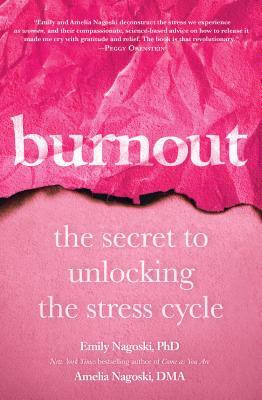
Burnout: The Secret to Unlocking the Stress Cyclre (Emily Nagoski, Amelia Nagoski)


Man, I was feeling this one. It's been a tough year. This book was a light in the darkness. I listened to it while I was walking to school each day and it seriously brought light into my life while we've being thrust into at home learning. That, along with new budgets for next year, staffing and covid stressors made this a great and enlightening listen. I think it is full of great information whether one is feeling like they're burnt out or not. It's great anti-burnout information!

At the end of each chapter, the authors have a TLDR list. Really, they're just summaries with a trendy title. Somehow, the trendy title made them even better. 

Chapter 1 Complete the Cycle

  • Just because you've dealt with a stressor, that doesn't mean you've dealt with the stress itself. You have to deal with the stress - complete the cycle - or it will slowly kill you. 
  • Physical activity is the single most efficient strategy for completing the cycle, even if it's jumping up and down or a good old cry. Affection (a six second kiss, a twenty second hug, six minutes of snuggling after sex, helpless laughter) are social strategies that complete the cycle along with creative self-expression, writing, drawing, singing...whatever gives you a safe place to move through the emotional cycle of stress. 
  • Wellness is the freedom to move fluidly through the cycles of being human. Wellness is thus, not a state of being, it is a state of action.

Chapter 2 Persist

  • Frustration happens when our progress towards a goal feels more effortful than we expect it to be.
  • You can manage frustration by using planful problem solving for stressors you can control and positive reappraisal for stressors you can't control. 
  • When we're struggling, we may reach a point of oscillating between frustrated rage and helpless despair. Solution: choose the right time to give up, which might be now or might be never. Either way, the choice puts you back in the driver's seat. 
  • Your brain has a built in mechanism to assess when it's time to quit. Listen to it's quiet voice. Or do a worksheet! Sometimes that's easier. 

Chapter 3 Meaning

  • Meaning in life is good for you. You make meaning by engaging with something larger than yourself - whether that's ambitious goals, service to the divine, or loving relationships. Meaning enhances well-being when you're doing well and can save your life when you're struggling.
  • Human giver syndrome is a collection of personal and cultural beliefs and behavior that insist that some people's only meaning in life comes from being pretty, happy, calm, generous and attentive to the needs of others. 
  • The stress response cycle, the monitor and meaning are all resources you carry with you into the battle against the real enemy. 
Chapter 4 The Game is Rigged
  • Women and girls, especially women and girls of color are systematically excluded from government and other systems of power. It's called the patriarchy. The patriarchy says it doesn't exist. It says that if we struggle it's our own fault for not being good enough, which is gaslighting.
  • Human giver syndrome, the contagious belief that you have a moral obligation to give every drop of your humanity in support of others, no matter the cost to you, thrives in the patriarchy the way mold thrives in damp basements. The solution? Smash! See worksheet.

Chapter 5 The Bikini Industrial Complex
  • The bikini industrial complex is a 100 billion dollar industry that tries to convince us that our bodies are the enemy, when in fact, the bikini industrial completes is itself the enemy.
  • Bias against people of size can be more dangerous to our health than the actual size of our bodies and many of the things we do to try to change our bodies make our health worse.
  • It is normal, nearly universal, to feel ambivalent about your body, wanting to accept and love your body as it is and at the same time wanting to change it to confirm with the culturally accepted aspirational idea. 
  • Solutions? Embrace the mess. See yourself as the new hotness. Practice seeing everyone as the new hotness and tune into your bodies' needs.

Chapter 6 Connect 
  • Connection with friends, family, pets, The Divine, etc. is as necessary as food and water. Humans are not built to function autonomously. We are built to oscillate between connection and autonomy and back again. We are all constantly co-regulating one another without even being aware it is happening: synchronizing heartbeats, changing moods and helping one another feel seen and heard.
  • Certain kinds of connection create energy. When you share mutual trust and connected knowing with someone you co-create energy that renews both people. We call this the bubble of love.
  • Sadness, rage and the feeling that you are not enough are forms of loneliness. When you experience these emotions, connect.

Chapter 7 What Makes You Stronger
  • We will literally die without rest. Literally! Finding time for rest is not a #firstworldproblem. It's about survival. We are not built to persist incessantly, but to oscillate from effort to rest and back again. On average, we need to spend 42% of our time (10 hours a day) on rest. If we don't take the time to rest, then our bodies will revolt and force us to take the time. 
  • Human giver syndrome tells us it is self-indulgent to rest, which makes about as sense as believing it is weak or self-indulgent to breathe. 
  • Getting the rest your body requires is an act of resistance against the forces that are trying to rig the game and make you helpless. Reclaim rest, and you reclaim sovereignty over your own life.  

Chapter 8 Grow Mighty
  • We each have a mad-woman in our psychological attic. She has the impossible job of managing the chasm of what we are and what human-giver syndrome has told us to be. 
  • Self-compassion and gratitude empower us to recognize the difference between who we are and who the world expects us to be without beating ourselves up or shutting ourselves off from the world. 
  • Self-compassion is hard because healing hurts and growing stronger can be scary - but it's worth it because healing helps us grow mighty enough to heal human-giver syndrome. 
  • We don't have to wait for the world to change before we begin to heal ourselves and one another.


Conclusion: Joyfully Ever After

Notes:

  • Joy doesn't come from within. It comes from connection with fellow givers.
  • The stepping stone to joy is feeling like you are enough and feeling not enough is a form of loneliness. We need other people to tell us that we are enough. Not because we don't know it already, but the act of hearing it from someone else and equally the act of taking the time to remind someone else they're enough, is part of what makes us feel we're enough. We give and we receive and we are made whole.
  • It is a normal healthy condition of humanity to need other people to remind us that we can trust ourselves. That we can be as tender and compassionate with ourselves as we would be as our best selves toward any suffering child. To need help feeling enough is not a pathology. It is not neediness. It's as normal as your need to assure the people you love that they can trust themselves, that they can be as tender and compassionate with themselves as you would be with them. This exchange, this connection, is the springboard from which we launch into a joyful life. 
  • Wellness is not a state of mind but a state of action. It is the freedom to move through the cycles of being human and this on-going mutual exchange of support is the essential action of wellness. It is the flow of givers giving and accepting support in all its many forms.
  • The cure for burnout is not self-care. It is all of us caring for one another so we'll say it one more time: trust your body. Be kind to yourself. You are enough just as you are right now. Your joy matters. Please tell everyone you know.
TLDR:
  • Just because you've dealt with a stressor doesn't mean you've dealt with the stress. You don't have to wait until all the stressors are dealt with before you deal with your stress. Which is to say that you don't have to wait for the world to be better before you make your life better and by making your life better, you make the world better. 
  • Wellness is not a state of being, but a state of action. It is the freedom to move fluidly through  the cyclical oscillating experiences of being human.
  • Human-giver syndrome is the contagious false belief that you have a moral obligation to give every drop of your humanity, your time, attention, energy, love, even your body, in support of others, no matter the cost to you. 
  • Pay attention to how different it feels to interact with people who treat you with care and generosity versus people who treat you as if they are entitled to whatever they want from you. 
  • Humans are not built to function autonomously. We are built to oscillate from connection to autonomy and back again. Connection with friends, family, pets, The Divine, etc is as necessary as food and water. 
-Reread November 2024
-Reread December 2025 - This book hits home every time

Goodreads says:

This groundbreaking book explains why women experience burnout differently than men—and provides a simple, science-based plan to help women minimize stress, manage emotions, and live a more joyful life.

Burnout. Many women in America have experienced it. What’s expected of women and what it’s really like to be a woman in today’s world are two very different things—and women exhaust themselves trying to close the gap between them. How can you “love your body” when every magazine cover has ten diet tips for becoming “your best self”? How do you “lean in” at work when you’re already operating at 110 percent and aren’t recognized for it? How can you live happily and healthily in a sexist world that is constantly telling you you’re too fat, too needy, too noisy, and too selfish?

Sisters Emily Nagoski, PhD, and Amelia Nagoski, DMA, are here to help end the cycle of feeling overwhelmed and exhausted. Instead of asking us to ignore the very real obstacles and societal pressures that stand between women and well-being, they explain with compassion and optimism what we’re up against—and show us how to fight back. In these pages you’ll learn

• what you can do to complete the biological stress cycle—and return your body to a state of relaxation
• how to manage the “monitor” in your brain that regulates the emotion of frustration
• how the Bikini Industrial Complex makes it difficult for women to love their bodies—and how to defend yourself against it
• why rest, human connection, and befriending your inner critic are keys to recovering and preventing burnout

With the help of eye-opening science, prescriptive advice, and helpful worksheets and exercises, all women will find something transformative in these pages—and will be empowered to create positive change. Emily and Amelia aren’t here to preach the broad platitudes of expensive self-care or insist that we strive for the impossible goal of “having it all.” Instead, they tell us that we are enough, just as we are—and that wellness, true wellness, is within our reach.
 

They also have a Ted video that explains their ideas well:

Sunday, December 27, 2020

A Thousand Splendid Suns (Khaled Hossein)


I first read this book in 2008, before I had even started this blog. The things I said then are still true today. I don't even know how to express how sad it is that there are women who go through things like these women do. I had forgotten much of the story and now, after hearing so much more in the news about Afghanistan, and perhaps being a little older helped me to appreciate it even more. 

A friend of mine that teaches high school English does this book as a novel study with her kids and she says that it is always a significant experience. I can only imagine the thoughts and discussion a book like this could bring out. I'm looking forward to discussing it with my book club.

Goodreads says:

A Thousand Splendid Suns is a breathtaking story set against the volatile events of Afghanistan's last thirty years - from the Soviet invasion to the reign of the Taliban to post-Taliban rebuilding - that puts the violence, fear, hope, and faith of this country in intimate, human terms. It is a tale of two generations of characters brought jarringly together by the tragic sweep of war, where personal lives - the struggle to survive, raise a family, find happiness - are inextricable from the history playing out around them.

Propelled by the same storytelling instinct that made The Kite Runner a beloved classic, A Thousand Splendid Suns is at once a remarkable chronicle of three decades of Afghan history and a deeply moving account of family and friendship. It is a striking, heart-wrenching novel of an unforgiving time, an unlikely friendship, and an indestructible love - a stunning accomplishment.

Saturday, November 21, 2020

Circling The Sun (Paula McLain)


Goodreads says:

Brought to Kenya from England as a child and then abandoned by her mother, Beryl Markham is raised by both her father and the native Kipsigis tribe who share his estate. Her unconventional upbringing transforms Beryl into a bold young woman with a fierce love of all things wild and an inherent understanding of nature’s delicate balance. But even the wild child must grow up, and when everything Beryl knows and trusts dissolves, she is catapulted into a string of disastrous relationships. Beryl forges her own path as a horse trainer, and her uncommon style attracts the eye of the Happy Valley set, a decadent, bohemian community of European expats who also live and love by their own set of rules. But it’s the ruggedly charismatic Denys Finch Hatton who ultimately helps Beryl navigate the uncharted territory of her own heart. The intensity of their love reveals Beryl’s truest self and her fate: to fly. 


My review:
I read this book for book club and didn't realize at first that it was a true story. That explained all the long detail about relationships with this person and that person that went nowhere. I was inspired by her ability to keep going despite seeming to have everything against her. She was abandoned by her mother at age 4 (bizarre turn of events) and raised by her father in Africa (Mom got tired of the African life). She rubbed shoulders with the richest of the rich, and went in cycles from poverty to great success. 


Memorable quotes:

p. 132 The more things change the more they stay the same:
"There are some women who'd be expecting a fellow to step up and get serious at some point."
"I that what you're worried about? I can't seem to get rid of teh husband I've got, and anyway, what I'd realy like to know is how it feels to be on my own. Not someone's daughter or wife, I mean...but my own person."

"Oh." It seemed I'd surprised him. "There isn't a lot of that kind of thinking around here."

"Of course there is," I told him, trying to draw a smile. "It's just usually a man who's doing it."

p. 167 Clara's mother to Beryl, after returning to Africa when Beryl was an adult:
"Harry was the joy of my life." Clara's mouth trembled. Her eyes silvered with tears. "You've no idea how hard it's been, wit hthe debts and the uncertainty. And now I'm alone again."

*blink*blink* This coming from a mother who abandoned her daughter. Bizarre.


p. 171 More on Beryl's fragile mother (and who is the total opposite of Beryl):

"I really am sorry for your trouble, "Karen said again and again.

"It's not your fault," Clara assured her, gathering damp bits of her hair into hairpins. But something in her tone told me she did hold Karen responsible - or perhaps me instead. I suppose it wasn't a great surprise to see she had very little gumption or resilience, and yet it made me sad for her. How dreadful it would be if everything toppled you and you folded in. Rain, for instance, not to mention the loss of a husband. She was s pitiful I shouldn't have been irritated with her, but I couldn't help it. By dinnertime, I was too fed up with the whole situation and bolded for Soysambu and my horses - for work, which was never mysterious and never failed to soothe me.


p. 204: This reminded me of the Bible story of the woman caught in adultery. It is after a terrible confrontation with her first husband:
He shrugged. "We're all very liberal until something shines a light on us. Somehow everyone undertands a husband's jealous raging more than a wife's.....indiscretions. It's not fair, but what is?"


p. 302 On society's expectations of women (which Beryl was never very good at meeting):

"Surely you'll stop riding....at least until the aby is born. You have to take care of yourself."
"This is how I take care of myself, don't you see? If we have this baby, I'll need to do my work just as before. I don't know any other way to live."


p. 307 On their impending family:
My body would transform first, and then everything else would follow. I still cared for Mansfield, but I also felt as if I'd boarded a train meant for one place and was no irrevocably going somewhere else entirely. The whole situation made me feel desperate.


p 308 Is this why people have affairs?
....I felt a surge of guilt and awareness. I wasn't trying to toy with Mansfield exactly, but I had been flirting with the princes. In a way, I couldn't help myself. It felt marvelous to smile and make Harry smile, too, or to walk off in a particular way and know that David's eyes were on me. It was childish, and also futile, but for those moments, I believe I was free-spirited and alluring again, as if I still had some measure of control in the world.


p. 341 On knowing when it's time to move on:

"Who has the privilege of knowing what's possible, or the burden, for that matter? I can tell you, though, that I never thought I could leave. I think that's what the dreams mean. I'm not leaving Africa, but slowly, ever so slowly, Africa has begun to seep out of me.


p. 346 When two women love the same man (but actually, neither ever really had him in this case) and how death seals some things that actually never were:

During the brief service, Karen's head sagged to her chest, and I felt a strong urge to go to her. I was the one person there who knew precisely what she'd lost in Denys; she was the only one who could have understood the weight and colour of my sorrow, too. But a shift had taken place, and it held me back. She was his publicly acknowledged widow now. The gods may have stolen him from her, but with his death, she had won him back. No one could challenge their bond, or doubt how she loved him. Or how truly he'd been hers. One day she was going to write about him-write him in such a way that would sela the two of them together forever. And from those pages, I would be absent.


p. 347 Is this the reason for the title? (I really couldn't figure the title out):
We had both tried for the sun, and had fallen, lurching to earth again, tasting melted wax and sorrow. Denys wasn't hers or mine. 

He belonged to no one and never had.

Friday, August 21, 2020

Becoming (Michelle Obama)


My big take away from this book is that Michelle Obama is really a good person who works hard to become the best person she can be. She's someone I'd want to have in my life. Imagine if she was part of our Mastermind Group?  Bottom line: She is smart and fun and someone who makes me want to be a better person.

On Goodreads I often read the people who give a book just one star. Not surprisingly, most of them are people who can't get past the politics. They are determined to not like anyone who isn't part of their party. 

Some quotes:

p. 75 On finding your place amongst people: 
It's hard to put into words what sometimes you pick up in the ether, the quiet, cruel nuances of not belonging - the subtle cues that tell you to not risk anything, to find your people and just stay put.

p. 81 On accepting differences:
...thanks to Suzanne [her friend at University that was opposite of her in so many ways, yet they had a great friendship], I am still coexisting with that guy to this day. This is what a control freak learns inside the compressed otherworld of college, maybe above all else: there are simply other ways of being.

p. 283 On being married to a leader:
There is no handbook for the incoming First Ladies of the United States. It's not technically a job, nor is it an official government title. It comes with no salary and no spelled out est of obligations. It's a strange kind of sidecar to the presidency, a seat that by the time I came to it had already been occupied by more than forty-three different women, each of whom had done it in her own way.
[It's just like women in the church! So many roles with no handbook]

p. 407 On the decline of civility since Donald Trump came on the scene:
Since childhood, I'd believed it was important to speak out against bullies while also not stooping to their level. And to be clear, we were now up against a bully, a man who among other things, demeaned minorities and expressed contempt for prisoners of war, challenging the dignity of our country with practically his every utterance. I wanted American to understand that words matter - that the hateful language they heard coming from their TVs did not reflect the true spirit of our country and that we could vote against it. It was dignity I wanted to make an appeal for - the idea that as a nation we might hold on to the core thing that had sustained my family, going back generations. Dignity had always gotten us through. It was a choice, and not always the easy one, but the people I respected most i life made it again and again, every single day. There was a motto Barrack and I tried to live by, and I offered it that night from the stage: When they go low, we go high.

p. 408 On reporting on Trump's Access Hollywood tape reporting:
In the end, the standards of decency were simply lowered in order to make room for the candidate's voice.

p. 411 On the 2016 election:
In the end,Hillary Clinton won nearly three million more votes than her opponent, but Trump had captured the Electoral College thanks to fewer than 80,000 votes spread across Pennsylvania, Wisconsin and Michigan. I am not a political person, so I'm not going to attempt to offer an analysis of the results. I won't try to speculate about who was responsible or what was unfair. I just wish more people had turned out to vote. And I will always wonder about what led many women, in particular, to reject an exceptionally qualified female candidate and instead choose a misogynist as their president. But the result was now ours to live with.

p. 414 On her goals as First Lady:
....we'd focused ourselves on doing more than trending for a few hours on Twitter. And we had results. 45 million kids were eating healthier breakfasts and lunches; 11 million tsudents were getting 60 minutes of physical activity every day through our Let's Move! Active Schools program. Children overall were eating more whole grains and produce. The era of supersized fast food was coming to a close.
[I wonder how Melania feels about her Be Better campaign...considering her husband's tweets and name-calling]


Goodreads says:

In a life filled with meaning and accomplishment, Michelle Obama has emerged as one of the most iconic and compelling women of our era. As First Lady of the United States of America—the first African American to serve in that role—she helped create the most welcoming and inclusive White House in history, while also establishing herself as a powerful advocate for women and girls in the U.S. and around the world, dramatically changing the ways that families pursue healthier and more active lives, and standing with her husband as he led America through some of its most harrowing moments. Along the way, she showed us a few dance moves, crushed Carpool Karaoke, and raised two down-to-earth daughters under an unforgiving media glare.

In her memoir, a work of deep reflection and mesmerizing storytelling, Michelle Obama invites readers into her world, chronicling the experiences that have shaped her—from her childhood on the South Side of Chicago to her years as an executive balancing the demands of motherhood and work, to her time spent at the world’s most famous address. With unerring honesty and lively wit, she describes her triumphs and her disappointments, both public and private, telling her full story as she has lived it—in her own words and on her own terms. Warm, wise, and revelatory, Becoming is the deeply personal reckoning of a woman of soul and substance who has steadily defied expectations—and whose story inspires us to do the same.

Tuesday, July 21, 2020

Nevertheless, We Persisted: 48 Voices of Defiance, Strength and Courage (So many authors)

At  first, I started to feel like this book was a bit of a downer. Every chapter is a story of someone who is an underdog. As I pressed on though, it became more and more compelling to hear their stories. They are stories of people who not only persisted, but accomplished great things despite other people. The more I read, the more inspired I was. I think this book is one of those best taken in full doses. It reminded me of reading a book by Deborah Ellis on First Nations kids called Looks Like Daylight. It wasn't until I had really buried myself in the stories that the feeling took over. This is one of those books that can change you, if you let it.

Goodreads says:

A powerful collection of essays from actors, activists, athletes, politicians, musicians, writers, and teens, including Senator Amy Klobuchar, actress Alia Shawkat, actor Maulik Pancholy, poet Azure Antoinette, teen activist Gavin Grimm, and many, many more, each writing about a time in their youth when they were held back because of their race, gender, or sexual identity--but persisted.

"Aren't you a terrorist?" "There are no roles for people who look like you." "That's a sin." "No girls allowed." They've heard it all. Actress Alia Shawkat reflects on all the parts she was told she was too "ethnic" to play. Former NFL player Wade Davis recalls his bullying of gay classmates in an attempt to hide his own sexuality. Teen Gavin Grimm shares the story that led to the infamous "bathroom bill," and how he's fighting it. Holocaust survivor Fanny Starr tells of her harrowing time in Aushwitz, where she watched her family disappear, one by one.

What made them rise up through the hate? What made them overcome the obstacles of their childhood to achieve extraordinary success? How did they break out of society's limited view of who they are and find their way to the beautiful and hard-won lives they live today? With a foreword by Minnesota senator and up-and-coming Democratic party leader Amy Klobuchar, these essays share deeply personal stories of resilience, faith, love, and, yes, persistence.

"Each tale is a soulful testament to the endurance of the human spirit and reminds readers that they are not alone in their search for self. An unflinchingly honest book that should be required reading for every young person in America."--Kirkus, Starred review

"An invaluable collection of snapshots of American society."--VOYA, Starred review

"[A] gem of a book. . . There's a lot to study here and talk about on the way to becoming kinder, more empathetic, and most important, compassionate."--Booklist

"Readers encountering injustice in their own lives may be compelled to take heart--and even action."--Publishers Weekly

"A powerful collection of voices."--SLJ

"The sheer variation in writing styles, subject-matters, and structure to these narratives provides readers with inspiration in assorted forms and a complex interpretation of what it means to persist."--The Bulletin

Saturday, July 4, 2020

Amal Unbound (Aisha Saeed)


Wow! This is a compelling story. I think a theme may be doing what's right, even when it isn't easy and things don't seem fair. Life is not fair for Amal, that is for sure. This would be a great story to do when we talk about segregation. The cover is beautiful. It's a page-turner that I couldn't stop reading and ended up reading in one day. The main character remains a good person despite really difficult circumstances. The afterward talks about Malala and the fight for girls to have a right to education. 


Goodreads says:

The compelling story of a girl’s fight to regain her life and dreams after being forced into indentured servitude.

Life is quiet and ordinary in Amal’s Pakistani village, but she had no complaints, and besides, she’s busy pursuing her dream of becoming a teacher one day. Her dreams are temporarily dashed when–as the eldest daughter–she must stay home from school to take care of her siblings. Amal is upset, but she doesn’t lose hope and finds ways to continue learning. Then the unimaginable happens–after an accidental run-in with the son of her village’s corrupt landlord, Amal must work as his family’s servant to pay off her own family’s debt.

Life at the opulent Khan estate is full of heartbreak and struggle for Amal–especially when she inadvertently makes an enemy of a girl named Nabila. Most troubling, though, is Amal’s growing awareness of the Khans’ nefarious dealings. When it becomes clear just how far they will go to protect their interests, Amal realizes she will have to find a way to work with others if they are ever to exact change in a cruel status quo, and if Amal is ever to achieve her dreams.
 

Thursday, March 26, 2020

The Invention of Wings (Sue Monk Kidd)


There is nothing I like better than a story of truly inspiring women. This is definitely one. The story is told from Sara Grimke's and Handful's point of view. Sarah, from early on, knew slavery was wrong, despite her family's practice of owning slaves. Handful is well named. She is a slave who suffers but doesn't lie down. Handful was not a real person. She is mostly made up by the author. Sarah Grimke, on the other hand, was a real person.

I loved this book and read it slowly so as to carefully soak up all the story into my heart. I hope I can be someone who stands up for those who need someone to speak up, rather than just accepting that that is the way things are.

"History is not just facts and events. History is also a pain in the heart and we repeat history until we are able to make another's pain in the heart our own." - Professor Julius Lester

One of the most striking moments in the story is when the slave owner comes across the quilt that Handful's mother has made. It tells the story of her life:

p. 336 - 337
"We looked back and forth to each other while little missus squinted from one square to the next like she was reading a book. Everything done to mauma - there it was. the one-legged punishment, the whippings, the branding, the hammering. mama's body laid on the quilt frame in pieces...."Who made this?"
"Mauma did. Charlotte."
"Well, it's gruesome!"
I never had wanted to scream as bad as I did right then. I said, "Those gruesome things happened to her."
A dark pink color poured into her cheeks. "For heaven's sakes then, you would think her whole life was nothing but violence and cruelty. I mean, it doesn't show what she did to warrant her punishments."
She looked at the quilt again, her eyes darting over the appliques. "We treated her well here, no one can dispute that. I can't speak for what happened to her when she ran away, she was out of our care then." Little missus was rubbing her hands now like she was cleaning them at the wash bowl.
The quilt had shamed hr. She walked to the door and took one look back at it, and I knew she'd never let it stay in the world. She'd send Hector to gt it the minute we were out of the room. He'd burn mauma's story to ash.
Standing there, waiting for little missus' steps to fade, I looked down at the quilt, at the slaves flying in the sky, and I hated being a slave worse than being dead. The hate I felt for it glittered so full of beauty I sank down on the floor before it.


That's the moment when Handful is ready to run away....and she does.


This is the second Sue Monk Kidd book I've read. I am thinking this summer might need to be a Sue Monk Kidd summer.


Goodreads says:

Writing at the height of her narrative and imaginative gifts, Sue Monk Kidd presents a masterpiece of hope, daring, the quest for freedom, and the desire to have a voice in the world—and it is now the newest Oprah’s Book Club 2.0 selection.

Hetty “Handful” Grimke, an urban slave in early nineteenth century Charleston, yearns for life beyond the suffocating walls that enclose her within the wealthy Grimke household. The Grimke’s daughter, Sarah, has known from an early age she is meant to do something large in the world, but she is hemmed in by the limits imposed on women.

Kidd’s sweeping novel is set in motion on Sarah’s eleventh birthday, when she is given ownership of ten year old Handful, who is to be her handmaid. We follow their remarkable journeys over the next thirty five years, as both strive for a life of their own, dramatically shaping each other’s destinies and forming a complex relationship marked by guilt, defiance, estrangement and the uneasy ways of love.

As the stories build to a riveting climax, Handful will endure loss and sorrow, finding courage and a sense of self in the process. Sarah will experience crushed hopes, betrayal, unrequited love, and ostracism before leaving Charleston to find her place alongside her fearless younger sister, Angelina, as one of the early pioneers in the abolition and women’s rights movements.

Inspired by the historical figure of Sarah Grimke, Kidd goes beyond the record to flesh out the rich interior lives of all of her characters, both real and invented, including Handful’s cunning mother, Charlotte, who courts danger in her search for something better.

This exquisitely written novel is a triumph of storytelling that looks with unswerving eyes at a devastating wound in American history, through women whose struggles for liberation, empowerment, and expression will leave no reader unmoved.

Sunday, May 12, 2019

Resistance (Jennifer Nielsen)

I'm a big fan of Jennifer Nielsen. I always tell my students that are great readers about her books. Last year I had a student who read all of the books in The False Prince series as well as A Night Divided. One day I was walking down the hall and he stopped me and said he had book for me. "Wait right here!" he said. He ran off to where his backpack was, found the book and raced back to me. He said, "You have to read this...but I have to go play now." I had heard about this book, but didn't realize it was out.  It has been so fun to read it. I spent about two weeks reading it and he would often find me at recess and ask what I thought of things so far. He spilled the beans to me about what happened in the ending and it made me want to slow down and soak it all up before the bad news unfolded. As a matter of fact, that's how I felt as I read the entire thing. I couldn't believe the things these kids went through and what they did.

You have to read this book!

May we never forget. May we live with honor at all times regardless of our circumstances. And may we choose love, a weapon that will defeat hate every single time because love is the resistance. 

I can't really recommend this book for students in my grade though. She doesn't hold back on the atrocities of war.

Here is a video of the author with the background on the story:


(Justyna's Narrative is a book I need to find!)

Goodreads says:

Chaya Lindner is a teenager living in Nazi-occupied Poland. Simply being Jewish places her in danger of being killed or sent to the camps. After her little sister is taken away, her younger brother disappears, and her parents all but give up hope, Chaya is determined to make a difference. Using forged papers and her fair features, Chaya becomes a courier and travels between the Jewish ghettos of Poland, smuggling food, papers, and even people. 

Soon Chaya joins a resistance cell that runs raids on the Nazis' supplies. But after a mission goes terribly wrong, Chaya's network shatters. She is alone and unsure of where to go, until Esther, a member of her cell, finds her and delivers a message that chills Chaya to her core, and sends her on a journey toward an even larger uprising in the works — in the Warsaw Ghetto.

Though the Jewish resistance never had much of a chance against the Nazis, they were determined to save as many lives as possible, and to live — or die — with honor.