Showing posts with label history. Show all posts

Friday, July 24, 2026

A Time to Gather (Bruce Feiler)


A while ago I decided I needed to re-read more often. Each month I pick a book that is worth re-reading. This month I was to re-read The Ritual Effect, but this book came up in my e-book holds at the library so I decided to read it instead. It was well-worth it and a good companion to The Ritual Effect. 

I really like this author. I put a couple more of his books on hold.

The first few chapters were about rituals we go through in life: birth rituals, entering adulthood, marriage, divorce...and of course, death. I read the death chapter while at my Auntie Shirley's building. I was waiting for her to arrive back at the senior's home from the hospital. I went down to the chapel where it was quiet and read there. They had a table set up with pictures of people who had passed away over the past six months (or maybe it was a year. I can't recall). Anyway, it was a weird mash up of coincidences to be reading about death outside a Catholic chapel with pictures and birth and death dates of all the people from that home. 

Notes:

- p. 229 Rituals are a means of collective time travel. And there's no better place to begin those trips than from our original home: nature.

- p. 250 When times are easy and there's plenty to go around, individuals can go it alone. But when conditions are harsh and life is tenuous, it takes a team sworn to reciprocity to keep life going forward (actually from Braiding Sweetgrass).

p. 260 What distinguishes ritual from routine and habit:

  • Rituals are intentional, symbolic, elevated actions
  • Routines are intentional, repeated actions.
  • Habits are automatic, repeated actions
Chapter 12 was called The Garden of Lost Children all about rituals around pregnancy loss - miscarriage, stillborn births, death of children and even abortions. He had a lot of information about stillborn children - which of course, really touched me. I had a stillborn baby in 2007. She would be 19 this year! 
  • p. 335 Apparently, King Tut (Tutankhamen) was buried with two stillborn baby girls. ...largely because Carter kept it secret. p. 338 In 1978, the two mummies were x-rayed and discovered to be stillborn girls who had died at twenty-four and thirty-six weeks. They had congenital abnormalities related to spina bifida that are consistent with inbreeding - Tutankhamen's parents were biological siblings, which explains his twisted spine, elongated skull, and club foot; his wife was his half sister. In 2001, The British medical historian Geoffrey Chamberlain argued that the mummies were identical girls who suffered from twin-to-twin transfusion syndrome - the same condition the author and his wife and been warned about - which led to their premature deaths.
  • p. 338 I met a woman who every year on the anniversary of her abortion would make a meal that her child would have liked at that age - in the early years it was juice boxes and candy necklaces, in the teenage years it was hamburgers and french fries. She would knit a red cap, place a bib on the statue, and serve a meal. It was an ocean of love.
  • p. 340 Irish traditions around baby deaths - they would bury corpses under the roofs of churches, a practice known as eaves-drop burials, so that dripping water might stealthily baptize their unprotected children
  • p. 343 Many of the rituals around child death are done in a group. There's so much shame around losing a child. The only medicine strong enough to counter that pain is the bllessings of not being alone.
  • p. 344 In the 2000s, scholars released studies showing that parents who see, hold, sniff, dress, kiss, and comfort their stillborn children have better mental health outcomes than those denied the privilege.
  • p. 346 As Cheryl Haggard observed (started an organization called Now I Lay Me Down to Sleep, a nonprofit that offers free, professional remembrance photos to families that have lost a child), "Some may look at us and think we photograph dead or dying babies, my perspective is: We don't photograph death, we capture love. And the love between a parent and a child can never be broken."
  • Chapter 13 is called A Moment of Hope and is all about cleansing rituals (water or oil....if only the author knew about our temples) and renewing rituals (again....this made me think of our temple). It also talked about "potlatches"....a ritual where people give all they have collected to those less fortunate (hello law of consecration?)
  • Interesting podcast to check out: Shame Pinata: Creating Rites of Passage for Real-Life Transitions
  • p. 383 Rituals connect us; the correct imbalances among us; they celebrate our loftiest moments; they chronicle our deepest aspirations. But mostly they make us feel at home. As Thomas Hovenden captured in another moment of national crises, they replace our grief over broken home ties with a vision of ties that bind.
P. 393 How to design your own rituals: 
  • 1. Reverence: Do what makes you feel at home. Identify what you're most missing from home  - whether that's safety, empathy, love, or joy - and design a ritual with that goal in mind
  • 2. Context: Identify your tension; define your intention. It must address the underlying uncertainty, fluidity and instability in the group; and provide comfort, relief, and support for that volatility. Ask, "What is our pain point? What is the tension, transition, or turbulence that we're experiencing?" Then, "What intention matches that tension?"
    • A = agency (what we do, make, or create; our me story)
    • B = belonging (our relationships, friends, loved ones, and colleagues; our we story)
    • C = cause (a calling, mission, or purpose, our thee story)
  • 3. Options: off-the-shelf or do-it-yourself, big or small, sacred space or third space.
  • 4. Pointers: The four somethings (old, new, borrowed, you)
  • 5. Instructions: boundaries, stakes, compromise, empathy, hope 
    • draw a boundary that defines the sacred space
    • articulate the stakes
    • compromise-rehearse on something important
    • create and atmosphere of empathy
    • end with a moment of hope


  • p. 400 Rituals work in times of change because they titrate change. They work in times of social upheaval because they modulate social upheaval. They work in times of religious flux because the bridge the religious, the irreligious, the spiritual, and the I'm not religious but I'm spiritual.
  • Rituals work because they are acts. They are values lived out loud. As the old adage goes, it's easier to act oneself into a new way of thinking than to think oneself into a new way of acting. A genius of ritual is that it's an old way of acting that leads to a new way of thinking.
  • Rituals work because they are shared. Our earliest ancestors shouted, waved sticks, and stamped their feet in unison to signal to predators that they were more powerful together than they were apart; our latest brain researchers have shown that when we sing, dance, eat, or work together, not only do our bodies synchronize, but our feelings do, too. To be in union is to become a union; to be in a group is to become a groupkeeper.
  • Rituals work because they are unnecessary. We live in a stranglehold of necessities, with deadening schedules, dulling routines, and draining obligations. Rituals are the unnecessities that unyoke those necessities - they upend schedules, disrupt routines, sideline obligations. They force us to focus on what Keats deemed our "negative capability," the ability to be in "uncertainties, Mysteries, doubts" without reflexively grasping for reason or explanation.
  • Finally, rituals work because they are portable, replicable versions or home. "The ache for home lives in all of us," Maya Angelou said, "The safe place where we can go as we are." Today we need that safe space more than ever - for morale making, for meaning making, for memory making.


Goodreads says:


At a time when our shared humanity is under threat and traditional life rituals are losing favor, one of our great decoders of human connection chronicles the astonishing rise of reinvented life rituals around the world and offers a blueprint for restoring togetherness.

It’s easy to be overwhelmed by the sharp decline in the types of life rituals that have been the tentpoles of family and community life since time immemorial. Birth rituals have plummeted, as have comings-of-age. Fewer than half of Americans are married today; only one in three is buried. “It took us ten thousand years to establish cultural norms around how we mark collective life transitions,” writes Bruce Feiler. “It took us fifty years to dismantle them.” We have clearly entered what Feiler calls a “celebration recession.” Can this threat to society be reversed? 

Feiler wanted to find out. As he did with his groundbreaking series Walking the Bible, Feiler went on a round-the-world ritual road trip, attending—and participating in—life rituals in sixteen countries on six continents. These rarely seen spectacles include an adolescent tooth filing in Bali, a mass baptism in the Vatican, and a tribal bride price negotiation in South Africa. He witnessed six weddings in a day in Las Vegas and ten funerals in a week in Ireland.

As he did with Life Is in the Transitions, Feiler also gathered the stories of a hundred ritual designers in twenty-six countries, including a Pentecostal priest in Nigeria who started a fertility circle, the creator of the Purple Pundit Project in New Jersey who leads LGBTQ+ Hindu weddings, and the founder of an app in Canada that helps “create your own rites of passage.”

What Feiler emerged with is a literary achievement, at once a great adventure story in the tradition of Sebastian Junger and Cheryl Strayed; a richly reported sociological portrait in the vein of Robert Putnam and Barbara Ehrenreich; and a conversation-shaping piece of social commentary in the mode of David Brooks and Jonathan Haidt.

Far from a ritual recession, we are in the midst of a  ritual renaissance, one that our outdated radar screens have failed to pick up. Fed up with top-down life rituals, everyday people are reimagining rituals at a pace unseen in human history. From boomers to Gen Z and boosted by social media, this new movement is reviving life rituals for a new century and building thriving communities in the process.

From a master storyteller on the trail of an urgent, untold story, what Feiler has created is a hopeful field guide to modern ritual; a tool kit for infusing collective meaning into our lives; and, perhaps, a framework for repairing our homesick world.

Sunday, July 27, 2025

Enigma Girls (Candace Fleming)


I was especially struck that these girls/women did not say anything about their experience for 30+ years! This is another example of women's stories going untold. They were compelled to be silent about their experience because of the war - but it is interesting how long they maintained their silence! At Bletchley Park there were over 8000 employees, 75% of which were female.

The stories are compelling. The chapters are short. It fills a gap in our understanding of World War II. This would be an okay book for some of the best readers in grade three. Imagining someone they know that is the same age and comparing their life experiences to what these girls were doing is eye-opening. These are ordinary teenagers who are entrusted with detailed and top secret codes. 

All this got me curious to see if there were Canadian women involved in code-breaking. There were. There is a CBC article here about Elsa Lessard.


Olive Bailey, who lives in BC and Marjorie Stetson in this video:


Goodreads says:

From award-winning author Candace Fleming, comes the powerful and fascinating story of the brave and dedicated young women who helped turn the tides of World War II for the Allies, with their hard work and determination at Bletchley Park. Scholastic Focus is the premier home of thoroughly researched, beautifully written, and thoughtfully designed works of narrative nonfiction aimed at middle-grade and young adult readers. These books help readers learn about the world in which they live and develop their critical thinking skills so that they may become dynamic citizens who are able to analyze and understand our past, participate in essential discussions about our present, and work to grow and build our future. "You are to report to Station X at Bletchley Park, Buckinghamshire, in four days time....That is all you need to know." This was the terse telegram hundreds of young women throughout the British Isles received in the spring of 1941, as World War II raged. As they arrived at Station X, a sprawling mansion in a state of disrepair surrounded by Spartan-looking huts with little chimneys coughing out thick smoke—these young people had no idea what kind of work they were stepping into. Who had recommended them? Why had they been chosen? Most would never learn all the answers to these questions. Bletchley Park was a well-kept secret during World War II, operating under the code name Station X. The critical work of code-cracking Nazi missives that went on behind its closed doors could determine a victory or loss against Hitler’s army. Amidst the brilliant cryptographers, flamboyant debutantes, and absent-minded professors working there, it was teenaged girls who kept Station X running. Some could do advanced math, while others spoke a second language. They ran the unwieldy bombe machines, made sense of wireless sound waves, and sorted the decoded messages. They were expected to excel in their fields and most know how to keep a secret. Candace Fleming is the award-winning and highly acclaimed author of Crash from Outer Space , The Curse of the Mummy , and many other nonfiction books for young readers. With her canny and compelling narrative voice she makes history come alive. Thick with tension and suspense, this is an extraordinary and relatively unknown story of World War II that will fascinate readers who will be thrilled to see young people playing such an important role in the wartime effort.

Monday, July 21, 2025

The Siren's Call (Chris Hayes)


This was kind of an adult version of The Anxious Generation (Jonathan Haidt) only, not so much anxiety....but the root of it all is the same...everything fighting for our attention.

In This Age of Information, attention is what everyone is fighting for. We need to be wise about what we give our attention to. He says instead of the information age, we should call it the attention age.  Ironically, I had a hard time following all the time I listened (he's REALLY thorough) but he does make some good points and interesting connections through history. His recommendation is to be really vigilant about how we spend our time and attention - more reading, more walking, more quiet! 

Five key take aways:

1. The Attention Economy Thrives on Distraction and Outrage – The stuff that makes people explode is what gets shared and therefore the majority of our focus. 

2. Our Ability to Focus Has Diminished – Shorter articles, shorter videos, shorter speeches. We have really lost our ability for deep thought, deep reading and deep conversation.

3. Toxic Attention-Seeking Behaviors Dominate Public Discourse – Meaning conversation is thwarted by trolls, conspiracy theories and whataboutism. People like Donald Trump have mastered the art of attracting attention at any cost, using positive or negative outrage to stay in the public consciousness.

4. Attention is Both Exploited and Inherently Human – Businesses are set up to make money off of our focus. Since humans seem to naturally seek attention for validation and connection. Social media exploits this. It makes us think we have connections - but truthfully, it's a shallow and unsatisfying connection and actually is just increasing loneliness and isolation.


5. Fixing this can be done on an individual level but may also require a social shirt – We can make changes in our own life like choosing to read print newspapers or using "dumb phones" as well as spending more time reading and discussing. We may also need systemic changes, like government regulation on social media and other platforms.


Goodreads says:

An Instant #1 New York Times Bestseller

From the New York Times bestselling author and MSNBC and podcast host, a powerful wide-angle reckoning with how the assault from attention capitalism on our minds and our hearts has reordered our politics and the very fabric of our society

“An ambitious analysis of how the trivial amusements offered by online life have degraded not only our selves but also our politics.” —New York Times

“Brilliant book… Reading it has made me change the way I work and think.”—Rachel Maddow


We all feel it—the distraction, the loss of focus, the addictive focus on the wrong things for too long. We bump into the zombies on their phones in the street, and sometimes they’re us. We stare in pity at the four people at the table in the restaurant, all on their phones, and then we feel the buzz in our pocket. Something has changed for most of human history, the boundary between public and private has been clear, at least in theory. Now, as Chris Hayes writes, “With the help of a few tech firms, we basically tore it down in about a decade.” Hayes argues that we are in the midst of an epoch-defining transition whose only parallel is what happened to labor in the nineteenth attention has become a commodified resource extracted from us, and from which we are increasingly alienated. The Sirens’ Call is the big-picture vision we urgently need to offer clarity and guidance.

Because there is a breaking point. Sirens are designed to compel us, and now they are going off in our bedrooms and kitchens at all hours of the day and night, doing the bidding of vast empires, the most valuable companies in history, built on harvesting human attention. As Hayes writes, “Now our deepest neurological structures, human evolutionary inheritances, and social impulses are in a habitat designed to prey upon, to cultivate, distort, or destroy that which most fundamentally makes us human.” The Sirens’ Call is the book that snaps everything into a single holistic framework so that we can wrest back control of our lives, our politics, and our future.

Monday, March 24, 2025

Attack From Within (Barbara McQuade)


This book was very American based, but many of the suggestions apply to Canada too. The problem definitely isn't unique to the USA. Since I live in Alberta where the current provincial politicians in charge seem to want to align themselves with the direction the current Republican government is moving and that is something I really don't want. Elbows up!

  • Create laws that require social media platforms to disallow false claims.
  • Fund local news coverage.
  • Extend the equal time rule to all news outlets...all candidates get equal time. Prevent broadcast media from showing one campaign over another.
  • The Fairness Doctrine has been removed from American media. Restore this law.
  • To reclaim audiences lost to social media, networks should focus on analysis rather than reporting.
  • Voluntary code of ethics for social media - remove false claims, remove bots, etc. This could be done with good algorithms!
  • Reduce disinformation from the demand side....this could be a big part of public education. Train students to recognize fake news and online conspiracy. Media literacy is becoming more and more important. Verify news stories from multiple news providers. Teach them to fact check School children and adults need this.
  • Public service campaigns to persuade people to use diligence when amplifying messages. This reminded me of The Dignity Index that has been created.
  • Increase face to face discussions in real public squares. Seclusion makes matters worse.
  • Vote and be an informed voter.
  • Install rank choice voting....this prevents two popular candidates from splitting the vote and having a less popular candidate come up through the middle.
  • Prosecute people who threaten and harass public servants.
  • Hate crime laws must be enforced vigorously. 
  • Speak up when people post threats.
  • Combat corruption. No one is above the law. 
Goodreads (as well as the Amazon website since it was clear Goodreads was missing some of the summary) says:

An urgent, comprehensive explanation of the ways disinformation is impacting democracy, and practical solutions that can be pursued to strengthen the public, media, and truth-based politics. The book includes:

  • The authoritarian playbook: a brief history of disinformation from Mussolini and Hitler to Bolsonaro and Trump, chronicles the ways in which authoritarians have used disinformation to seize and retain power.
  • Disinformation tactics—like demonizing the other, seducing with nostalgia, silencing critics, muzzling the media, condemning the courts; stoking violence—and reasons why they work.
  • An explanation of why America is particularly vulnerable to disinformation and how it exploits our First Amendment Freedoms, sparks threats and violence, and destabilizes social structures.
  • Real, accessible solutions for countering disinformation and maintaining the rule of law such as making domestic terrorism a federal crime, increasing media literacy in schools, criminalizing doxxing, and much more.


American society is more polarized than ever before. We are strategically being pushed apart by disinformation—the deliberate spreading of lies disguised as truth—and it comes at us from all opportunists on the far right, Russian misinformed social media influencers, among others. It's endangering our democracy and causing havoc in our electoral system, schools, hospitals, workplaces, and in our Capitol. Advances in technology including rapid developments in artificial intelligence threaten to make the problems even worse by amplifying false claims and manufacturing credibility.

In Attack from Within, legal scholar and analyst Barbara McQuade, shows us how to identify the ways disinformation is seeping into all facets of our society and how we can fight against it. 


Disinformation is designed to evoke a strong emotional response to push us toward more extreme views, unable to find common ground with others. The false claims that led to the breathtaking attack on our Capitol in 2020 may have been only a dress rehearsal. Attack from Within shows us how to prevent it from happening again, thus preserving our country’s hard-won democracy.

Wednesday, November 20, 2024

Carnegie's Maid (Marie Benedict)


I enjoyed this book. It was interesting to learn about the Carnegie family (which we all, apparently pronounce incorrectly....emphasis should be on the second syllable!)  the main character is made up - the author's attempt to find a reason for Andrew Carnegie's business dragon personality that changed into a philanthropist. 

I learned at book club that his organization funded the first library in Calgary - Memorial Park Library. It is my favorite library in Calgary. If only there was better parking around there, I'd go there a lot just to sit and soak in its beauty.

I borrowed this book from a book club friend. She said it was an easy read and that she read it in two days. I felt bad that it took me a week to read it. I thought I should have read it faster and then be able to pass it on - but actually, a little over a week isn't that bad. I wasn't compelled to keep reading like my friend said she was. It was an enjoyable read but not one where I couldn't put it down.

Goodreads says:

From the author of The Other Einstein, the mesmerizing tale of what kind of woman could have inspired an American dynasty.

Clara Kelley is not who they think she is. She's not the experienced Irish maid who was hired to work in one of Pittsburgh's grandest households. She's a poor farmer's daughter with nowhere to go and nothing in her pockets. But the other woman with the same name has vanished, and pretending to be her just might get Clara some money to send back home.

If she can keep up the ruse, that is. Serving as a lady's maid in the household of Andrew Carnegie requires skills he doesn't have, answering to an icy mistress who rules her sons and her domain with an iron fist. What Clara does have is a resolve as strong as the steel Pittsburgh is becoming famous for, coupled with an uncanny understanding of business, and Andrew begins to rely on her. But Clara can't let her guard down, not even when Andrew becomes something more than an employer. Revealing her past might ruin her future -- and her family's.

With captivating insight and heart, Carnegie's Maid tells the story of one brilliant woman who may have spurred Andrew Carnegie's transformation from ruthless industrialist into the world's first true philanthropist..

Sunday, March 31, 2024

Threads: Zlata's Ukrainian Shirt (Lina Maslo)


A good story to read about communism and the on-going disputes between Russia and Ukraine. It was published in 2024, so the Russian invasian had started - but it's not mentioned.


Goodreads says:

Threads is an inspiring picture book about a girl’s survival of the 1930s Ukrainian Famine-Genocide, messaging hope, pride for one's heritage, and context for today's War in Ukraine.

The threads on Zlata’s beautiful birthday blouse were knotted by her mother’s hands. “Red is for love, and black is for sadness,” her Papa says. Her Mama warns her not to show it off. Ever since the Communists came from Russia to Ukraine, they prohibited the teaching of Ukrainian culture. They’ve even taken the grain from Zlata's family's fields. But despite the danger, her parents refuse to give up their art, language, or beliefs.

As Zlata works to help her community survive, she finds that the dream of freedom is stitched deeper into the Ukrainian spirit than she could ever imagine.

Drawing from her own family’s experience in the 1932-33 Ukrainian Famine-Genocide, Lina Maslo weaves a thoughtful story that dares us not the forget the pain of the past as it informs the present conflict in Ukraine and inspires hope for the future.

Thursday, March 28, 2024

For Laika (Kai Chng Thom)


This story tugs on the heart strings. I guess there was a stray dog that a Russian scientist adopted for an experiment on Sputnik 2. It burst into flames when it returned to earth and Laika, of course, died. The author says it is part fable, part dog story and part history lesson. It is not surprising that a transgender person who is often ostricized and forgotten would have the empathy to write a story about this dog. Oh my heart! 

If I were to read this to a class, it would definitely have to be on a day when there is time to discuss it after.

Goodreads says: 


The heart-rending story of Laika, the brave space traveler, by the co-authors of From the Stars in the Sky to the Fish in the Sea.

By two of the co-authors of the acclaimed children’s book From the Stars in the Sky to the Fish in the Sea: the moving beautifully told story of Laika, the dog who learned the names of the stars. Laika is an orphaned stray dog who lives in the streets of Moscow in the then Soviet Union. Although she is loved by her pack, Laika longs one day to learn the names of the stars, since she knows that all dogs become stars when they die—including her parents. One day, a Russian scientist named Vlad offers Laika the chance to travel to the stars by helping him with an important experiment, an event that will change the entire world.

Part fable, part dog story, part history lesson, young and older readers alike will find themselves captivated by Laika’s brave and loving heart, and by her story, which holds important lessons about world peace, science, and the deep bonds between humans and every other creature with whom we share the planet.

Saturday, September 2, 2023

Citizen She! (Caroline Stevan)


I'm always amazed at how recently women were considered people and allowed to vote.  It's especially interesting to look at it on a global scale. There are still two places women can't vote: Brunei (it has an absolute monarchy and no one vote there) and the Vatican (the priests control everything there and women cannot be priests). The last country to finally allow women to vote was Saudi Arabia and that happened in 2011.

Goodreads says:

An inspiring journey of women's struggles and victories around the globe.

Citizen She! tracks the global fight for women’s suffrage from the first pioneers in the eighteenth century to the heroines of today, from American Lucretia Mott to Egypt’s Huda Sha’arawi to China’s Qui Jin. What does it mean to have a vote, and why did women have to fight so hard to get one? How did they fight for it? And why are they still fighting in many countries around the globe? In illuminating the global struggle for women’s rights, the book shows us how far we’ve come–and that there is a lot left to fight for.

Friday, December 4, 2020

Fear (Bob Woodward)


Bob Woodward is a renound reporter who has interviewed presidents and other politicians for generations and so I trust his work. That was the only reason I picked up this book. It wasn't because I want to relive all the crazy stories of the Trump presidency. He reveals that Trump wasn't qualified when he ran for president and he didn't do anything to improve his qualifications. The number of times people would ask him why he had a certain view and he'd answer, "I just do" despite all evidence pointing in the exact opposite direction. People around him did dances of secrecy and trickery to swipe papers off his desk that he wanted to sign. He'd forget about it for a while like a child playing peek-a-boo. Staff openly talked about how to protect the country from him. I was kind of hoping to get some insight into why people voted for him and continue to support him. The only thing I can come up with after reading this book is that they believed his lies that he said again and again despite all evidence to the contrary. It's astounding. This presidency will not spawn inter-generational respect. It will provide for some very entertaining history class lessons in the future. Kids will shake their heads and wonder what the hell was wrong with their parents and grandparents.

Goodreads says:

With authoritative reporting honed through eight presidencies from Nixon to Obama, author Bob Woodward reveals in unprecedented detail the harrowing life inside President Donald Trump’s White House and precisely how he makes decisions on major foreign and domestic policies. Woodward draws from hundreds of hours of interviews with firsthand sources, meeting notes, personal diaries, files and documents. The focus is on the explosive debates and the decision-making in the Oval Office, the Situation Room, Air Force One and the White House residence.

Fear is the most intimate portrait of a sitting president ever published during the president’s first years in office.

Thursday, February 20, 2020

Brick by Brick (Charles Smith Jr)

I picked this book to read because it is about a great structure my students are often interested in. It brought about a whole different conversation though! We had just read a book from a series called Girls in Science and my students asked why they always write about girls in science and math. I told them that girls used to never go into jobs for people good at math and science. We started talking about lots of other things girls also used to not be able to do. They asked why it was this way and I said, "I don't know, but one day someone asked the same question. They said why is it this way? This is dumb." Because of this, people started changing what they thought girls and women could do. Then I told them, "If you think girls had it bad, you should read this story!" We had a very interesting discussion about racism, slavery and the history of it all. At the end of the book, it says that the British burned down the first White House. I told them that this was before Canada was a country and so it was the people who lived in Canada before it was formed that burnt down the White House. That brought about another interesting discussion on politics and working well together and more. What a great discussion. One student said, "This is why I love reading so much! This is so interesting."

I agree my dear student. I agree!


Goodreads says:

The president of a new country
needs a new home,
so many hands work
together as one.

Black hands,
white hands,
free hands,
slave hands.

In this powerful story of the building of the White House, Coretta Scott King Award winners Charles R. Smith Jr. and Floyd Cooper capture the emotion and toil that created this incredible structure, the home of our president. The White House was created by many hands, several of the slaves', who will be remembered throughout history for their extraordinary feat. Many slaves were able to purchase their freedom after earning money from learning a trade through this work, which speaks to their unbelievable strength. The title reflects how this towering symbol of America was created by hand, human hands, working toward their freedom, brick by brick.
 

Friday, October 18, 2019

White Bird (RJ Palacio)


Sometimes, when looking at all the follow up books after Wonder, I snubbed them. Too much of a good thing? This one is definitely worth the time. I loved the story. It's a great twist that Julian was named after someone so brave and kind. I hope he lives up to his name!


Goodreads says:

In Auggie & Me, which expands on characters in Wonder, readers were introduced to Julian's grandmother, Grandmère. Palacio makes her graphic novel debut with Grandmère's story as a young Jewish girl hidden away by a family in Nazi-occupied France during World War II. Her experience demonstrates the power of kindness to change hearts, build bridges, and even save lives.

Monday, July 1, 2019

The Girl Who Named Pluto: The Story of Venetia Burney (Alice B McGinty)


Who would have thought it was a little girl that named Pluto? Great story!

One of my favorite As it Happens stories on CBC was the one where people vented their anger over Pluto no longer being a planet. This book even addresses that in the afterward.

Goodreads says:

An empowering, inspiring--and accessible!--nonfiction picture book about the eleven-year-old girl who actually named the newly discovered Pluto in 1930. 

When Venetia Burney's grandfather reads aloud from the newspaper about a new discovery--a "ninth major planet" that has yet to be named--her eleven-year-old mind starts whirring. She is studying the planets in school and loves Roman mythology. "It might be called Pluto," she says, thinking of the dark underworld. Grandfather loves the idea and contacts his friend at London's Royal Astronomical Society, who writes to scientists at the Lowell Observatory in Massachusetts, where Pluto was discovered. After a vote, the scientists agree unanimously: Pluto is the perfect name for the dark, cold planet.
Here is a picture book perfect for STEM units and for all children--particularly girls--who have ever dreamed of becoming a scientist.
 

Sunday, July 1, 2018

Saints (Volume 1)

This is now available on the Gospel Library app and on www.lds.org  It is easy to read and touches on many things that people have had trouble accepting in church history. I am eager to read the following volumes! It will be useful for seminary next year, I'm sure.

There is no summary on Goodreads - but other people have written interesting things about it. I'm sure more will be added to Goodreads in time.

Saturday, March 24, 2018

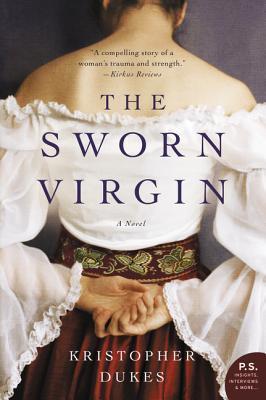
The Sworn Virgin (Kristopher Dukes)

33780185

I really reveled in the theme of a woman not just falling to societal expectations, but instead doing what she needed to do to not just survive, but to live.

I enjoyed the twists and turns to the story. They definitely kept me reading. I was also taken by the seriousness with which oaths are taken.

On Goodreads the author shared how she came up with the idea for the book.

Years ago, I read an article in The New York Times about the last remaining sworn virgins in the mountains of Albania. Immediately, the basic conflict of "The Sworn Virgin," based on the true tradition, popped into my mind: What happens when you must choose between your love, or your life?

I began researching the culture of the Albanian mountains, learning how traveling into the mountains in 1910, from a Western point of view, was like traveling back thousands of years in time. Understanding the rules of Eleanora's world shaped the context of the characters, and how Eleanora could be true to her time -- but a rebel, as well.


Goodreads says:

What would you do if your father was suddenly and mysteriously murdered, leaving you alone in 1910s Albania?

When 18-year-old Diana’s father is mysteriously shot dead in the cobblestone streets of 1910s Albania, Diana must abandon her dream of studying art in Italy as she struggles to survive in a remote mountain village with her stepmother Mirlinda. 

Nearing starvation, Mirlinda secretly sells Diana into marriage with Edi, the cruel heir of a powerful clan. Rather than lose her freedom, Diana swears to remain a virgin for the rest of her life, a tradition that gives her the right to live as a man: she is now head of her household, can work for a living and carry a gun. She may participate in the vengeful blood feuds that consume the mountain tribes, but she may not be killed—unless she forsakes her vow. 

When an ill stranger stumbles into her life, she nurses him back to health, saving his life but risking her own when she falls in love with him. . .

Friday, January 12, 2018

Train to Somewhere (Eve Bunting)

158954

Oh my gosh. This is so heartbreaking! We read this, hoping all along the way that Marianne would meet her at one of the stops.

She never did.

And it ends like that.

My class sat and stared at me. Then someone said, "That's it?"

Interesting to read a story that doesn't end happily! We thought maybe we could write an ending so that it actually feels like it ends.

I don't think it's a bad thing for kids to read books like this though. It certainly brought out some emotions. It started a great discussion about adoption and orphans and appreciating our parents. And it sounds like we will have a good writing project! We also had a good discussion about historical fiction.

Goodreads says:

Marianne, heading west with fourteen other children on an Orphan Train, is sure her mother will show up at one of the stations along the way. When her mother left Marianne at the orphanage, hadn't she promised she'd come for her after making a new life in the West? Stop after stop goes by, and there's no sign of her mother in the crowds that come to look over the children. No one shows any interest in adopting shy, plain Marianne, either. But that's all right: She has to be free for her mother to claim her. Then the train pulls into its final stop, a town called Somewhere . . . 

Tuesday, September 5, 2017

The Wonderful Towers of Watts (Patricia Zelver)

700543

Kids love REAL stories. This one is a true story of a man with an interesting hobby (fettish?) for building towers. It turns out there really was a Simon Rodia and he built so many amazing things there is now a center called The Watts Towers Arts Center. I want to visit it the next time I'm in LA!

Goodreads summary:

One man's monument to his neighborhood.

Thursday, February 23, 2017

In a Sunburned Country (Bill Bryson)

Before this, I didn't know about Bill Bryson. When I was carrying this book around people would comment, "Oh! I love Bill Bryson. Have you ever read...."

I definitely have some more reading to do.

I really didn't know anything about Australia before this. His book was a great way to learn about Australia. I learned that you could die there. They have some seriously unique animals and plants and a lot of danger. I think I'll stick to the coastal areas, if I go there. Although, the lure of undiscovered gems and minerals in the wide open outback is a bit of a temptation!

I really enjoyed his humour. I found myself chuckling often. I read this while hanging out in the lodge on our school's ski days and my friends around me would often ask what I was chuckling about. We enjoyed it together. I was glad I had those two days to sit and read. I wouldn't want to spread this one out over too many more days...it could take forever to read this one, if you let that happen. Instead, I totally immersed myself. It isn't that long, but the font is quite small....very dense!

It is interesting to me that so many countries have a part of their history where they were abusive to the indigenous people that were there when they arrived. There doesn't seem to be much shame in that on the part of Australians though. I found that quite curious.

I did find him a little more verbose than necessary. He does like to go on and on and on. Mavericks was the same way. (I never did finish that one...it's more of a long term project type book) It had a lot of great information, but there was just so much of it! I wondered if more people would read these kinds of books if only they were a little more succinct. He also likes to use crazy words. At first I'd look them up. Then I just started making a list to look up later. Most of the time I discovered that there was usually a word that would be just as effective that he could have used.

Goodreads summary:

Every time Bill Bryson walks out the door, memorable travel literature threatens to break out. His previous excursion along the Appalachian Trail resulted in the sublime national bestseller A Walk in the WoodsIn A Sunburned Country is his report on what he found in an entirely different place: Australia, the country that doubles as a continent, and a place with the friendliest inhabitants, the hottest, driest weather, and the most peculiar and lethal wildlife to be found on the planet. The result is a deliciously funny, fact-filled, and adventurous performance by a writer who combines humor, wonder, and unflagging curiousity.

Despite the fact that Australia harbors more things that can kill you in extremely nasty ways than anywhere else, including sharks, crocodiles, snakes, even riptides and deserts, Bill Bryson adores the place, and he takes his readers on a rollicking ride far beyond that beaten tourist path. Wherever he goes he finds Australians who are cheerful, extroverted, and unfailingly obliging, and these beaming products of land with clean, safe cities, cold beer, and constant sunshine fill the pages of this wonderful book. Australia is an immense and fortunate land, and it has found in Bill Bryson its perfect guide.

Thursday, January 5, 2017

The House that George Built (Suzanne Slade)

This book was a great introduction for our Structures and Design in science. It is a good mix of facts and poetry! It talks about problems in building it, its stability (they use the word sturdy), etc. It's great! We could easily have a discussion about quality of life from this book. It also gives some good history lessons on the US breaking away from England and becoming a nation.

Goodreads summary:

THE HOUSE THAT GEORGE BUILT takes readers through the process of how the president’s house came to be—starting with the contest George held to choose the perfect design for this legendary landmark, all the way to President John Adams’s move into the grandiose home. Cleverly written in the familiar format of "The House That Jack Built," author Suzanne Slade supplements her rhyming verse with lively conversational prose, describing how George was involved in this project from beginning to end, from selecting the location to figuring out how to get the thousands of heavy bricks to the construction site. Rebecca Bond’s watercolor illustrations help readers follow the steps to what became the White House as we know it today.(

Wednesday, January 4, 2017

Ruby's Wish (Shirin Yim Bridges) Sophie Blackall (Illustrator)


We've listened to this story a number of times on Tumblebooks. My students are always captivated by it. The idea that girl's don't just automatically get an education, unlike boys, is a totally foreign concept to them. It makes no sense...and that is a wonderful thing. :)

Goodreads summary:

Ruby is unlike most little girls in old China. Instead of aspiring to get married, Ruby is determined to attend university when she grows up, just like the boys in her family. Based upon the inspirational story of the author's grandmother and accompanied by richly detailed illustrations, Ruby's Wish is an engaging portrait of a young girl who strives for more and a family who rewards her hard work and courage. 

Saturday, July 16, 2016

Science Comics: Dinosaurs (MK Reed)

25689059


This is a definitely classroom-keeper! I loved how it explained the history and ever evolving understanding of dinosaurs. There has been a lot of competition in the search for understanding about dinosaurs. The author shows how understanding has evolved and where we're at now. The illustrations are simply terrific. In my true style of reading graphic novels, I often had to remind myself to slow down and look at the illustrations and graphs as it is packed full of information. I don't have a good memory for all these facts, but I know a bunch of kids who'd totally absorb all this information and simply love it.


Earlier this month I read Coral Reefs from the same series. I will definitely watch for more of these books.


Goodreads summary:


Every volume of Science Comics offers a complete introduction to a particular topic--dinosaurs, coral reefs, the solar system, volcanoes, bats, flying machines, and more. These gorgeously illustrated graphic novels offer wildly entertaining views of their subjects. Whether you're a fourth grader doing a natural science unit at school or a thirty-year-old with a secret passion for airplanes, these books are for you!

This volume: in Dinosaurs, learn all about the history of paleontology! This fascinating look at dinosaur science covers the last 150 years of dinosaur hunting, and illuminates how our ideas about dinosaurs have changed--and continue to change.