Showing posts with label Brothers. Show all posts

Wednesday, January 27, 2021

Loula is Leaving for Africa (Anne Villeneuve)


Even though my class laughed at her for pretending she was in Africa when clearly she wasn't, it was an entertaining story. Loula has a good imagination! That often helps with nasty little brothers.

Bonus: The author is Canadian!

Goodreads says:

Loula has had ENOUGH of her TERRIBLE triplet brothers. She's leaving home and going to Africa! Though her quirky parents are too distracted to pay much attention to her plans, Loula has a good friend in the family chauffeur, Gilbert, who gently inquires, ?Mademoiselle, may I ask, why Africa?? ?Because!? Loula explains. ?Africa is far away, very far away, the farthest away I can get from my MEAN, HORRIBLE, STINKY brothers. Plus they are scared of snakes. And if they come, piranhas will eat them.? ?Well then,? says Gilbert, ?I think Africa is the best destination.? So together, with the help of their imaginations, Loula and Gilbert travel over the sand, through the air and across the water to reach their own special island of Africa. Which, Loula happily discovers at the end of the day, is ?not so far away? from home.

Award-winning Anne Villeneuve has created a lovable and memorable character in the irrepressible Loula, who enchants and inspires with her spunk and the unique way she approaches the challenges in her life. Villeneuve's artwork, loosely drawn and painted warmly with watercolors, is both witty and charming, just like her character. This is a wonderful story about independence and adventure that also offers a heartwarming example of the important role a caring adult can play in a child's life. It provides a terrific opportunity to discuss dealing with feelings and how to be resourceful when faced with things that are out of your control.
 

Saturday, August 18, 2018

Educated (Tara Westover)

I read this book slowly. Sometimes I wanted to soak it up. Sometimes I could only take so much.

Part of what really drew me in was the dysfunctional traits I saw in families I know. Tara's family honors their father and even though he is clearly out of line, mentally ill and puts family members' lives in danger, the unwavering dedication to following him was an extreme example of things I've seen. Tara doesn't follow quite so easily and struggles for years as she goes in and out of feeling comfortable with that expectation. It made me uncomfortable that they were members of the church. However, she is careful to add that this isn`t a story about the church. It`s a story about family and mental illness and dysfunctional relationships. They took what the church teaches to an unhealthy extreme. I felt shame that it could be rooted in something I love but turn into something so terrible. Now she is no longer active in the church. I`m not surprised. It`s pretty impossible to grow up with abuse and have a good relationship with religion and God. Her abuse was too connected and excused by religious teachings and breaking free of that was really the only way to get healthy.

People in the family have a series of terrible accidents that are treated by oils and tinctures. Those were parts I could hardly stand.

Tara has a brother that is abusive and mentally ill. I don't know why the family defended him and let the needs of almost every one else in the family go unmet. I wanted to punch him in the face. The guy needs help and my guess is he'll end up in jail one day. I was angry at her mother for not standing up for her children. All through the book the family is preparing for the Day of Abomination. I felt like the mother was an abomination. She stood by her mentally ill husband even though there are windows of time where she admits he is fallible. She even stands by him when he for some absurd reason, refuses to admit (first I wrote see....but you can't tell me he couldn't see it) the abuse his son, Shawn dealt. Why do some parents do that? It is incomprehensible to me - but then again, it is something I`ve seen to a lesser extreme. Still, it makes me reel.

I loved that Tara is saved by education. Even though she never went to school, she learns to learn and goes to BYU to learn. She had to learn how to take tests, the importance of text books, and she had her mind opened to many things that we take for granted. She was saved by finally becoming educated, along with two of her brothers. It was truly a miracle.

p. 180 I did not think of my brother as that person; I doubt I will ever think of him that way. But something had shifted nonetheless. I had started on a path of awareness, had perceived something elemental about my brother, my father, myself. I had discerned the ways in which we had been sculpted by a tradition given to us by others, a tradition of which we were either willfully or accidentally ignorant. I had begun to understand that we had lent our voices to a discourse whose whole purpose was to dehumanize and brutalize others - because nurturing that discourse was easier, because retaining power always feels like the way forward.
     I could not have articulated this, not as I sweated through those searing afternoons in the forklift. I did not have the language I have now. But I understood this one fact: that a thousand times I had been called Nigger, and laughed and now I could not laugh. The word and the way Shawn said it hadn`t changed; only my ears were different. They no longer heard the jingle of a joke in it. What they heard was a signal, a call through time, which was answered with a mounting conviction: that never again would I allow myself to be made a food soldier in a conflict I did not understand.

Throughout the story, when she is away at BYU and then Cambridge, she doesn`t tell people much about her family. She hides their truths. Her mother abandons and allows her to be in danger when working with her dad and abused by her brother. Instead of feeling rage, Tara feels shame. However, along the way something clicks that causes a change:

p. 273 I told them I`d been poor. I told them I`d been ignorant, and in telling them this I felt not he slightest prick of shame. Only then did I understand where the shame had come from: it wasn`t that I hadn`t studied in a marble conservatory, or that my father wasn`t a diplomat. It wasn`t that Dad was half out of his mind, or that Mother followed him. It had  come from having a father who shoved me toward the chomping blades of the Shear, instead of pulling me away from them. It had come from those moments on the floor, from knowing that Mother was in the next room, closing her eyes and ears to me, choosing, for that moment, not to be my mother at all.

Her brother, Tyler, finally gets it and stands up. In the end, although he recognizes the abuse, he doesn`t distance himself totally from the family. What he said to Tara though was so true:

p. 316 Our parents are held down by chains of abuse, manipulation, and control....They see change as dangerous and will exile anyone who asks for it. This is a perverted idea of family loyalty...they claim faith, but this is not what the gospel teaches. Keep safe. We love you.

Tara has to become a new person to survive. She has to separate herself from her parents and now has no relationship with them. So many times when she`d go back to her family I wanted to scream, `Don`t go!` The compelling ties to family make living a healthy life really difficult for her. I get that. I feel for her. Finally, in the end, she decided she could not live a healthy life with them in it.

p. 328 If there was a single moment when he breach between us, which had been cracking and splintering for two decides, was at least too vast to be bridged, I believe it was that winter night, when I stared at my reflection in the bathroom mirror, while, without m knowing it, my father grasped the phone in his knotted hands and dialed my brothe, Diego, the knife. What followed was very dramatic. But the real drama had already played out in the bathroom.
     It had played out when, for reasons I don`t understand, I was unable to climb through the mirror and send out my sixteen-year-old self in my place.
     Until that moment she had always been there. No matter how much I appeared to have changed - how illustrious my education, ow altered my appearance - I was still her. At best I was two people, a fractured mind. She was inside, and emerged whenever I crossed the threshold of my father`s house.
     That night I called on her and she didn`t answer. She left me. She stayed in the mirror. The decisions I made after that momet were not the ones she would have made. They were the choices of a changed person, a new self.
     You could call this selfhood many things. Transformation. Metamorphosis. Falsity. Betrayal.
     I can it an education.
I found myself googling information about this family after I finished the book. Are they real? Do they really run a health business? Where are her parents now? It looks like they're still denying everything.They also run a huge business.


Goodreads says:

An unforgettable memoir in the tradition of The Glass Castle about a young girl who, kept out of school, leaves her survivalist family and goes on to earn a PhD from Cambridge University

Tara Westover was 17 the first time she set foot in a classroom. Born to survivalists in the mountains of Idaho, she prepared for the end of the world by stockpiling home-canned peaches and sleeping with her "head-for-the-hills bag". In the summer she stewed herbs for her mother, a midwife and healer, and in the winter she salvaged in her father's junkyard.

Her father forbade hospitals, so Tara never saw a doctor or nurse. Gashes and concussions, even burns from explosions, were all treated at home with herbalism. The family was so isolated from mainstream society that there was no one to ensure the children received an education and no one to intervene when one of Tara's older brothers became violent.

Then, lacking any formal education, Tara began to educate herself. She taught herself enough mathematics and grammar to be admitted to Brigham Young University, where she studied history, learning for the first time about important world events like the Holocaust and the civil rights movement. Her quest for knowledge transformed her, taking her over oceans and across continents, to Harvard and to Cambridge. Only then would she wonder if she'd traveled too far, if there was still a way home.

Educated is an account of the struggle for self-invention. It is a tale of fierce family loyalty and of the grief that comes with severing the closest of ties. With the acute insight that distinguishes all great writers, Westover has crafted a universal coming-of-age story that gets to the heart of what an education is and what it offers: the perspective to see one's life through new eyes and the will to change it.

Tuesday, July 17, 2018

The Storyteller (Jodi Picoult)

It took me a while to get into this book. Actually, I started it, then left it for a while, which caused me to not make some connections - but luckily this was a book club book so my book club friends cleared that up for me!

I seem to read a Jodi Picoult book every summer. This was a lot like the other ones I've read - some big topic (this one was forgiveness), multiple narratives and a twist at the end.

Last year, I read Small Great Things, which is about a white supremacist and a black nurse in a hospital. I was reading it at the same time as the stuff was happening in the USA in Charlottesville. It was surreal. There's a story in the news right now about a holocaust denier. The holocaust was terrible and this book has some incredibly descriptive accounts of it. You can't make that stuff up.

Goodreads says:

Some stories live forever . . .

Sage Singer is a baker. She works through the night, preparing the day’s breads and pastries, trying to escape a reality of loneliness, bad memories, and the shadow of her mother’s death. When Josef Weber, an elderly man in Sage’s grief support group, begins stopping by the bakery, they strike up an unlikely friendship. Despite their differences, they see in each other the hidden scars that others can’t, and they become companions.

Everything changes on the day that Josef confesses a long-buried and shameful secret—one that nobody else in town would ever suspect—and asks Sage for an extraordinary favor. If she says yes, she faces not only moral repercussions, but potentially legal ones as well. With her own identity suddenly challenged, and the integrity of the closest friend she’s ever had clouded, Sage begins to question the assumptions and expectations she’s made about her life and her family. When does a moral choice become a moral imperative? And where does one draw the line between punishment and justice, forgiveness and mercy?

In this searingly honest novel, Jodi Picoult gracefully explores the lengths we will go in order to protect our families and to keep the past from dictating the future


Monday, April 23, 2018

Wrinkle in Time (Madeleine L`Engle)


Reread April 23, 2018
This is the third time reading this book. We did it for book club this month in conjunction with the new movie coming out. I haven`t seen the movie yet. I plan to. In the meantime, I have to say that every time I read this book I appreciate it a little bit more. It wasn`t a huge hit with our grade three students. They thought it was kind of boring. It got low ratings from all but one student (a science crazy student). 

I think there`s a lot more in this book than I even realize so far. I`m looking forward to reading it again one day!


March 15, 2015
There are so many awesome themes in this book. We read it with our grade three book club. I was a little leery to read it with them. I wasn't sure they were old enough. I can't remember how old I was when I first read A Wrinkle in Time, but I do remember that I didn't really understand it and didn't enjoy it that much. When our book club met, after reading it, I was pleasantly surprised with the number of children who read it. Not only that, we had an amazing discussion. Lesson learned. Don't underestimate!

It was a great introduction to science fiction. 

Themes: love, courage, working together, being proud to be yourself, individuality, love conquers all and more.


Later we watched the movie as well. That is an intense movie. It made me want to read the book again!

Sunday, December 31, 2017

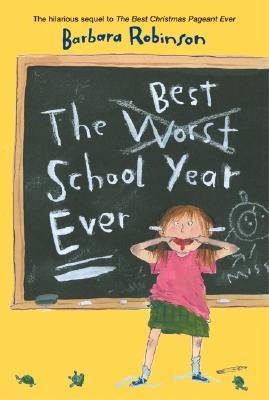
The Best School Year Ever - The Herdman's #2 (Barbara Robinson)

727428

I came across this book by chance. I read The Best Christmas Pageant Ever and loved it. I have always wanted to do it for grade 3 book club, but I figured the slang on the real Christmas story might not fly very well with everyone in school. This one has the same hilarity and would totally work for grade 3 book club! It even has a bit of character attached to the story with the teacher's year long assignment to make a list of positive traits about everyone in the class.

This book reminded me of sitting around listening to my aunt and uncle and their kids talk about funny stories in their insurance adjusting business.....matter of fact stories with hilarity attached.

Goodreads says:

The Worst Kids in the History of the World!

When anything goes wrong at Woodrow Wilson Elementary School, from the hexing of Bus Six to the mysterious disappearance of the kindergarten gerbil, it's sure to have a Herdman behind it. The Herdmans are more than famous -- they're outlaws. They smoke cigars, lie, and set fire to things, and that's only when they bother to come to school!

Then a school project forces the students to think of compliments for all their classmates -- including the Herdmans. Is it possible that behind their outrageous pranks there may be something good about this crazy clan after all?


Tuesday, December 26, 2017

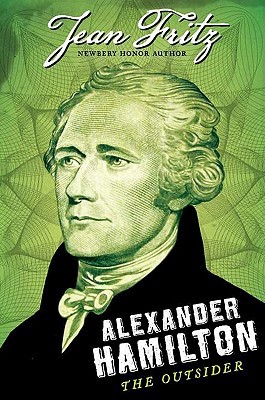
Alexander Hamilton (Jean Fritz)

9417995

Now I want to see the play! After I finished reading this, I spent time listening to the songs on YouTube from the musical.

This was a good short version of Alexander Hamilton's life. It was a quick read. The subtitle, 'The Outside' was a good one. He was an outsider because his parents never married, because his step brother took what he loved, was poor but found a way to get a good education and was a great leader in the early years of the US government. The musical starts off with:

How does a bastard, orphan, son of a whore and a Scotsman, dropped in the middle of a forgotten spot in the Caribbean by providence impoverished, in squalor grow up to be a hero and a scholar?

I loved reading about how he loved to learn and how aggressive he was about it. He would get up early and read and then go walking and work on memorizing the information he had read by reciting it. People thought he was a little crazy when they saw him walking and talking to himself.

I enjoyed reading about how banks started. Many people thought they were akin to gambling and would rather be seen in a brothel than a bank....perhaps still a legit concern. :)

In the end, he died in a duel, just a few years after his son died the same way. I thought it was bizarrely dumb way for such a smart guy to die.


When I read books like this, I wish someone had written some similarly great stories about people in Canadian history!

Goodreads says:

Acclaimed biographer Jean Fritz writes the remarkable story of Alexander Hamilton, one of America's most influential and fascinating founding fathers, and his untimely death in a duel with Aaron Burr.

Born in the British West Indies, Hamilton arrived in New York as an "outsider." He fought in the Revolution and became Washington's most valuable aidede- camp. He was there with Washington, Madison, and the others writing the Constitution. He was the first Secretary of the Treasury as the country struggled to become unified and independent.

Fritz's talent for bringing historical figures to life is at its best as she shares her fascination with this man of action who was honorable, ambitious, and fiercely loyal to his adopted country.

Tuesday, June 27, 2017

Book of Big Brothers (Cary Fagan)

Everyone should write a story like this and share it with their kids. Fun!

Goodreads says:

In this episodic tale that's rich with Cary Fagan's characteristically dry humor, a boy tells the story of his life with two older brothers. When he is only a week old, his brothers argue over who can hold him first and drop him onto the porch. But they aren't all bad: they chase away the mean girls who call him names, and they perform a play starring the neighbor's dog to cheer him up when he has the measles. Later on these troublesome boys set fire to neighbor's tree, play football in the living room, and even attempt to ride their banana bikes all the way to the Rocky Mountains. Inspired by Cary Fagan's childhood experiences, this story is a spot-on portrayal of the crazy, mishap-filled, yet undeniably fun and affectionate life in a family with three boys. Luc Melanson's wonderfully lively and extremely funny retro-style illustrations are a perfect complement to the text.

Wednesday, March 30, 2016

I Know Why the Caged Bird Sings (Maya Angelou)


This is one of those books I had thought I should read for a long time. It's also a book that it's great that we read it for book club because I got so much more out of discussing it than just reading it on my own. Some books do not foster a lot of discussion. This book is the exact opposite! There were so many themes to discuss. At our book club meeting, we didn't really get past segregation and prejudice. Those are big ones! 

Other potential great discussions:

Home: Maya and her brother live in many different homes. They are mainly raised by their grandma but have times where they try living with their mother and with their father, who are not together. Many pivotal moments occur because of their lack of a "home".

Rising from the ashes: Maya isn't penned in by the beliefs of society and the people around her. She is matter of fact about her optimism to do anything anyone else can do.

Matriarchal Society: Men in this story are not positive role models in Maya's life (except for her brother, Brother and her Uncle). Women forge on and succeed despite their place in society.

Literature: Books save Maya. Her first love is William Shakespeare. She is well read and highly influenced by literature.

Beauty: Maya thinks she is ugly. She wishes to be whiter in order to be more beautiful. 


I think we could have had a couple of book club meetings on this book!


Sent by their mother to live with their devout, self-sufficient grandmother in a small Southern town, Maya and her brother, Bailey, endure the ache of abandonment and the prejudice of the local "powhitetrash." At eight years old and back at her mother’s side in St. Louis, Maya is attacked by a man many times her age—and has to live with the consequences for a lifetime. Years later, in San Francisco, Maya learns that love for herself, the kindness of others, her own strong spirit, and the ideas of great authors ("I met and fell in love with William Shakespeare") will allow her to be free instead of imprisoned.

Poetic and powerful, I Know Why the Caged Bird Sings will touch hearts and change minds for as long as people read.
 

Goodreads summary about Maya's life:

Maya Angelou, born Marguerite Ann Johnson April 4, 1928 in St. Louis, Missouri, was an American poet, memoirist, actress and an important figure in the American Civil Rights Movement. In 2001 she was named one of the 30 most powerful women in America by Ladies Home Journal. Maya Angelou is known for her series of six autobiographies, starting with I Know Why the Caged Bird Sings, (1969 which was nominated for a National Book Award and called her magnum opus. 

Thursday, March 3, 2016

Alexander, Who Used To Be Rich Last Sunday (Judith Viorst)


I love this story. My students could totally relate to the problem of wanting to buy stuff the minute you have money in your pocket. When he talks about how hard it is to save your money there was lots of nodding in agreement.

The interactions with Alexander's brothers made everyone giggle a little.

After a few minutes, however, someone did suddenly have a light bulb moment about how inexpensive things are in this story! He can buy a lot just with $1! And who even uses pennies anymore? We don't! I'm thinking someone needs to update this story a little bit.

This would be a good story for talking about how little things make a big difference and how sometimes you just have limited resources. You could also talk about the value of money and why it's good to wait before you buy the first thing that comes along. The story isn't preachy at all. It is very relate-able.


Last Sunday, Alexander's grandparents gave him a dollar -- and he was rich. There were so many things that he could do with all of that money!
He could buy as much gum as he wanted, or even a walkie-talkie, if he saved enough. But somehow the money began to disappear...
Readers of all ages will be delighted by this attractive new edition of Judith Viorst's beloved picture book.


Tuesday, January 27, 2015

Monkey Me and the Pet Show (Timothy Roland)

 
This is an interesting story. It's about two siblings who are twins. The boy can't control himself sometimes. When he gets really excited he jumps up and down and runs around and generally acts crazy - and turns into a monkey. It made me wonder if this is a commentary of sorts on the tendancy of more boys to be diagnosed with ADHD than girls. The sister in the story always tries to get him to settle down and act in socially acceptable ways - but he just can't help himself. He acts like a monkey - and actually does turn into one, thanks to a banana he ate at a science lab.
 
The story is cute and the pictures are simple. It is part of a new series of easy chapter books that Scholastic has published. My class loves them.
 
When Clyde gets excited, he brings a whole new meaning to "monkeying around!"
This series is part of Scholastic's early chapter book line called Branches, which is aimed at newly independent readers. With easy-to-read text, high-interest content, fast-paced plots, and illustrations on every page, these books will boost reading confidence and stamina. Branches books help readers grow!
Clyde is an energetic student who just can't sit still. When he gets too excited, he transforms into a real monkey! When the class bully challenges Clyde's "monkey me" to the pet talent show, he has no choice but to participate. But when the other pets start to disappear, Clyde uses his inner monkey to save the day.


Monday, January 19, 2015

The Troublemaker (Lauren Castillo)


The beginning of this story looks like there's a little boy who is causing trouble. Turns out he is getting blamed for the work of a tricky raccoon!

We will have to remember this one when we are doing our City Wildlife unit in Open Court.

Goodreads summary:
Bored and restless on a summer day, a little boy steals his sister’s bunny and sends it on an adventure. He is well satisfied with the results—until his own stuffed animal disappears. Could it be that he is not the only troublemaker around . . . ?

     A case of sibling rivalry is neatly resolved with the “assistance” of a hilarious raccoon in Lauren Castillo’s warm, simple text and gorgeous classic illustrations.

Monday, June 2, 2014

The Legend of Spud Murphy (Eoin Colfer)

This is a hilarious story. Will and Marty Woodman are 2 of 5 boys in a family. The parents decide there is enough craziness at home and the two of them, since they're the oldest, need to do something a little more productive with their time - so off to the library they go. They're scared to spend any time at the library because of the legendary very scary librarian, Spud Murphy. She doesn't just have eyes in the back of her head, she has spidey senses that tell her when kids misbehave in the library. Even the best prankster can't prank her.

This is a short chapter book, perfect for kids who are just getting into reading chapter books. There's lots of humor and brotherly ribbing to keep any younger elementary boy's interest peaked! I love the lesson in this book: libraries really are great places and librarians aren't as scary as some think.

Monday, March 24, 2014

Crow Lake (Mary Lawson)


I loved this book. This is a simple yet beautiful story. I found myself slowing down as I read to be sure I didn't miss any subtleties. The complexities of family relationships and perception as they move through life with all of it's tragedies and changes were very real. This is a book worth reading again. 

Re-read Sep 2021: It's very much about understanding one's past and figuring out how to shuffle those memories and affects into one's present. The main character really struggles with understanding her past after trauma as a child and how to include her past in her current life.
The copy I had was from the library and someone prior to me had scribbled notes in the margins. I wish I could figure out what the notes meant. It really gave me pause for thought as I was reading.
Interestingly, many of the passages I marked to record, were the ones I had marked last time.
I loved this book just as much the second time as I did the first.

Goodreads Summary:
Crow Lake is that rare find, a first novel so quietly assured, so emotionally pitch perfect, you know from the opening page that this is the real thing-a literary experience in which to lose yourself, by an author of immense talent.

Here is a gorgeous, slow-burning story set in the rural "badlands" of northern Ontario, where heartbreak and hardship are mirrored in the landscape. For the farming Pye family, life is a Greek tragedy where the sins of the fathers are visited on the sons, and terrible events occur-offstage.

Centerstage are the Morrisons, whose tragedy looks more immediate if less brutal, but is, in reality, insidious and divisive. Orphaned young, Kate Morrison was her older brother Matt's protegee, her fascination for pond life fed by his passionate interest in the natural world. Now a zoologist, she can identify organisms under a microscope but seems blind to the state of her own emotional life. And she thinks she's outgrown her siblings-Luke, Matt, and Bo-who were once her entire world.
In this universal drama of family love and misunderstandings, of resentments harbored and driven underground, Lawson ratchets up the tension with heartbreaking humor and consummate control, continually overturning one's expectations right to the very end. Tragic, funny, unforgettable, Crow Lake is a quiet tour de force that will catapult Mary Lawson to the forefront of fiction writers today.


--------------------------------------------------------
Good quotes: 

p. 3

My great-grandmother Morrison fixed a book rest to her spinning wheel so that she could read while she was spinning, or so the story goes. And one Saturday evening she became so absorbed in her book that when she looked up, she found that it was half past midnight and she had spun for half an hour on the Sabbath day. Back then, that counted as a major sin.

---

Just after Laurie Pye runs away from his abusive father:

(P. 216) Nothing to do I with us. That is what I thought. I didn't know that the Pyes' story was already starting to converge with our own. No one knew. We were all bumbling along, the Morrisons and the Pyes and the Mitchells and the Janies and the Stanoviches and all the others, side by side, week in, week out, that our paths similar in some ways and different in others, all apparently running parallel. But parallel lines never meet.


----

P. 221 Laurie was just one more dropped stitch in a family tapestry already full of holes.

---

p. 272 On shuffling the past in with the present:
But although I had not wanted him to come, granted that he was here I found that I wanted him beside me. I wanted him to be a buffer between me and the rest of them. He was my present. If he was there, then perhaps the past would not spread out in the night and overwhelm me. Besides, I thought, A shade defiantly, what right had Matt, of all people, to pass judgment? Silly, I know. It would never occur to him to judge me.

---

p. 282 Daniel said, "Well, I agree with you about one thing, Kate. I do think there's a tragedy here. But I don't think it's what you think it is."

.......He wiped his hand on his shirt and retrieved his coffee and said, "You'll say I don't understand, just like you think Marie doesn't understand, but I think I do. Some of it anyway. Your family's had a real struggle, all those generations and everything, all of you striving toward this great goal. And Matt's obviously brilliant, anyone can see that. So I can see it was a disappointment. He had his chance and he blew it, Which is a real shame."

He gave me a brief, almost apologetic smile. "But it's just a shame. It's not a tragedy. It makes no difference to Matt is. Can't you see that? No difference at all. The tragedy is that you think it's so important. So important you're letting it destroy the relationship the two of you had."

He must have seen my incredulity, because he hesitated, eyeing me uneasily. He said, "I'm not trying to say it doesn't matter to him, Kate - that he's miraculously discovered that he loves farming, so it's all turned out for the best, or some crap like that .I'm not saying that. I'm just saying that from what you've told me about him and what I've seen of him, my guess is that he came to terms with it a long time ago. The problem is, you didn't. And as a consequence, he's lost what he had with you. That's the real tragedy.

Strange how parts of your brain can continue to function normally when other parts have come to a dead stop. I could hear Matt and Simon's voices; I saw the car getting nearer; in the distance a couple of crows were quarrelling; my brain recorded it all faithfully. But within me, for a long moment, there was total silence. A paralysis of the mind. And then gradually things started up again, and with the return of conscious thought came an absolute flood tide of disbelief, confusion and furious resentment. Daniel, of all people, an outsider, a guest, who had dragged the story out of me, who had known Matt scarcely twelve hours. That he could look at our lives and casually, carelessly, knowing nothing about it, come to such a conclusion. I could hardly believe that I had heard time right - hardly believe that he had said it.

---

p. 289 I suppose the real question is not why I saw it then, but why I didn't see it years ago. Grand-Grandmother Morrison, I accept that the fault is largely mine, but I hold you partly to blame. It is you, with your love of learning, who set the standard against which I have judged everyone around me, all my life. I have pursued your dream single-mindedly; I have become familiar with books and ideas you never even imagined, and somehow, in the process of acquiring all that knowledge, I have managed to learn nothing at all.

---
p. 290

I would like to be able to say that I threw myself into the spirit of it all, but the truth is, I still felt a bit dazed. A bit abstracted. It's going to take time, I guess. If you've thought a certain way for many years, if you've had a picture in your mind of how things are and that picture is suddenly shown to be faulty, well, it stands to reason that it will take a while to adjust. And during that time, you're bound to feel...disconnected. Anyway, that was how I felt, and still feel, to some degree. What I would really have liked to do was sit quietly somewhere, preferably under a tree, and watch the goings-on from a distance. In particular, watch Matt. Let my eyes absorb this new view of him, this new perspective on our lives.

Wednesday, July 3, 2013

Three Little Pigs: An Architectural Story(Steven Guarnaccia)

Goodreads summary:

In this quirky, artsy retelling of "The Three Little Pigs,” the pigs and their homes are nods to three famous architects—Frank Gehry, Phillip Johnson, and Frank Lloyd Wright—and their signature homes. Each house is filled with clever details, including furnishings by the architects and their contemporaries. Of course, not all the houses are going to protect the pigs from the wolf’s huffing and puffing. Which one will? The wolf, and readers, are in for a clever surprise ending.

This book would be a great one for our Structures and Design unit! It would be interesting to teach them about the three great architects mentioned in the book (Frank Gehry, Phillip Johnson, and my personal favorite: Frank Lloyd Wright). Frankly, I think this book would be a great one for all ages)


Saturday, May 4, 2013

The False Prince (Jennifer Nielsen)


I've been listening to The False Prince on CD. What an awesome story! My 11 year old son joined in about half way through and didn't take long to get hooked either. Soon he took the CD case and was listening from the beginning.

I was pretty hooked from the beginning with this story. There are plenty of twists to keep you surprised and hooked on continuing the story. When I got to the end of the CD's I quickly got on the library website to get the 2nd book.

The story is about a kingdom where all the royal family has been killed. A Lord in the court decides to avert a civil war he will find someone to pose as the prince and take the throne. He kidnaps three orphans. Why orphans? Because no one will miss them, of course. They have two weeks to train and compete to become the heir to the throne.

I have to go get book 2 right away. This is a great series. I think it will be a great one for our Gr. 3 book club!


Tuesday, January 15, 2013

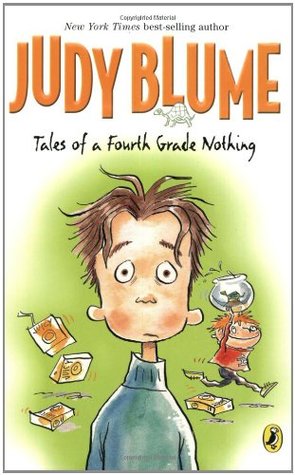
Tales of a Fourth Grade Nothing (Judy Blume)

232100

February 12, 2018:

We just read this for Grade 3 Book Club. Most of the students loved the book. It was definitely our best attended meeting. There were about 27 kids there. Interestingly, I just found out that yesterday was Judy Blume's birthday! We sent her a happy birthday tweet.

Most of the kids really liked the book. The few that rated it lower than 7 did so because they said it was just a little too crazy an attempt at humor. I thought that was quite insightful. One of the students read the entire Fudge series and it was great to hear her thoughts on it. She said the books get better as they go. I guess I'll have to read the rest.


From Jan 15, 2013:

I just finished reading Tales of a Fourth Grade Nothing aloud to my class. It is laugh out loud, bust a gut stuff for 8 year olds. I read to my class while they're eating their lunches. I always dismiss kids first who want to use the washroom. The rest get their lunches and we start into the book. It's so fun to see how they really hurry down to the washroom and back because they don't want to miss any of the story.

This book is a number of vignettes about Peter and his little brother Fudge. Fudge is a pain in the neck to Peter. He's always getting in his stuff and wrecking things. Kids can totally relate to Peter because, even if they don't have a younger sibling, they've hung around little kids that are a pain.

Love this book!