Showing posts with label Canadian history. Show all posts

Saturday, January 10, 2026

If I Couldn't Be Anne (Kallie George)


Lovely. This spoke to my heart. Anyone who loves Anne of Green Gables will also love this book. 

Goodreads says:

A beautiful read-aloud picture book about the power of the imagination, inspired by the best-selling Anne of Green Gables.

In this whimsical and magical picture book, Anne's boundless imagination takes flight! She imagines being all the things she loves so dearly. If I Couldn't Be Anne, Anne with an ewhat would I be . . . Anne wonders what it would be like to be the wind dancing round the treetops. A tightrope walker, breathless and brave. A princess in a palace made of apple blossoms. A magical frost fairy or a plain little wood elf. . . . But even as Anne's imagination soars far and wide, she comes back down to earth, recognizing that some things - like friendship! - are even better than the imagination.

With adorable illustrations, and a heartfelt message, this picture book is a perfect read-aloud introduction to L.M. Montgomery's beloved Anne and will delight her brand-new fans and lifelong readers alike.

Monday, March 25, 2024

So Loud! (Sahar Golshan)


Cute story about a girl who has a strong voice. Reminds me of some of my students! 
Lesson: it's okay to be yourself! 

Goodreads says:

A fun and touching debut that explores the power of finding your voice.

Rudābeh (Rudy for short) loves to talk, sing, jump and shout. There’s just one problem: the adults in her life are always telling her that she is SO LOUD. When her grandmother (Māmān Bozorg) visits from Iran for the first time, Rudy worries that she might be too loud for her. But as she tries to be quieter, Rudy starts to feel less and less like herself. Listening closely to the many sounds in her world—from husky howls and streetcar chimes to Māmān Bozorg’s roaring sneezes—Rudy tries to figure out the full range of her own voice, discovering along the way the joy in being loud.

With exuberant illustrations by Shiva Delsooz, this charming story will resonate with readers who love to make noise and are still learning where and when to take up space.

Tuesday, October 18, 2022

The Innocents (Michael Crummey)


Honestly, I didn't finish reading this. I found it depressing and cold and even though I kept hoping something would happen that would compel me to read more....I finally just gave up. This book was for my book club and I was hoping when I went to the meeting I could get some inspiration to finish it. No luck. 


I did admire their ability to survive while alone and in such a brutal climate. I think there's an interesting connection in there somewhere between these children and the story of Adam and Eve (even their names....Ada and Evered). Ada's apple was a relic found and taken that she shouldn't take. 


There are too many good books in the world to continue reading ones I don't love.

Goodreads says:

From prizewinning author Michael Crummey comes a spellbinding story of survival in which a brother and sister confront the limits of human endurance and their own capacity for loyalty and forgiveness.

A brother and sister are orphaned in an isolated cove on Newfoundland's northern coastline. Their home is a stretch of rocky shore governed by the feral ocean, by a relentless pendulum of abundance and murderous scarcity. Still children with only the barest notion of the outside world, they have nothing but the family's boat and the little knowledge passed on haphazardly by their mother and father to keep them.
Muddling though the severe round of the seasons, through years of meagre catches and storms and ravaging illness, it is their fierce loyalty to each other that motivates and sustains them. But as seasons pass and they wade deeper into the mystery of their own natures, even that loyalty will be tested.
The Innocents is richly imagined and compulsively readable, a riveting story of hardship and survival, and an unflinching exploration of the bond between brother and sister. By turns electrifying and heartbreaking, it is a testament to the bounty and barbarity of the world, to the wonders and strangeness of our individual selves.
 

Thursday, February 20, 2020

Brick by Brick (Charles Smith Jr)

I picked this book to read because it is about a great structure my students are often interested in. It brought about a whole different conversation though! We had just read a book from a series called Girls in Science and my students asked why they always write about girls in science and math. I told them that girls used to never go into jobs for people good at math and science. We started talking about lots of other things girls also used to not be able to do. They asked why it was this way and I said, "I don't know, but one day someone asked the same question. They said why is it this way? This is dumb." Because of this, people started changing what they thought girls and women could do. Then I told them, "If you think girls had it bad, you should read this story!" We had a very interesting discussion about racism, slavery and the history of it all. At the end of the book, it says that the British burned down the first White House. I told them that this was before Canada was a country and so it was the people who lived in Canada before it was formed that burnt down the White House. That brought about another interesting discussion on politics and working well together and more. What a great discussion. One student said, "This is why I love reading so much! This is so interesting."

I agree my dear student. I agree!


Goodreads says:

The president of a new country
needs a new home,
so many hands work
together as one.

Black hands,
white hands,
free hands,
slave hands.

In this powerful story of the building of the White House, Coretta Scott King Award winners Charles R. Smith Jr. and Floyd Cooper capture the emotion and toil that created this incredible structure, the home of our president. The White House was created by many hands, several of the slaves', who will be remembered throughout history for their extraordinary feat. Many slaves were able to purchase their freedom after earning money from learning a trade through this work, which speaks to their unbelievable strength. The title reflects how this towering symbol of America was created by hand, human hands, working toward their freedom, brick by brick.
 

Wednesday, July 17, 2019

Who Has Seen the Wind (WO Mitchell)


On Goodreads, I gave this book a 3. Part of me says, who am I to give this a 3?! It's a classic that many people love. I didn't really love it. However, I also didn't hate it. I feel like it is one of those books that I would need to read again and again and discuss with other people who really gain a good appreciation for it. It rambled and I found it hard to follow. There were a ton of characters in the book and I had a hard time keeping them all straight.

I read this with my book club and the meeting was last night. After discussing it, I did find more reasons to appreciate it.

Favorite quotes:

p. 176 And when she was through, he looked down at her with his face slightly wry and ever so tender. What did you expect? You don't expect to be taken seriously, do you? You're only a schoolteacher. You're not the mayor, the banker, a businessman; you're not the wife even of a property owner. What you should do is pick a man of weight in town, marry him, then go to work.


Goodreads says:

When W.O. Mitchell died in 1998 he was described as “Canada's best-loved writer.” Every commentator agreed that his best – and his best-loved – book was Who Has Seen the Wind. Since it was first published in 1947, this book has sold almost a million copies in Canada. 

As we enter the world of four-year-old Brian O’Connal, his father the druggist, his Uncle Sean, his mother, and his formidable Scotch grandmother (“she belshes…a lot”), it soon becomes clear that this is no ordinary book. As we watch Brian grow up, the prairie and its surprising inhabitants like the Ben and Saint Sammy – and the rich variety of small-town characters – become unforgettable. This book will be a delightful surprise for all those who are aware of it, but have never quite got around to reading it, till now.

Friday, November 16, 2018

Rockbound (Frank Parker Day)


This is another one of those books I would have never read if it weren't for Book Club, however, I'm glad I read it.

Truthfully, I found it hard to follow. The dialogue made it especially difficult and I found myself needing to read it aloud to even come close to understanding it. I'm not patient enough to read and re-read lines to try to figure it out. The accept though was really reminiscent of how my husband talks about Nova Scotia from the time he spent there on his mission.

Apparently, when the book was written, people from the area were angry about it because they felt like they were portrayed negatively. I can see why they'd feel that way. The superstition, the lack of education and survival mentality is heavy. I did love the parts about the teacher coming to the island and David wanting to learn to read. I'm not sure he was really successful though.

The Maritimes is a harsh and unforgiving place. Interestingly, it continues. This was a news article from today:

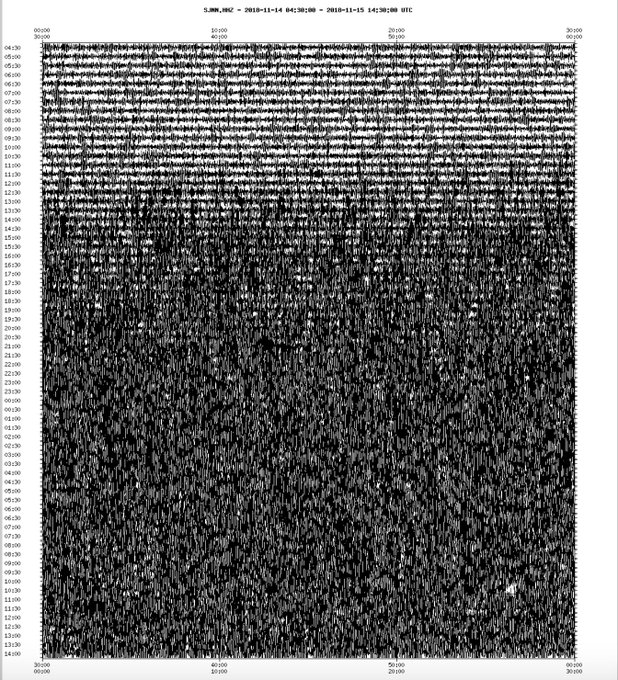
Seismic records show Newfoundland was literally shaking from wind and waves

Seismometer in St. John's shows how intense Thursday's winds were

Heavy seas crash into the land at the Drook, a spot on the road to Cape Race. (Submitted by Clifford Doran)
The waves crashing into the rugged shoreline of Newfoundland and Labrador this week led to waves of a different kind.
The squiggly black lines produced by a Natural Resources Canada seismometer show the seismic activity of a vicious windstorm that whipped across the province on Wednesday and Thursday.
The wind and waves were so strong, the island was shaking.
"What we saw over the past 48 hours was quite a dramatic change in [activity]," said John Cassidy, an earthquake seismologist with Natural Resources Canada. 
"It was very noticeable and in our seismic data, our plots, it just jumped off the page. You could just see that shaking."
The federal government has seismometers — tools that measure earth movements — all across the country.
Cassidy said each year, a handful of storms will produce winds and waves strong enough to record seismic activity on the east and west coast.
And over time, as these weather events impact older infrastructure, it just breaks down.- Randy Oram, Karwood Homes
With winds gusting between 100 and 140 km/h, the conditions were just right to get the Rock rocking.
"It's that combination of the wind, that incredible wind, and the waves that were hitting the island," Cassidy said. 
"Both of those, the waves and the wind, gets trees shaking, rocks shaking ... And all of that can be recorded by our seismometers on the island."

Homebuilders association reacts

Randy Oram, president of the Newfoundland and Labrador branch of the Canadian Home Builders' Association, said people have to prepare for these earth-quivering storms to be the new normal.
There was damage reported to home and businesses across the province, but Oram said his company, Karwood Homes, has yet to receive any reports of damage.
When asked why some homes suffer damage and others go unscathed, Oram said it has to do with location and age.
"With these weather events, some of the extremes can be localized," he said. "And over time, as these weather events impact older infrastructure, it just breaks down."​
Oram said the industry is changing as the weather worsens, and contractors need to keep up with the standards.
"You look at shingles we were using 15 years ago, they were rated for 97 km/h winds. What we're using nowadays, 210 kilometres is what they're rated for. As climate change happens, building products advance."
It was very noticeable and in our seismic data, our plots, it just jumped off the page. You could just see that shaking.- Seismologist John Cassidy
 
Randy Oram, president of the Newfoundland and Labrador branch of the Canadian Home Builders' Association, said standards are changing to meet climate change. (Paula Gale/CBC)
Part of the industry is regulated by Natural Resources Canada, which is currently working on a five-year project on adaptations to home building for climate change.
Where it used to study historical weather events, Natural Resources Canada is now trying to model future storms and set standards based on what is expected to happen, Oram said.
"They're actually looking at where the weather is going in the future, and testing new products and codes for the future."
With files from the St. John's Morning Show

Friday, July 14, 2017

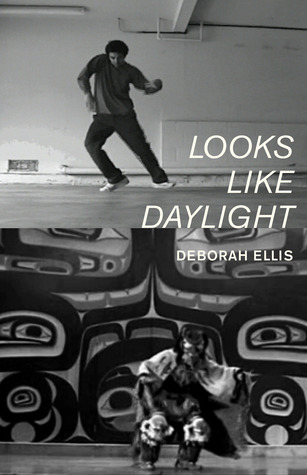
Looks Like Daylight (Deborah Ellis)

Earlier in the Spring, I went to what I thought was a reading at the Calgary Public Library. It was during the Children's Festival and Deborah Ellis was a speaker! I was so excited to go listen to her. It turned out it really wasn't about Deborah Ellis. It was about students who are doing cool projects in Calgary to better the world. Their projects were centered on First Nation's issues. I found it all quite inspiring. After the presentations, I asked Deborah Ellis if she'd ever considered writing a book about First Nations and it turns out she had! I got straight on to the library website to get a copy of the book.


17318672


This isn't a novel. It is interviews with First Nations youth that Deborah Ellis had met over the course of two years. Each chapter is a different story. Stories are told in first person. After a while, I figured I got the gist of the book, but something told me I should continue on. After reading story after story after story, there is a great impact on the reader's heart. There are so many amends to be made for all the First Nations people have gone through. I think they will rise up though. I feel like times are changing for their entire culture. Perhaps that is why it is called Looks Like Daylight. The last page is a story about Waakekom, an Ojibwe boy who is 16 from Saugeen First Nation in Ontario. He says:

 “My spirit name (“Waasekom”) means ‘when it’s night and lightning fills the sky and it suddenly looks like daylight,’”.

Like she has in the past, all the royalties from this book go to the First Nations Child and Family Caring Society of Canada (www.fnccaringsociety.com)

Some parts that really struck me:

p. 117 The US government referred to the Cochtaw Nation as one of the Five Civilized Tribes, along with the Cherokee, Creek, Chicksaw and Seminole. They were called civilized because many had begun to adopt European ways - living in log cabins, wearing European style clothing and attending school. But in 1829, President Andrew Jackson decided that assimilation wasn't good enough. He launched a plan to remove all Native Americans from the US South to places west of the Mississippi River. The idea was to move 60,000 Native Americans who had been living in the Eastern Woodlands since time immemorial and put them in an area vastly unsuited to their traditional way of life. The bulk of the Five Tribes were rounded up at gunpoint and then forced to walk, leaving behind farms and homes. One in four died along the way.


p. 151 Lacrosse originated with the people of the Ongwahonwe Haudenosaunee, or Six Nations, the people of the Longhouse....also known as The Ancient Game/the Creator's Game, its purpose was- and still is-spiritual. It's offered up to the Creator asa prayer for healing or as an expression of gratitude. Some people are given miniature lacross sticks when they are born, & when they pass, a lacrosse stick is placed beside them. 

*Lacrosse = Canada's National Sport


p. 175American Indians have a higher percentage of enrollment in the armed services than any other group. The first Native American recipient of the Medal of Honor (1869) was Co-Rux-Te-Chod-ish, or Co-Tux-Kah-Waddle, who served with the Indian Scouts. In WWI, a law was passed requiring all Native American men to register for the draft even though they were not considered citizens and could not vote .Many thousands voluntarily joined the military. Many others protested this law. In Utah, for instance, the protests were so vehement that the army was called in to stop them.More than 44,000 Native Americans served in WWII, where Navajo Code Talkers played a pivotal role. Ten thousand served in Korea and 42,000 in Vietnam. Ten thousand of those who have served have been women. 18,000 have been sent to Iraq or Afghanistan. First Nations people in Canada have also served with great distinction.In Canada, Aboriginal veterans were for a long time not entitled to the same benefits granted to soldiers of European descent. Native veterans were told that since they were not considered Canadian citizens (First Nations people did not obtain the right to vote until 1960), they were not eligible for veterans' benefits. And it wasn't until 1992 that Aboriginal vets were allowed to lay a wreath at the National War Memorial in Ottawa on Remembrance Day.At powwows, veterans are treated with special respect, and a ceremonial dance is done in their honor.


Goodreads says:

After her critically acclaimed books of interviews with Afghan, Iraqi, Israeli and Palestinian children, Deborah Ellis turns her attention closer to home. For two years she traveled across the United States and Canada interviewing Native children. The result is a compelling collection of interviews with children aged nine to eighteen. They come from all over the continent, from Iqaluit to Texas, Haida Gwaai to North Carolina, and their stories run the gamut — some heartbreaking; many others full of pride and hope.


You’ll meet Tingo, who has spent most of his young life living in foster homes and motels, and is now thriving after becoming involved with a Native Friendship Center; Myleka and Tulane, young artists in Utah; Eagleson, who started drinking at age twelve but now continues his family tradition working as a carver in Seattle; Nena, whose Seminole ancestors remained behind in Florida during the Indian Removals, and who is heading to New Mexico as winner of her local science fair; Isabella, who defines herself more as Native than American; Destiny, with a family history of alcoholism and suicide, who is now a writer and powwow dancer.


Many of these children are living with the legacy of the residential schools; many have lived through the cycle of foster care. Many others have found something in their roots that sustains them, have found their place in the arts, the sciences, athletics. Like all kids, they want to find something that engages them; something they love.


Deborah briefly introduces each child and then steps back, letting the kids speak directly to the reader, talking about their daily lives, about the things that interest them, and about how being Native has affected who they are and how they see the world.


As one reviewer has pointed out, Deborah Ellis gives children a voice that they may not otherwise have the opportunity to express so readily in the mainstream media. The voices in this book are as frank and varied as the children themselves.
 

Thursday, May 25, 2017

The Darkest Dark (Chris Hadfield)

This is a beautiful book! It is by the astronaut, Chris Hadfield. It talks about his fear of the dark, being inspired by other astronauts and overcoming his fear of the dark. And best of all: he has a pug!

After, we watched some great videos about experiments and life in space.

 Chris Hadfield is very inspiring. And best of all, he is a great advocate for literacy. McLeans's magazine wrote a great article about him.

“For the first time, Chris could see the power and mystery and velvety black beauty of the dark.

And, he realized, you’re never really alone there.
Your dreams are always with you, just waiting.
Big dreams, about the kind of person you want to be.”


Goodreads:

Inspired by the childhood of real-life astronaut Chris Hadfield and brought to life by Terry and Eric Fan's lush, evocative illustrations, The Darkest Dark will encourage readers to dream the impossible. 
Chris loves rockets and planets and pretending he's a brave astronaut, exploring the universe. Only one problem--at night, Chris doesn't feel so brave. He's afraid of the dark.
But when he watches the groundbreaking moon landing on TV, he realizes that space is the darkest dark there is--and the dark is beautiful and exciting, especially when you have big dreams to keep you company.
 

Friday, March 17, 2017

Emma and the Silk Train (Julie Lawson)

A great little piece of Canadian historical fiction! It was a great way to introduce this genre to my students. There is some great vocabulary in here as well.

My students were totally captivated by the story. They had a lot of questions after. I didn't know about silk trains at all so this was a learning curve for myself too!

Goodreads summary:

A young girl's longing for a piece of silk almost leads to disaster when she risks her life to recover a length of fabric from the churning waters of a river.

Wednesday, March 2, 2016

One Hockey Night (David Ward)


I already cried over one hockey book! Here's another one that could make you cry if you don't take deep breaths (I handled it today quite well) :)

My students LOVE hockey stories. They're so Canadian. They're so relate-able. This one is about a family that moves from Saskatchewan to Nova Scotia (Oh! Immediately lots of hands go up with stories of Saskatchewan and Nova Scotia). My students love to hear names of places they know when we read books. This story ends with, "It's hockey night in Kettle Harbour!" My students got the connection to the pre-amble to Hockey Night in Canada immediately.


For Owen, winter is all about hockey. It’s December, and his family has just moved to the east coast. He’s shovelled snow. He’s practised shots in the driveway. But he hasn’t skated on ice. Now it’s Christmas Eve, and it’s time for a secret to be revealed! 

A hockey story – and a holiday story – with a heartwarming Canadian setting.

Tuesday, June 16, 2015

The Journal (Lois Donovan)


Although I find time travel a little silly, I think it works in this book. It is kind of like a Magic TreeHouse book, only this is for middle school aged kids. Lois Donovan's other book involves time travel too. 

I loved reading about The Famous Five. There was plenty to learn and appreciate about this story. Unfortunately, I think it is a little too old for my grade 3 students, but would be great for middle school!

GoodReads summary: 


Kami's grade-eight year in Vancouver is off to a fantastic start. The senior soccer team. A birthday bash to celebrate turning thirteen. This could be the best year ever! Then Kami's world crashes when a mysterious letter arrives, and her mother decides they must move to Edmonton. Lonely and upset, Kami discovers a family journal with newspaper clippings, which, upon reading, sends her hurtling back in time to 1929. Here she meets the heroic WWI flying ace, "Wop" May, as he embarks on a dangerous mission to the north. Kami then becomes involved with Judge Emily Murphy at the time when the "Famous Five" are fighting to have women recognized as "persons." But the Edmonton of 1929 is not exactly welcoming to persons of Asian heritage, and Kami encounters racial prejudice at every turn. When she also discovers a painful family secret, she begins to question everything she values and thought she knew. This is not how Kami had pictured her life as she turned thirteen. 

Although we really admire all that women like Emily Murphy did, being faced with prejudisms from that time made me squirm a little, and it would be a great discussion starter with kids: 

When Kami travels back in time she experiences the prejudicial attitudes of the day:
P. 89 Kami is talking to Emily Murphy, who has taken her in:

"I sense being a maid is distasteful to you, as though you consider yourself above that station." she paused. "You mentioned that your father is Scottish."
"His parents came from Scotland," I answered, wondering what that had to do with anything.
"Ah. Well, I can see some Scottish traits shining through, to be sure. But you are not Scottish. Not as far as society is concerned. You will always be considered Oriental. Working as a domestic, or something akin to it, is what will be available to you. Do you understand that?"
"No, I don't understand. I believe in equality. I thought you did, too."
"Kami, people arrive daily from other countries, wanting to make Canada their home. I don't blame them. It is a good country. But the fact remains that Canada is founded on British values, and those coming to our country must adhere to those British values." She began to cough, and I handed her the glass of water from her night time.
"Do British values exclude people who are Japanese?"
"Some races are known to have certain issues, shall we say, that are not in the best interest of society."

It was fascinating to read the discussions people of the 1920s had as they grappled with the idea that women might be considered persons and be allowed to vote and own land. Any reference to persons in the law at that time only meant men as women had a very defined role: working in the home and raising children. There was no need for them to vote or own anything, according to the creators of the British North America Act. Once women were considered "persons" it took two decades before Asian people were considered the same. The big question Kami struggles with is whether or not Emily Murphy was less a hero because of her prejudisms typical of the time. She decides that no one is perfect. Kami says: 

P. 180 Everyone is influenced by the society that raised them and the values they were taught. Emily Murphy fought for what she believed was right, and she left Canada a better place than she found it. If she were here today, I believe she would challenge each of us to leave the world better than we found it. What an awesome world we would have if we all followed her lead."


Saturday, June 13, 2015

The Best Laid Plans (Terry Fallis)

It's true. This is funny! I didn't think I could get into this story very well. I was pleasantly surprised.


I loved the author's story of getting this book to print as well. I listened to his podcast while I walked for some of the chapters and read others. His podcast is really well done.


Currently, with our new NDP government in place in Alberta, this is a hilarious read. A little true to life!


Goodreads summary:


A burnt-out political aide quits just before an election — but is forced to run a hopeless campaign on the way out. He makes a deal with a crusty old Scot, Angus McLintock — an engineering professor who will do anything, anything, to avoid teaching English to engineers — to let his name stand in the election. No need to campaign, certain to lose - or is he?


Tags:
Canadian Authors - Terry Fallis lives in Toronto. He went to McMaster and has won Canadian writing awards.

Canadian history - this is a story of political commentary and some history is involved
Feminism - one of the main characters, Angus, was married to a great feminist writer (she passed away months previous) and gets along well with feminists
Government
Politics
Humor - this book is seriously funny
Making a difference - Angus stays true to his ideals (something unusual for politicians, it seems)
Personal Growth - a number of characters in the story do things that are uncomfortable, but important