Showing posts with label family history. Show all posts

Saturday, June 20, 2026

The Secret Library (Kekla Magoon)


There was a lot going on in this book. The family history aspect was interesting....go back in time to learn about your family. She'd run into the same people again and again and it was confusing to keep straight who the person was and how old they were or what year it was. Time travel is not my favorite genre. It felt like maybe there should be a second book because many of the issues between Dally and her mother are not resolved - but Dailly has time traveled to the future and skipped a bunch of years (broke all the time travel rules!) so a resolution won't be possible. I thought the ending was rushed and rather incomplete.

The idea of a secret library is interesting. This is the key in the time travel - pick a book from your shelves and a cloud starts to form. Off you go! Sometimes the writing seemed quite didactic and sometimes it just wasn't conceivable at all that this is how a child would converse with people.

The main character says she's biracial but as the story ends, you discover that her mother, who is presented as a white woman, actually had a black father - something he kept hidden.  Even Dally's mother didn't know. No one knew. Oh the complexities of family history!

There was a lot of commentary on historic events. In chapter 29, she arrives at a Juneteenth celebration where her parents are, but they aren't married yet. I read this on Juneteenth....so that was a weird twist of fate. There is talk of LGBTQ issues and it's interesting to compare how the issues are viewed in the past to today, however, it was weird addition to the story and seemed like it was thrown in to make sure the author hit on all sorts of current issues: family secrets, LGBTQ lessons, weird explanations about scientific realities today, sex education (a baby is born, mother's water breaks...the whole lots of details kids don't need), segregation and racism issues as well. For an audience of 8-12 year olds, this would open a lot of questions unless they were REALLY well versed in history, which is quite unlikely. I would recommend it for readers over 12, for sure. The book banners would have a heyday with this one. Luckily, most kids didn't finish it and for those who said they did (that's questionable), clearly it was over their head.

This book was a lesson in why it's important to read the book before I suggest it for book club. This one was not a great choice. During our book club meeting we learned about resources online to research your genealogy. I logged into my Family Search account and showed them famous people I was related to. They really enjoyed that.

Goodreads says:
Since Grandpa died, Dally’s days are dull and restricted. She’s eleven and a half years old, and her exacting single mother is already grooming her to take over the family business. Starved for adventure and release, Dally rescues a mysterious envelope from her mother’s clutches, an envelope Grandpa had earmarked for her. The map she finds inside leads straight to an ancient vault, a library of secrets where each book is a portal to a precise moment in time.


As Dally “checks out” adventure after adventure—including an exhilarating outing with pirates—she begins to dive deep into her family’s hidden history. Soon she’s visiting every day to escape the demands of the present. But the library has secrets of its own, intentions that would shape her life as surely as her mother’s meticulous plans. What will Dally choose?

Equal parts mystery and adventure—with a biracial child puzzling out her identity alongside the legacy of the past—this masterful middle-grade fantasy rivets with crackling prose, playful plot twists, and timeless themes. A satisfying choice for fans of Kindred and When You Reach Me.

Tuesday, April 28, 2026

Spark (Chris Baron)


Wow. This book was an experience. The author did a fantastic job of really helping you feel the fear that is a part of events like devastating fires. I had serious feeling stirred up about how important it is to look after the environment...and being a girl who'd rather stay inside and read - that is something. The whole idea of survival - how the forest realizes that burning is a part of the natural process...and the humans have to learn to understand that as well as they live amongst the forest in areas developed where they weren't in the past.....powerful symbolism.

I'm not sure what age I'd recommend Spark for. Colby Sharp read it to his grade five students (I think anyway....or maybe he just read it himself...not sure). I'm not so sure I'd do that. If I read it aloud, there's definitely be tears and big emotions on my part. It says it's a middle-grade book - but it's one that you'd have to approach carefully because there are a lot of big and difficult issues of trauma. The scenes where they escape the fire are so well written! 

Rabbit figuring out the origin of the fire reminded me of Willowdeen arguing for science and saving the trees. I loved the connection to ancestors. Early on, Finn learns that the portrait of his great-grandfather, Phineas Katz, is important to his family—and that if the fire ever comes they should save it. Finn, the main character, is named after his grandfather. He has traits like his grandfather - liked to keep a journal and write down lists of things.

There is a black-and-white photograph above the fireplace of my great-grandfather, Phineas Katz. Everyone says I look like him: brown hair, green eyes, medium height.  Average, like someone who fits right in. His story is how our family got here. He uprooted everyone, because their home wasn't safe. On the ship, a sailor warned him he should shorten their names, so when he got to the States they could have a "normal life". But is normal, anyway, once everything in your life has changed? He disagreed, but he shortened it from Phineas. I know him as Great-Grandpa Finn. That's me, too. Phineas Katz, but everyone calls me Finn. Mom says that my great-grandfather kept a field journal. He loved to write it all down just like I do, inking everything he could about his journey. Mom says the field journal and the photograph remind us of whah=t is important, where we've come from, and what we've been through. Mom says that if the fire does ever come, we can't forget to take his portrait.

His great grandfather went in search of a "normal life"....which is what they try to get back to after the fire. 

The author is Jewish and the main character in the book is also Jewish. I read this with my Children's Lit book club and one of the other teachers told me about PJ Library...and organization that sends children (ages 0 to 5) a book every month that has Jewish characters or teaches about Jewism.  

Goodreads says:

Finn and his friend, nicknamed Rabbit, live in a rural area that's been hit hard by wildfires. Families were displaced and school was interrupted. Moreover, their beloved forest is suffering -- animals and plants haven't been able to come back, and the two friends wonder if there's anything they can do to help. Rabbit's uncle, a science teacher, is part of a study that may help bring the forest back to life, but Finn and Rabbit wonder if the forest can wait. And what if another fire comes in the meantime? They believe a small part of the forest -- the forest heart -- that survived the wildfire may hold the key to regrowth, but first, they have to find it and then convince the adults around them to listen.

For any young person who's ever felt powerless against the world, here is a story about two kids doing all they can to understand their natural world and preserve it.

Sunday, January 4, 2026

The Girl and the Mermaid (Hollie Hughes)


This is a "turning the hearts of the children to their fathers" kind of book. Storytelling through generations is beautiful.


Goodreads says:
**"An instant classic" - Lancashire Post**
**"Magical" - Inis**

Alina and her granny live in a lighthouse by the a home filled with the warmth of Granny's magical stories.

But Alina is worried. Granny's memories and stories are starting to fade away, and she doesn't know how to bring them back. Then one day, she meets a mermaid on the rocks near the lighthouse – and she's swept into a magical deep-sea adventure that will change everything.

A modern classic from the bestselling creators of The Girl and the Dinosaur.

Friday, January 2, 2026

Eyes that Speak to the Stars (Joanna Ho)


This author is just my kind of person....totally woke. Her bio says she has a passion for anti-bias, anti-racism and equity work. This is part of a series. The first book, Eyes that Kiss in the Corners is also profound.

This story made me think of the promise of turning the hearts of the children to their fathers. The boy finds power in realizing he has eyes like his father, grandfather and baby sibling. It made me think about the "Hyde eyes" in our family. That might make a beautiful picture book too.


Goodreads says:

A young Asian boy notices that his eyes look different from his peers' after seeing his friend’s drawing of them. After talking to his father, the boy realizes that his eyes rise to the skies and speak to the stars, shine like sunlit rays, and glimpse trails of light from those who came before—in fact, his eyes are like his father’s, his agong’s, and his little brother’s, and they are visionary.

Inspired by the men in his family, he recognizes his own power and strength from within.

Saturday, December 14, 2024

Holes (Louis Sacher)


This is a book that I always wondered why I hadn't read it. It's a well known book and teachers think it's great....well, those who have read it. I realized though that it was only written in 1998. No wonder I didn't read it when I was in school. It wasn't around! I did finally read it for my Grade 3 book club though.

Teaching potential:
I thought it was a great book with lots of potential for talking about literacy devices. The example, dramatic irony (when the reader knows something the characters in the story do not know) or foreshadowing (why is there an entire early chapter about a killer yellow spotted lizard?) The main character, Stanley, changes over time and is able to save his family from an inter-generational curse...which is bildungsroman (a genre that focuses on intellectual/moral growth of a character from youth to adulthood)....there's a moral development or the two main characters. Stanley and Hector start addressing each other by their real names (adults?) rather than their nicknames (Caveman and Zero).

Adult themes that could  be discussed:
Poverty and class - how some people are dealt different trials in life
Race Relations
What just and reform actually entails and how it is carried out.

Book Club ideas:
Bring shovels to put at door with a sign....Welcome to Camp Green Lake
Who said it game with quotes from the book
Watch parts of the movie and discuss it - venn diagram with holes book and holes movie
Make name tags for ourselves (first name and last name with first name spelled backwards)
TPT Coloring page

Food

Red candies for lizard eyes
Gummy words for rattle snakes
Onion dip/chips
Sploosh - cooked peaches (in a crock pot?) or peach fruit snacks in containers

Symbols in a bag
Sign: Which "hold" will you dig into? Will you find a yellow-spotted lizard, treasure or be cursed along with the Yelnats family?"
- onion (Sam's onions)
- Kate Barlow peaches
-Yellow spotted lizard toy
-Stanley's canteen of water
-Kissin' Kate Barlow's lipstick tube
-treasure box
-letter from Stanley to his mom
-fish fossil


Signposts
There is a lot of potential for Notice and Note signposts. I kept notes of some....I'm sure there's more! 

Goodreads says:

Stanley Yelnats is under a curse. A curse that began with his no-good-dirty-rotten-pig-stealing-great-great-grandfather and has since followed generations of Yelnats. Now Stanley has been unjustly sent to a boys’ detention center, Camp Green Lake, where the boys build character by spending all day, every day digging holes exactly five feet wide and five feet deep. There is no lake at Camp Green Lake. But there are an awful lot of holes.

It doesn’t take long for Stanley to realize there’s more than character improvement going on at Camp Green Lake. The boys are digging holes because the warden is looking for something. But what could be buried under a dried-up lake? Stanley tries to dig up the truth in this inventive and darkly humorous tale of crime and punishment—and redemption.

Saturday, July 13, 2024

The One Hundred Years of Lenni and Margot (Marianne Cronin)


This book just got better and better as I read. The author is a great writer. Her metaphors and literacy connections she makes side by side as she puts the character's lives' stories together are brilliant. 

It isn't often that I actually cry when reading....but parts of this book left me in a puddle.

I was left with so many questions. This book touched on our society's inability to stand by people to the end and to think that disease and disability make someone disposable. 

Although the family connections were sad, the community that came together to support each other was beautiful. The lessons in having a purpose or project in your dying days was profound.

Re: The Title: The One Hundred Years of Lenni and Margot
p. 44 In honor of my own vanity, at the bottom of my painted star, in yellow and using the thinnest brush I could find, I wrote Lenni, aged 17. Seeing this, Margot did the same. Margot, she wrote, 83, And then we put them side by side, the two stars against the dark.
Numbers don't mean a lot to me. I don't care about long division or percentages. I don't know my height or my weight and I can't remember my dad's phone number, though I know I used to know it. I prefer words. Delicious, glorious words. 
But there were two numbers in front of me that matters, and would matter for the rest of my numbered days. 
"Between us," I said quietly, "We're a hundred years old."

Characters
Linnea Pettersson (age 17)
Margot (age 83)
Dawn (counselor)
Father Arthur (minister)
Jacky -head nurse)
The Temp
Pippa (art teacher)
New Nurse - not sure why she was always referred to as New Nurse?
Lenni's mother (in Sweden most of the book)
Lenni's father
Paul (porter)
Walter and Elise and various old people in the art room
Johnny (Margot's first husband)
Meena (Catherine Amelia Houghton)
Humphrey James (Margot's second husband)
Jeremy David Star (Meena's son)
The professor Meena worked for

Words of the Wiser
p. 38 Father Arthur: Those who ask questions and return to God are better than they who never ask questions and only pay lip service to their religion.

Re: Lenni and Margot dying [see Memory Moment p. 42] Margot and I both watched her try to explain. "Your heart is beating and your eyes are seeing and your ears are hearing. You're sitting in this room completely alive. And so you're not dying. You're living. She took in Margot.  "You both are."
It simultaneously made perfect sense and no sense at all.
    (people really are uncomfortable with the idea of death, it seems!)

p. 152 "Meena was right...about not giving chase...what she said to you when you were looking for Johnny about waving someone off into their new life but not feeling the need to follow. Letting the people who need to leave, leave. Allowing them to be free."

Contrasts and Contradictions
p. 41 "What are you doing here?" she asked, and I knew she meant the Rose Room, but I think it's best to be honest, so I told her the truth.
"They say I'm doing to die."
There was a moment of silence between us as Margot studied my face. She looked like she didn't believe me.
"It's a life-limiting thing," I said.
"But you're so..."
"Young, I know."
"No, you're so..."
"Unlucky?"
"No," she said, till looking at me like she didn't believe it. "You're so alive."

p. 134 My body was taking a stand, and I sometimes had to stand with it. We were a team. Sometimes.

p. 169 We have practiced for death every night. Lying down in the dark and slipping into that place of nothingness between rest and dreams where we have no consciousness, no self, and anything could befall our vulnerable bodies. We have died each night. Or at least, we have laid down to die, and let go of everything in this world, hoping for dreams and morning. Maybe that's why my mother could never sleep - it's too much like death and she wasn't ready. So she was always walking, chasing awareness, clinging to life. Too afraid to let go, and then, years later, unable to do anything else.

Again and Again
Margo about Meena: P. 269 She always called me "Mrs. James". It was her way of reminding me of the permanence of my decisions, of reminding me she'd never change her name for a man. But my taking Humphrey's name had been very unconscious. Accidental, almost.

Tough Questions
Lenni and Father Arthur: p. 12 "...the Bible teaches us that Christ can guide you to the answer to every question."
"But can it answer an actually question? Honestly? Can you answer me a question without telling that life is a mystery, or that everything is God's plan, or that the answers I seek will come with time?"
"Why don't you tell me your question, and we will work together to see how God can help us find an answer?"
I leaned back into the pew and it creaked. The echo reverberated around the room.
"Why am I dying?"

A ha Moment

p. 64...we will have told our story, scratching out one hundred pictures intended to say, "Lenni and Margot were here."

Memory Moment
p. 42 Margot saying, "But you look so alive." [see contrasts and contradictions] triggers a memory moment for Lenni about getting in trouble at school for tearing the cover off of a book:
I think because I didn't look contrite enough, she sent me to the head teacher's office. It felt like I was being sent to the police. I was already sure that my parents would be told and that I would be in trouble forever. My palms started sweating. Even walking along the corridor to the teacher's office while everyone was in class felt wrong, like I was somewhere I ought not to be. 
There's a boy there who is also in trouble and he doesn't seem bothered at all. Suddenly, Lenni's memory moment stops:
p. 43: And that's exactly how I felt when Margot chose to break the silence by leaning toward me and whispering, "I'm dying too."
For a moment, I met Margot's bright blue eyes and I felt that we were perhaps going to be cellmates.

Notes/Quotes
p. 31 The hospital is a cruel mistress. The International Date Line run somewhere between the end of the May Ward and the nurses' station. The only way to fight Hospital Time is to never fight it. If New Nurse wanted to claim that she had been gone for only tow and a half hours, then I would let her. People start to worry if you fight Hospital Time. They ask you what year you think it is and if you remember the name of the prime minister.

p. 46 I promised Jackie I'd stop wandering around. Or wondering around. Nobody was specific about the spelling.

p. 50 Lenni: I have an urgency to have fun.

P. 132 ...they (the nurses) are the wardens and we are the prisoners, and if they get too close, the lines might become blurred as to who is captive and who is free.

p. 133 the octopus? time spent with the octopus? all the lines and poles?

p. 264 Though my soul may set in darkness, it will rise in perfect light. I have loved the stars too fondly to be fearful of the night. (old astronomer to his pupil, Sarah Williams)

p. 206 His shelves of books lined both sides of the living room. Most of them hadn't been touched since I first met him but they were all, as he insisted, essential. They'd been there so long that they seemed to be part of the walls rather than objects for use, like additional beams holding up the timber structure of his little cottage. With each book I took from the shelf, it felt like I was removing a brick from the walls of the house. Without him and his books, surely it would all fall down. 

p. 264 "Though my soul may set in darkness, it will rise in perfect light. I have loved the stars too fondly to be fearful of the night,"  I said.

p. 265
"Do you know," she said slowly, "that the stars that we see the dlearest are already dead?:
"Well, that's depressing." I took my hand from hers.
"No," she said gently, linking her arm through mine, "It's not depressing, it's beautiful. They've been gone for who knows how long, but we can still see them. They live on."
They live on.


Goodreads says:

An extraordinary friendship. A lifetime of stories.
Their last one begins here.


Life is short. No-one knows that better than seventeen year old Lenni living on the terminal ward. But as she is about to learn, it's not only what you make of life that matters, but who you share it with.

Dodging doctor's orders, she joins an art class where she bumps into fellow patient Margot, a rebel-hearted eighty three year old from the next ward. Their bond is instant as they realize that together they have lived an astonishing one hundred years.

To celebrate their shared century, they decide to paint their life stories: of growing old and staying young, of giving joy, of receiving kindness, of losing love, of finding the person who is everything.

As their extraordinary friendship deepens, it becomes vividly clear that life is not done with Lenni and Margot yet.

Fiercely alive, disarmingly funny and brimming with tenderness, THE ONE HUNDRED YEARS OF LENNI AND MARGOT unwraps the extraordinary gift of life even when it is about to be taken away, and revels in our infinite capacity for friendship and love when we need them most.

Wednesday, May 1, 2024

Hotel On the Corner of Bitter and Sweet (Jamie Ford)


Although I felt like this book certainly wasn't a great work of literature, I really loved the story. I'm shocked at the things we have done in our past to people because of racism. People in Japanese internment camps were amazingly generous with their response to these camps during World War II. 

This was a book club book and we had a great discussion on it.

In this story a Chinese boy named Henry falls in love with a Japanese girl. 

Favorite quotes:
All Henry could do was sigh and nod. He knew that the concept all too well. Painfully well. Obedience as a sign of loyalty as an expression of honor, even as an act of love, was a well-worn theme in his household. Especially between him and his father. but that wasn't the case now, was it? Did I cause my father's stroke? Was it brought on by my disobedience? As much as Henry reasoned otherwise, he ahd a hard time convincing himself the answer was no. His guilt remained.

p. 233 "How long will you wait ofr me, Henry?"
"As long as it takes, I don't care what my father says."
"What if I'm an old woman?" Keiko said, laughing. "What if I'm in here until I'm old and my ahir is gray - "
"Then I'll bring you a cane."
"You'd wait for me?"
Henry smiled, nodded, and took Keiko's hand. He didn't even look, their two hands just seemed to fall together. They spend the better part of the day beneath that cloudy sky. Henry looked up expecting rain, but the wind, which kept them a little chilly, blew the clouds south of the camp.  There would be no more rain.

...spoiler alert....he did! 


Goodreads says:


In 1986, Henry Lee joins a crowd outside the Panama Hotel, once the gateway to Seattle's Japantown. It has been boarded up for decades, but now the new owner has discovered the belongings of Japanese families who were sent to internment camps during World War II. As the owner displays and unfurls a Japanese parasol, Henry, a Chinese American, remembers a young Japanese American girl from his childhood in the 1940s—Keiko Okabe, with whom he forged a bond of friendship and innocent love that transcended the prejudices of their Old World ancestors. After Keiko and her family were evacuated to the internment camps, she and Henry could only hope that their promise to each other would be kept. Now, forty years later, Henry explores the hotel's basement for the Okabe family's belongings and for a long-lost object whose value he cannot even begin to measure. His search will take him on a journey to revisit the sacrifices he has made for family, for love, for country.


Friday, April 5, 2024

Little Fires Everywhere (Celeste Ng)


This was a really enjoyable read. It's kind of an adult approach to the concepts in The Giver. Shaker Heights is this place where everything is just right, especially in Mrs. Richardson's world. However, the more she digs, the more problems come to light. Her youngest daughter, who she has a difficult relationship with, sees through all this and cannot stand the cognitive dissonance. There are current tales and tales in the past that all weave together to make it quite a compelling story.

Goodreads says:
Everyone in Shaker Heights was talking about it that summer: how Isabelle, the last of the Richardson children, had finally gone around the bend and burned the house down.

In Shaker Heights, a placid, progressive suburb of Cleveland, everything is meticulously planned – from the layout of the winding roads, to the colours of the houses, to the successful lives its residents will go on to lead. And no one embodies this spirit more than Elena Richardson, whose guiding principle is playing by the rules.

Enter Mia Warren – an enigmatic artist and single mother – who arrives in this idyllic bubble with her teenage daughter Pearl, and rents a house from the Richardsons. Soon Mia and Pearl become more than just tenants: all four Richardson children are drawn to the mother–daughter pair. But Mia carries with her a mysterious past, and a disregard for the rules that threatens to upend this carefully ordered community.

When old family friends attempt to adopt a Chinese-American baby, a custody battle erupts that dramatically divides the town – and puts Mia and Elena on opposing sides. Suspicious of Mia and her motives, Elena is determined to uncover the secrets in Mia's past. But her obsession will come at an unexpected and devastating cost . . .

Monday, January 29, 2024

Mexikid: a graphic memoir (Pedro Martín)


I don't really love reading graphic novels, but this one was recommended by many people that I admire as readers and so I decided to read it. The author is also the illustrator and there is a LOT in the illustrations. It also received a number of awards this year:
  • Newberry Honor Book
  • Pure Belpre author award
  • Pura Belpre illustrator award
  • Odyssey honor audiobook
  • NPR best books of the year
  • New York Times best books of the year
  • The Guardian five best young adult books of the year
  • Boston Globe best books of the year
  • Booklist best books of the year
  • Kirkus best books of the year
  • Publisher Weekly best books of 2023


Goodreads says: 

A poignant, hilarious, and unforgettable graphic memoir about a Mexican-American boy’s family and their adventure-filled road trip to bring their abuelito back from Mexico to live with them.


Pedro Martín has grown up hearing stories about his abuelito—his legendary crime-fighting, grandfather who was once a part of the Mexican Revolution! But that doesn't mean Pedro is excited at the news that Abuelito is coming to live with their family. After all, Pedro has 8 brothers and sisters and the house is crowded enough! Still, Pedro piles into the Winnebago with his family for a road trip to Mexico to bring Abuelito home, and what follows is the trip of a lifetime, one filled with laughs and heartache. Along the way, Pedro finally connects with his abuelito and learns what it means to grow up and find his grito.


Sunday, December 3, 2023

Lessons in Chemistry (Bonnie Garmus)


Most of the time I felt angry and slightly enraged while reading this book. It had laugh out loud moments, heart warming moments and shocking moments too that practically gave me whiplash. Most of the men in this book are gross. Just gross. I found it rather ironic that it ended happily about Calvin...which I suppose made Elizabeth happy? Irony. I do think that one of the tragedies of that time was how shame was so common and people were secretive rather than being open about everyone's mistakes. 

I loved how the dog, Six Thirty, had thoughts on many of the important moments. 

Goodreads says:

Chemist Elizabeth Zott is not your average woman. In fact, Elizabeth Zott would be the first to point out that there is no such thing as an average woman. But it’s the early 1960s and her all-male team at Hastings Research Institute takes a very unscientific view of equality. Except for one: Calvin Evans; the lonely, brilliant, Nobel–prize nominated grudge-holder who falls in love with—of all things—her mind. True chemistry results.

But like science, life is unpredictable. Which is why a few years later Elizabeth Zott finds herself not only a single mother, but the reluctant star of America’s most beloved cooking show Supper at Six. Elizabeth’s unusual approach to cooking (“combine one tablespoon acetic acid with a pinch of sodium chloride”) proves revolutionary. But as her following grows, not everyone is happy. Because as it turns out, Elizabeth Zott isn’t just teaching women to cook. She’s daring them to change the status quo.

Laugh-out-loud funny, shrewdly observant, and studded with a dazzling cast of supporting characters, Lessons in Chemistry is as original and vibrant as its protagonist.

Friday, October 20, 2023

We Will Rock Our Classmates (Ryan T Higgins)


More surprises from Penelope! Great story for contrasts and contradictions! There are plenty of surprises along the way:

  • Feeling different than everyone else (everyone ALWAYS wants Penelope to be a dinosaur when they play....she never gets to pretend she's something else)
  • When they're playing dentists they scold Penelope for not flossing AND they find someone's backpack stuck in her teeth
  • Is nervous about performing (you would think a bring strong dinosaur would never feel nervous!)
  • Daddy Rex teaches Penelope about great things people in her family have accomplished and this helps buoy her up


Goodreads says:


Readers will twist and shout for this headbanging companion to the #1 New York Times best-selling We Don't Eat Our Classmates.

Penelope is a T. rex, and she's very good at it. She also likes to rock out on guitar! With the school talent show coming up, Penelope can't wait to perform for her classmates. But sharing who you are can be show-stoppingly scary, especially when it's not what people expect. Will Penelope get by with a little help from her friends?


Wednesday, July 26, 2023

The Secret Pocket (Peggy Janicki)


The author is Dene, from BC.

My favorite part: Now, as a great-grandmother, I look back at the time and see what sweet little geniuses we were. In the full face of genocide and cruelty, we secured our families' path for generations to come. We sewed our survival into every stitch. We come from a strong line of artists and geniuses, so we stitch with easy skill. 

...We were geniuses. We are geniuses. We will always be geniuses.

Goodreads says:
 “Captures the sympathy of readers and holds their attention...An age-appropriate telling by an Indigenous creative team of a tragic historical period.”― School Library Journal , starred review The true story of how Indigenous girls at a residential school sewed secret pockets into their dresses to hide food and survive. Mary was four years old when she was first taken away to the Lejac Indian Residential School. It was far away from her home and family. Always hungry and cold, there was little comfort for young Mary. Speaking Dakelh was forbidden and the nuns and priest were always watching, ready to punish. Mary and the other girls had a genius drawing on the knowledge from their mothers, aunts and grandmothers who were all master sewers, the girls would sew hidden pockets in their clothes to hide food. They secretly gathered materials and sewed at nighttime, then used their pockets to hide apples, carrots and pieces of bread to share with the younger girls. Based on the author's mother's experience at residential school, The Secret Pocket is a story of survival and resilience in the face of genocide and cruelty. But it's also a celebration of quiet resistance to the injustice of residential schools and how the sewing skills passed down through generations of Indigenous women gave these girls a future, stitch by stitch.

Tuesday, November 23, 2021

Watercress (Andrea Wang)


The author's note at the back of this book makes the book even more meaningful. My class totally got it. We all have stories and some we are leery to share...but we really should share them.

Goodreads says:

Gathering watercress by the side of the road brings a girl closer to her family's Chinese Heritage.

Driving through Ohio in an old Pontiac, a young girl's parents stop suddenly when they spot watercress growing wild in a ditch by the side of the road. Grabbing an old paper bag and some rusty scissors, the whole family wades into the muck to collect as much of the muddy, snail covered watercress as they can.

At first, she's embarrassed. Why can't her family get food from the grocery store? But when her mother shares a story of her family's time in China, the girl learns to appreciate the fresh food they foraged. Together, they make a new memory of watercress.

Andrea Wang tells a moving autobiographical story of a child of immigrants discovering and connecting with her heritage, illustrated by award winning author and artist Jason Chin, working in an entirely new style, inspired by Chinese painting techniques. An author's note in the back shares Andrea's childhood experience with her parents.

Tuesday, August 17, 2021

Before We Were Yours (Lisa Wingate)


I really enjoyed this story. It bounces between the present and the past and I found myself engrossed in each of the stories and then eager to get back to the other one as it came up. I read this book for my book club and everyone seemed to enjoy it. 

Before We Were Yours also has a non-fiction companion book of sorts. It is called Before and After: The Incredible Real-Life Stories of Orphans Who Survived the Tennessee Children's Home Society.


Before andGoodreads says:

Memphis, 1939. Twelve-year-old Rill Foss and her four younger siblings live a magical life aboard their family’s Mississippi River shantyboat. But when their father must rush their mother to the hospital one stormy night, Rill is left in charge—until strangers arrive in force. Wrenched from all that is familiar and thrown into a Tennessee Children’s Home Society orphanage, the Foss children are assured that they will soon be returned to their parents—but they quickly realize the dark truth. At the mercy of the facility’s cruel director, Rill fights to keep her sisters and brother together in a world of danger and uncertainty.

Aiken, South Carolina, present day. Born into wealth and privilege, Avery Stafford seems to have it all: a successful career as a federal prosecutor, a handsome fiancé, and a lavish wedding on the horizon. But when Avery returns home to help her father weather a health crisis, a chance encounter leaves her with uncomfortable questions and compels her to take a journey through her family’s long-hidden history, on a path that will ultimately lead either to devastation or to redemption.

Based on one of America’s most notorious real-life scandals—in which Georgia Tann, director of a Memphis-based adoption organization, kidnapped and sold poor children to wealthy families all over the country—Lisa Wingate’s riveting, wrenching, and ultimately uplifting tale reminds us how, even though the paths we take can lead to many places, the heart never forgets where we belong.
 

Thursday, July 22, 2021

My Grandmother Ironed The Kings Shirts (Torill Kove)


This reminds me of family lore that just gets better and better the more it is told. It's really funny! My favorite part is where they sabotage the enemy soldier's shirts and make them itchy....so all the soldiers end up naked and the war has to end because they have nothing to wear.

I'm not totally sure that the author is Canadian, but it does say she lives in Montreal and the book is part of the National Film Board collection. The film actually has a few more details than the book does (like a bit on Tonya Harding's skate in the 1994 Olympics where she was allowed to start over)

https://www.nfb.ca/film/my_grandmother_ironed_the_king_shirts/ 

Goodreads says:

One of three new titles in the Firefly Books-National Film Board of Canada partnership.

This tall tale of Kove's Norwegian grandmother was nominated for an Academy Award when first produced as an animated short film.

Torill Kove's grandmother often told stories to Torill when she was a young girl. One in particular revolved around ironing shirts for the King of Norway.

In My Grandmother Ironed the King's Shirts, Kove follows a thread of family history, embroidering it with playful twists along the way, imaginatively rendering her grandmother's life and work in Oslo during World War II.

In Kove's retelling, her grandmother leads a Norwegian resistance to the invading German Army who had forced the King to flee for his safety.

When the task of ironing the King's shirts was replaced by those of the German Army officers, Kove's grandmother and her shirt pressing sisters sabotage the enemy uniforms until morale among the Germans is so low that they lose the war and head home without a thing to wear!

Full of sharp humor and myth making, My Grandmother Ironed the King's Shirts is a great example of how small contributions to the greater good count for a whole lot.

My Grandmother Ironed the King's Shirts was nominated for an Oscar in 2000 and won 17 awards in all. It has also been produced as a book in Norway.
 

Tuesday, April 20, 2021

Eyes That Kiss in the Corners (Joanna Ho)


This was recommended by by someone in my Children's Lit book club. It is a lovely story. Interestingly, we had just read a part of A Boy Called BAT where he experiences the beauty of his pet skunk's eyes opening and has a good conversation with his mom about what people's eyes can tell you. My class listened intently to this story and then we had a good conversation about our eyes, who we got them from and what we have seen in other people's eyes.

Goodreads says:

A young Asian girl notices that her eyes look different from her peers'. They have big, round eyes and long lashes. She realizes that her eyes are like her mother’s, her grandmother's, and her little sister's. They have eyes that kiss in the corners and glow like warm tea, crinkle into crescent moons, and are filled with stories of the past and hope for the future.

Drawing from the strength of these powerful women in her life, she recognizes her own beauty and discovers a path to self love and empowerment

Friday, April 9, 2021

A Piece of the World (Christina Baker Kline)


I was quite caught up with this story. Christina, although crippled, as the author puts it, embraced austerity but craved beauty; ...was curious about other people and yet pathologically private. She was perversely independent yet reliant on others to take care of their basic needs. (p. 303). It's a great story! I loved how the author created it from pictures she sat in front of for days at a time at The Metropolitan Museum of Art. 


Some favorite quotes:

p. 14 (Christina Olsen has an ancestor named Hawthorne that was a key figure in the burning of witches in Salem)  Family history: Moral allegories about people determined to root out wickedness in others while denying it in themselves.

p. 15 Over the years, certain stories in the history of a family take hold. They're passed from generation to generation, gaining substance and meaning along the way. You have to learn to sift through them, separating fact from conjecture, the likely from the plausible. 

Here is what I know: Sometimes the least believable stories are the true ones.


p. 35: re: daughtering out

It means no male heirs survived to carry on the family name. 


p. 44 Christina Olson's mother to her after she refused help with her twisted leg: You are your own worst enemy, young lady. And you are a coward. It is senseless to mistake fear for bravery. I feel sorry for you. But that's it. We are done trying to help you. It's your life, as your poor father said. 

....The pain in my joints is like a needy pet that won't leave me alone. But I can't complain. I've forfeited that right.


p. 75 by Emily Dickinson:

I'm Nobody! Who are you?

Are you-Nobody-too?

Then there's a pair of us! 

Don't tell! they'd advertise - you know!


p. 81 Mother believes pockets on skirts are inelegant. She shows me how to sew a secret pouch into the lining so no one can see. "A lady doesn't reach into her pocket in view of others," she says.


p. 100 "There's a great line from The House of the Seven Gables: 'The world owes all its onward impulses to men ill at ease.' Your father must have felt he had to forge his own path, even if it meant cutting ties to his family. It's brave to resist the pull of the familiar. To be selfish about your own needs. I wrestle with that every day."

Note: The House of the Seven Gables is by Nathaniel Hawthorne 


The local church ladies decide to take pity on her and check in on her. She's proud and sees herself as quite capable of looking after herself (which she is!):
p. 188 I know she expects me to act more appreciative. but I didn't ask for this casserole, and I don't particularly care for chipped beef. I don't like her haughty manner, as if she's afraid she'll catch a disease by sitting in a chair. And something in my nature bridles at the expectation that I must be grateful for charity I didn't ask for. Perhaps because it tends to be accompanied by a kind of condescending judgment, a sense that the giver believes I've brought my condition - a condition I'm not complaining about, mind you - on myself.


Not only is she good at looking after herself, she's got a sharp wit too:

p. 196 "I'm fine, Gertrude," I say, attempting to fend her off.

"Oh, I know you have to say that," she stage whispers. "You are so brave, Christina."

"I'm not."

She squeezes my hand. "You are, you are! After all you've been through. I would crawl into a hole."

"No you wouldn't."

"I would! I would just collapse. You are so..." She sticks her lip out in a pretend pout. "You always make the best of things. I admire that so much."

And just like that, I've had enough. I close my eyes, take a breath, open them. "Well, see, now, I admire you."

She puts a hand on her chest. "Really?"

"Yes. I think it would be hard to have such a slender sister, when you try so desperately to watch your weight. That doesn't seem fair at all."

She stand erect. Pulls her stomach in. bites her lip. "I hardly think-"

"It must be very difficult." Reaching out, I pat her shoulder. "Everybody says so."

I know I'm being unkind, but I can't help myself. And I don't regret it when I see the hurt look on her face. My heart is shattered, and all that's left are jagged shards.


Even people who love her are always pitying her. It seems exhausting! This is Ramona, after talking Christina into going to see a doctor in Boston (who in the end decides there's nothing they can do for her)

p. 206 "All right," I tell Ramona. "I'll consider it."

She smiles. "Good! We might get that leaky boat of yours patched up after all."


When she first gets to the hospital, Ramona gives her a book that someone gave her and from what she says she is quite unfamiliar with. 

p. 215 Looking at the book jacket, gold with bronze lettering, I realize that this must be the third in Cather's prairie trilogy. I read the other two at Walton's suggestion. A line from O Pioneers! pops into my mind: "People have to snatch at happiness when they can, in this world. It is always easier to lose than to find..."

Is this a statement on the hopelessness of being in the hospital? Perhaps foreshadowing? In the end, the doctors decide they can't do anything for her except recommend a quiet country life.

p. 216 On the train home, I squint out the window at a silver-dollar moon framed in a blue-velvet sky. I've done what my parents wanted me to do. They don't have to fret about a cure we didn't seek. This disease-whatever it is-will advance as it will. I think about the destructiveness of desire: of wanting something unrealistic, of believing in the possibility of rescue. This stint in Boston only confirms my belief that there is no cure for what ails me. No matter how long I hold a stick with fluttering rags above my head, no trawler in the distance will come to my rescue.

Christina seems to be right in being a pessimist about healing:

p. 223 Over the next few months, the severity of our situation becomes starkly clear. Papa's two thousand dollars in savings are gone. We can't pay our bills. More infirm than ever, Papa is listless and depressed and spends all his time upstairs. I try to be sympathetic, but it's hard. Apples. The fruit that tempted Eve lured my poor gullible father, both seduced by a sweet-talking snake.


On family history:

p. 240 Do our natures dictate the choices we make, I wonder, or do we choose to live a certain way because of circumstances beyond our control? Perhaps these questions are impossible to tease apart because, like a tangle of seaweed on a rock, they are connected at the root. I think of those long-ago Hathorns, determined beyond all reason to leave the past behind - and we, their descendants, inheritors of their contrarian tenacity, sticking it out, one generation after the next, until every last one of us ends up in the graveyard at the bottom of the field.

On pitying Christina (Christina banished Gertrude from her life):

p. 241 And if I'm honest there's something else. Gertrude has become a stand-in for anyone who ever pitied me, didn't try to understand me, abandoned me. She gives my bitterness a place to dwell.


On things coming full circle:

When her father dies, Al suggests she use his wheelchair. She tells him she hates that wheelchair and they decide to get rid of it.

p. 260 For the rest of my life I will think of that wheelchair lying smashed and rusting in the alty water near Mystery Tunnel, a place that once opened me to a world of magic, of possibility, but that over the years has come to mean something else. A place where Walton spun his false promises. A path strewn with anticipation that ends at a pile of rocks. A repository for my broken dreams, the treasure vanishing as soon as I reach for it.

The wheelchair, fool's gold, in the depths below.


p. 300 Nathaniel Hawthorn - who also changed the spelling of his name to obscure the family connection - wrote about is great-great grandfather Hathorne's unremitting ruthlessness in Young Goodman Brown, a tale about how those who fear the darkness in themselves are the most likely to see it in others.

Goodreads says:

From the #1 New York Times bestselling author of the smash bestseller Orphan Train, a stunning and atmospheric novel of friendship, passion, and art, inspired by Andrew Wyeth’s mysterious and iconic painting Christina’s World.

"Later he told me that he’d been afraid to show me the painting. He thought I wouldn’t like the way he portrayed me: dragging myself across the field, fingers clutching dirt, my legs twisted behind. The arid moonscape of wheatgrass and timothy. That dilapidated house in the distance, looming up like a secret that won’t stay hidden."

To Christina Olson, the entire world was her family’s remote farm in the small coastal town of Cushing, Maine. Born in the home her family had lived in for generations, and increasingly incapacitated by illness, Christina seemed destined for a small life. Instead, for more than twenty years, she was host and inspiration for the artist Andrew Wyeth, and became the subject of one of the best known American paintings of the twentieth century.

As she did in her beloved smash bestseller Orphan Train, Christina Baker Kline interweaves fact and fiction in a powerful novel that illuminates a little-known part of America’s history. Bringing into focus the flesh-and-blood woman behind the portrait, she vividly imagines the life of a woman with a complicated relationship to her family and her past, and a special bond with one of our greatest modern artists.

Told in evocative and lucid prose, A Piece of the World is a story about the burdens and blessings of family history, and how artist and muse can come together to forge a new and timeless legacy.

Monday, February 15, 2021

Akin (Emma Donoghue)


I had a copy of Room, but I never did read it. This was my first experience with Emma Donoghue. 

One aspect I thought was interesting was family secrets. Noah knows negative things about Michael's father, but he keeps it to himself. I wondered if that was really fair to Michael. Is it better to be honest?  

(i.e. the maroon chip) p. 213: One the back, Ninety Days. but anyone could get hold of a plastic token: buy them by the dozen online, pick one up off the sidewalk. It proved nothing, except to a gullible child.....it could just possibly have been true: if ever his nephew had made a real effort to sober up, surely it would have been when he'd just sent the woman he loved to prison for five years, leaving his son motherless. An even bigger pity, if Victor had made it to the three-month mark before his final lapse.


The irony is that after those thoughts, Noah goes on to say that chemists have an unusually high death rate: a long tradition of blinding and scarring and poisoning ourselves. 

How is that any different than Michael's father, really?

Another interesting thing about this book was how every part of a family influences someone. Sometimes we think we're a black sleep or not like the rest of our family, but is that really the case. In the story, Michael is really not that different from Noah. Noah keeps hearing his wife's voice, as if a conversation is going on with her throughout the story. 

Another interesting connection to that is Noah's search for answers about his mother. Was she involved with all the missing children? Was she a helper or a snitcher? Also, the children represent connections to our past. 

p. 229 Imagine if you forgot your real name and date of birth, and when the war was over you couldn't remember who you really were, or find....any of your family who were left?"
"I'd remember." Michael's voice was stern.
"Well, some of them were just toddlers, So Abadi and Rosenstock, what they did was, they wrote down all the kids' true facts, made three identical cards for each, with photographs, fingerprints, addresses, relations, the whole works."
The paradox was that these cards had endangered the entire Marcel Network, hiders and hidden alike. But then, it wasn't fair to save a child's life at the cost of stripping him of who he was.


The connection between generations was another theme. On p. 220 Noah is showing Michael photos from a book. He shows him the first faked photos, dated in 1840 as well as selfies where a guy posed himself as a drowned man and Michael quickly responds that he does that too and flips through his camera roll to show himself as a corpse on grass. Another examples was on p. 222 when Noah is trying to explain the law of closure in photography (the viewer fills in what they don't see, what's missing) and relates it to the FedEx logo. Michael replies, "The arrow. I never didn't see the arrow"....knowing right away what he is talking about. 

p. 237 Michael's tattoo: F.O.E. (Family Over Everything)

Then there's the irony of Noah saving Michael just as perhaps his mother saved Jewish children during the war? Or did she? 

Goodreads says:

In her first contemporary novel since Room, bestselling author Emma Donoghue returns with her next masterpiece, a brilliant tale of love, loss and family. A retired New York professor’s life is thrown into chaos when he takes his great-nephew to the French Riviera, in hopes of uncovering his own mother's wartime secrets.

Noah is only days away from his first trip back to Nice since he was a child when a social worker calls looking for a temporary home for Michael, his eleven-year-old great-nephew. Though he has never met the boy, he gets talked into taking him along to France.

This odd couple, suffering from jet lag and culture shock, argue about everything from steak haché to screen time, and the trip is looking like a disaster. But as Michael's ease with tech and sharp eye help Noah unearth troubling details about their family’s past, both of them come to grasp the risks that people in all eras have run for their loved ones, and find they are more akin than they knew.

Written with all the tenderness and psychological intensity that made Room a huge bestseller, Akin is a funny, heart-wrenching tale of an old man and a boy who unpick their painful story and start to write a new one together.


I'm really looking forward to our book club discussion on this one. I'm sure the ladies in our group will have many more insights.

Friday, November 17, 2017

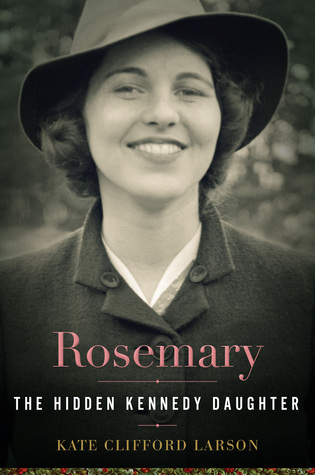
Rosemary: The Hidden Kennedy Daughter (Kate Clifford Larson)

23719479

I'll admit I'm a bit of a fan girl when it comes to royal families - and the Kennedy's are one of those famous families that fascinate me. This story made me sad though. Rosemary's parents inability to accept her was disturbing. They continually looked for ways to "fix" the problem rather than accept who she was. It's difficult to be imperfect when you're so worried about what everyone around you thinks. Although, I hope the family would argue that they weren't worried about what others were thinking and rather, more interested in helping her to be all she could be. The author's opinion definitely seemed to be that it was the former.

It was interesting to read the ideas they had about special needs education back then. Moving her from school to school was kind of sad. It made me want to make sure I'm more inclusive as a teacher. Joe Kennedy's take on Hitler and the war with Hitler and the Nazi's was also fascinating to follow. Clearly, he got it wrong. We sure have gone down some crazy roads when it comes to health and science.
 The story of her lobotomy was sad. The author called it the beginning of the Kennedy tragedies. I'd agree.  I had to wonder if keeping Rosemary hidden was the beginning of bad karma for the family. It was disturbing to hear about how her mother, Rose, didn't admit to knowing anything about the surgery and was complicit in keeping her hidden away for years after. The author says that perhaps she is the Kennedy that made the biggest difference. She is the reason the special Olympics were started, which was interesting considering of all the Kennedys, she was least interested in sports. It was something they made her do for her own good.


Goodreads says:

They were the most prominent American family of the twentieth century. The daughter they secreted away made all the difference.

Joe and Rose Kennedy’s strikingly beautiful daughter Rosemary attended exclusive schools, was presented as a debutante to the Queen of England, and traveled the world with her high-spirited sisters. And yet, Rosemary was intellectually disabled — a secret fiercely guarded by her powerful and glamorous family.  Major new sources — Rose Kennedy’s diaries and correspondence, school and doctors' letters, and exclusive family interviews — bring Rosemary alive as a girl adored but left far behind by her competitive siblings. Kate Larson reveals both the sensitive care Rose and Joe gave to Rosemary and then — as the family’s standing reached an apex — the often desperate and duplicitous arrangements the Kennedys made to keep her away from home as she became increasingly intractable in her early twenties. Finally, Larson illuminates Joe’s decision to have Rosemary lobotomized at age twenty-three, and the family's complicity in keeping the secret.  
Rosemary delivers a profoundly moving coda: JFK visited Rosemary for the first time while campaigning in the Midwest; she had been living isolated in a Wisconsin institution for nearly twenty years. Only then did the siblings understand what had happened to Rosemary and bring her home for loving family visits. It was a reckoning that inspired them to direct attention to the plight of the disabled, transforming the lives of millions.

Sunday, February 7, 2016

The Sound of Gravel (Ruth Wariner)

I am always curious about polygamous stories. I have never known anyone in a family like this and cannot understand how I could ever be a positive situation. I do, however, have ancestors who were polygamists. Nothing much is ever said about their experience in my family history loving tribe, so it has always made me assume it was not a great situation. How could I ever be?

This story made me sad for the women who get themselves stuck in situations where they turn all decision making, all power and all control of their life over to someone else....a man. The man in this story was a sick and twisted lazy abuser. It made me angry to read of her mother's decisions to stay with him and continue to have me children and not protect them. I cannot stand such backward thinking and cowardliness. I hated how Ruth's mother kept saying, "If he ever does it again...." I hated how, after expelling him from their community, they decided he had suffered enough and let him back. I hated how he le his family live in such squalor. I hated him and I despised his wives.

But I also could not put the book down. I started it yesterday morning then had a full day of commitments. All day I kept wishing for time to steal away to my vehicle and spend some me time in the story. There was no time for that though. This morning I got up early before everyone else and picked up the book right away. I read it through to the end.....and then slammed it shut. It has left a cloud over my day that has not been easily shaken.

I am so proud of Ruth for being brave enough to turn her life and her siblings lives around. Thank goodness for people like her grandmother who weren't afraid to voice her opinion on the problems in the religion. It put ideas into Ruth's head to her her see she had to get out.

...and may people like Lane rot in hell.

Goodreads summary:

A riveting, deeply-affecting true story of one girl's coming-of-age in a polygamist cult.

Ruth Wariner was the thirty-ninth of her father’s forty-two children. Growing up on a farm in rural Mexico, where authorities turned a blind eye to the practices of her community, Ruth lives in a ramshackle house without indoor plumbing or electricity. At church, preachers teach that God will punish the wicked by destroying the world and that women can only ascend to Heaven by entering into polygamous marriages and giving birth to as many children as possible. After Ruth's father--the man who had been the founding prophet of the colony--is brutally murdered by his brother in a bid for church power, her mother remarries, becoming the second wife of another faithful congregant.

In need of government assistance and supplemental income, Ruth and her siblings are carted back and forth between Mexico and the United States, where her mother collects welfare and her step-father works a variety of odd jobs. Ruth comes to love the time she spends in the States, realizing that perhaps the community into which she was born is not the right one for her. As Ruth begins to doubt her family’s beliefs and question her mother’s choices, she struggles to balance her fierce love for her siblings with her determination to forge a better life for herself.

Recounted from the innocent and hopeful perspective of a child, The Sound of Gravel is the remarkable true story of a girl fighting for peace and love. This is an intimate, gripping tale of triumph, courage, and resilience.