Showing posts with label grief. Show all posts

Saturday, July 27, 2024

The Ritual Effect (Michael Norton)


This book got better and better the deeper I got into it. It made me think of the things that I identify as routines and pushed me on to thinking about how I can make those things more meaningful. It made me think of some of my religious practices and whether or not they're just routines or if they're ritualistic and meaningful. If they matter, they should be meaningful and that is really inner work.


For me, five stars means I thought it was great and I'd definitely read it again.


I started to notice rituals and as a result, could be more mindful of the practices. I noticed other people doing it too. We went to a funeral and one person talked about how the person they were honoring used to tap every log three times before he put it in the fire when they were camping....and now, in memory of this friend, he taps every log three times. 


Notes and ideas:
p. 25
Rituals are emotion generators. Once a particular set of movements become linked to a particular emotion, that set of actions, that ritual, is then available to summon the relevant emotion - not unlike a catalyst in the kitchen such as sourdough bread starter. 

- I started using the time when I get out of the shower as a ritual time. I light a candle and while I'm drying off and lotioning up, I think of the covenants that I have made in the temple. I go over them in my mind and repeat some of the phrases we use in the temple. It has made a big change in my life, helping me want to do better at keeping those covenants.
p. 78 After a childhood spent in the world of food and fine dining, Michaud had hospitality on her mind when she arrived in New York. what she discovered, however, was not the city that never sleeps. Instead, it was a city shattered by lockdown and looking to find its social footing. In 2022, although people were ready to socialize again, a mood of trepidation hung over many social gatherings. For people such as Michaud, young transplants still new to the city, the question was, How do you possibly find IRL friends after two years of Zoom happy hours? Instead of starting with people already in her network, Michaud took a bolder and bigger chance. She identified six strangers-friends of friends and people she found on Bumble BFF, a friendship app-and invited them to a meal in her home. She didn't call her party Dinner with Strangers, however. Instead, she sent out her invites and welcomed people she had never met to join her for an intimate evening around her dining table. It's a "Dinner with Friends," her invite stated. A promise or a pipe dream?
As documented in the New York Times, one by one, women arrived for dinner - total strangers - and learned, once again, how to have a conversation with new people in the same room. What does it look like to make friends again? The question was on everyone's mind after the worst of the pandemic. Researchers estimate that people's social networks decreased in size an average of 16 percent during COVIDs lockdowns and in the following year of social distancing.
When the strangers at Michaud's dinner party erupted into laughter or split off into side conversations, she knew they had all found a bit of chemistry. Before the night was over, she connected everyone on a group chat and added it to her growing collections of text streams, each from a different cohort of guests at one of her dinner parties. She now has a waiting list of more than eight hundred people to attend oen of her "stranger" events - primarily young women, all with a simple intent: today I might make a friend.


p. 144 
Everyday family meals offer another opportunity for reinvention. In the United States, one in five family meals are now consumed in a car, and close to three-quarters are eaten outside the home. Fewer than 33 percent of American families eat together at an actual table more than two times a week.
An abundance of research over the past two decades has confirmed the power of reviving this ritual. In 2012, for example, a survey conducted by the National Center on Addiction and Substance Abuse at Columbia University found that regular family dinners were linked to a decreased rate of substance abuse in teenagers and an increase in feelings of connectedness between adolescents and their parents. One study of nine-three parents wit ha first-grader showed that the benefits of mealtime rituals are particularly pronounced for boosting relationships between fathers and daughters, family members who otherwise spend less time together. It's not a question of if for most families; it's a question of how. Between sports schedules, after-school jobs, commutes and school days and work meetings that run late, how can we make the family meal into a meaningful event?
Psychiatrist Anne Fishel has some ideas. Fishel directs the FAmily and Couples Therapy Program at Massachusetts Genreal Hospital, where she saw a need for more guidance on making this meal happen. She started the Family Dinner Project to help families add a touch of ritual back into their lives. The project is designed to transform family meals from habits to rituals; that is, from empty routines (this is what we do) to meaningful experiences that connect family and enrich the lives of children (this is who we are).
Rishel starts small. She recommends picking one meal, or even one snack time, when the family commits to being together - which often means poring through everyone's schedule to find that single thirty-minute window that works for all members. The key is to pick just one. Thinking that family dinners are all-important can be self-defeating if we focus on the impossibility of having dinner (or any meal) together every day. it's important to be realistic about the time you have.
It's also worth starting small on the food, too - while home-cooked healthy meals are best for everyone, the stress of preparing an entire meal from scratch is another barrier to getting started. As in so many other areas of life, the great can be the enemy of the food. What Fishel has in mind is decidedly more playful and improvisational: think less Sunday roast and more silly snack time when the family eats popcorn together on Tuesday evening.

p. 158 on death and the process after the funeral is over:
Literally, the United States has no law requiring bereavement leave.
As anyone who has experienced grief knows, this is not how the process works. In one study of 233 bereaved individuals followed for twenty-four months after the death of a loved one, disbelief peaked at one month after the loss, yearning peaked at four months, anger peaed at five months, and depression didn't peak until six months. Unfortunately, we often put pressure on ourselves to move on, to stop thinking about the person, to "get over it".

Goodreads says:


In the bestselling tradition of Charles Duhigg’s The Power of Habit and Angela Duckworth’s Grit, a renowned social psychologist demonstrates the power of small acts—and how a subtle turning of habits into rituals can add purpose and pleasure to life.

Our lives are filled with repetitive tasks meant to boost productivity—what we come to know as habits. Over time, these habits (for example, brushing your teeth or putting on your right sock first) are done on autopilot. But when a layer of mindfulness accompanies a habit—when we focus on the precise way an act is performed—a ritual has been created. Now, an everyday act goes from black-and-white to technicolor. And as author Michael Norton explains here, it’s these rituals that make life worth living.

Think of the way you savor a certain beverage, the care you take with a certain outfit that only gets worn on special occasions, the unique way that your family gathers around the table at the holidays, or the secret language you enjoy with your significant other. To some, these behaviors may seem quirky, but because rituals matter so deeply to us on a personal level, they saturate our lives with purpose and meaning. Rituals can heal a community experiencing a great loss, guide a speaker through a difficult presentation, drive a stadium of sports fans to ecstasy, inspire courage in soldiers going into combat, and help us rise to challenges and realize opportunities. Among those who have made effective use of rituals are Maya Angelou, Keith Richards, Barack Obama, and Steve Jobs. Drawing on decades of original research, author Michal Norton reveals that shifting from a “habitual” mindset to a “ritual” mindset can both enhance performance and add meaning to your life.

Compelling, inspiring, and practical, The Ritual Effect takes us on a fascinating tour of the intention-filled acts that drive human behavior and shows us how to create simple rituals to imbue everyday life with a sense of purpose and joy.

Monday, November 14, 2022

Bittersweet (Susan Cain)


Susan Cain has done it again. This is another brilliant book. It has gospel truths in it focused on how life cannot be wonderful without the terrible and sad parts. I remember when Destiny was born silently how people tried to cheer me up and tell me how grateful I must be <insert a number of different things....have two healthy children.....know that we will have our children with us in the eternities....etc> but I didn't find my solace in those things, even though I did realize how important they were. I needed that time for sadness and grief. Sometimes I still do.  Too often people in North America (and in my religion) are far too uncomfortable with sadness. We are kind of expected to see the bright side and simply be happy. There is a place for the sadness, sorrow and longing though. I need this sorrow and sadness and longing for many things, perhaps most of all, to remind me that life is fragile and to appreciate it. This book reminds me again that it is okay to get what I need. It's okay to long for something that is lost or just simply never was.

There's a lot to this book. I'd definitely find it worthwhile to read it again.


Goodreads says:

In her new masterpiece, the author of the bestselling phenomenon Quiet reveals the power of a bittersweet outlook on life, and why we’ve been so blind to its value.

With Quiet, Susan Cain urged our society to cultivate space for the undervalued, indispensable introverts among us, thereby revealing an untapped power hidden in plain sight. Now she employs the same mix of research, storytelling, and memoir to explore why we experience sorrow and longing, and the surprising lessons these states of mind teach us about creativity, compassion, leadership, spirituality, mortality, and love.

Bittersweetness is a tendency to states of longing, poignancy, and sorrow; an acute awareness of passing time; and a curiously piercing joy when beholding beauty. It recognizes that light and dark, birth and death—bitter and sweet—are forever paired. A song in a minor key, an elegiac poem, or even a touching television commercial all can bring us to this sublime, even holy, state of mind—and, ultimately, to greater kinship with our fellow humans.

But bittersweetness is not, as we tend to think, just a momentary feeling or event. It’s also a way of being, a storied heritage. Our artistic and spiritual traditions—amplified by recent scientific and management research—teach us its power.

Cain shows how a bittersweet state of mind is the quiet force that helps us transcend our personal and collective pain. If we don’t acknowledge our own sorrows and longings, she says, we can end up inflicting them on others via abuse, domination, or neglect. But if we realize that all humans know—or will know—loss and suffering, we can turn toward each other. And we can learn to transform our own pain into creativity, transcendence, and connection.

At a time of profound discord and personal anxiety, Bittersweet brings us together in deep and unexpected ways.

Sunday, September 4, 2022

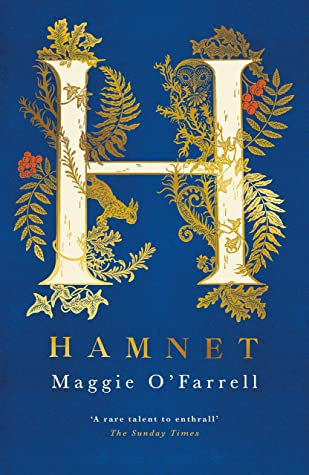
Hamnet (Maggie O'Farrell)


It took me a long time to get through this book. I loved the premise. It is the story of Shakespeare's wife...someone we really don't know anything about. The author has made many assumptions and I was comfortable with them. The book does a really good job of expressing the inner thoughts and agony of this family. I found myself really relating to her heartache over her son that died. Also her anger when her husband wrote a play using his name. I have had similar reactions when I feel like people aren't respecting my children. I liked how the author made her quite independent and wise, almost able to read people's thoughts. It's a well-written book.


Goodreads says:

Drawing on Maggie O'Farrell's long-term fascination with the little-known story behind Shakespeare's most enigmatic play, Hamnet is a luminous portrait of a marriage, at its heart the loss of a beloved child.

Warwickshire in the 1580s. Agnes is a woman as feared as she is sought after for her unusual gifts. She settles with her husband in Henley street, Stratford, and has three children: a daughter, Susanna, and then twins, Hamnet and Judith. The boy, Hamnet, dies in 1596, aged eleven. Four years or so later, the husband writes a play called Hamlet.

Award-winning author Maggie O'Farrell's new novel breathes full-blooded life into the story of a loss usually consigned to literary footnotes, and provides an unforgettable vindication of Agnes, a woman intriguingly absent from history.

New York Times Notable Book (2020), Best Book of 2020: GuardianFinancial TimesLiterary Hub, and NPR.


Wednesday, November 17, 2021

Bear Island (Matthew Cordell)


Amazingly, everyone seemed to have a story to relate to this book. We have all experienced loss. The sadness and the anger was something we all knew about. This book beautifully depicts those emotions and also gives a sense of wonder. We don't know what happens to the bear in the end. We chose to believe he (she?) has a happy ending. 

Goodreads says:

Bear Island is a heartfelt picture book about healing after loss by Caldecott Medalist Matthew Cordell.

Louise and her family are sad over the loss of their beloved dog, Charlie. "Life will not be the same," Louise says, as she visits a little island that Charlie loved.

But on a visit to the island after Charlie's death, something strange happens: She meets a bear. At first, she's afraid, but soon she realizes that the bear is sad, too. As Louise visits more often, she realizes that getting over loss takes time. And just when she starts to feel better, it's time for Bear to bed down for the winter.

Once again, Louise believes that life will not be the same. But sometimes, things can change for the better, and on the first warm day of spring, her family welcomes a new member. Here is a lovely, poignant story about loss and healing that will bring comfort to even the youngest readers.

Sunday, September 12, 2021

What Happened To You? (Oprah Winfrey and


 I listened to the audio book. It's mostly Bruce Perry but now and then Oprah interjects and asks questions as if she is interviewing him. Bruce Perry apparently has done a lot of work for her and with her with different people. One significant group was girls at the school Oprah started in Africa. He has also worked with children who survived cults as well as many other extremely traumatized individuals. It's clear he knows what he's talking about.

The gist of the book seems to be that we shouldn't be asking what is wrong with you, but instead, what happened to you. This brings about more understanding and compassion and leads to healing. 

My favorite part was the last chapter where Oprah shared her story and talked about how what happened to you can lead to your super power. Earlier in the book they had talked about how all super hero stories begin with a crisis. They become super heroes through an accidental tragedy. It's good to think of our trauma as something that can create greatness in us.

Goodreads says:

"Through this lens we can build a renewed sense of personal self-worth and ultimately recalibrate our responses to circumstances, situations, and relationships. It is, in other words, the key to reshaping our very lives.”
―Oprah Winfrey

This book is going to change the way you see your life.

Have you ever wondered "Why did I do that?" or "Why can't I just control my behavior?" Others may judge our reactions and think, "What's wrong with that person?" When questioning our emotions, it's easy to place the blame on ourselves; holding ourselves and those around us to an impossible standard. It's time we started asking a different question.

Through deeply personal conversations, Oprah Winfrey and renowned brain and trauma expert Dr. Bruce Perry offer a groundbreaking and profound shift from asking “What’s wrong with you?” to “What happened to you?” Our earliest experiences shape our lives far down the road, and What Happened to You? provides powerful scientific and emotional insights into the behavioral patterns so many of us struggle to understand.

Here, Winfrey shares stories from her own past, understanding through experience the vulnerability that comes from facing trauma and adversity at a young age. Joining forces with Dr. Perry, one of the world’s leading experts on childhood and brain development, Winfrey and Dr. Perry marry the power of storytelling with science to better understand and overcome the effects of our pasts.

In conversation throughout the book, the two focus on understanding people, behavior, and ourselves. It’s a subtle but profound shift in our approach to trauma, and it’s one that allows us to understand our pasts in order to clear a path to our future―opening the door to resilience and healing in a proven, powerful way.

Friday, October 18, 2019

White Bird (RJ Palacio)


Sometimes, when looking at all the follow up books after Wonder, I snubbed them. Too much of a good thing? This one is definitely worth the time. I loved the story. It's a great twist that Julian was named after someone so brave and kind. I hope he lives up to his name!


Goodreads says:

In Auggie & Me, which expands on characters in Wonder, readers were introduced to Julian's grandmother, Grandmère. Palacio makes her graphic novel debut with Grandmère's story as a young Jewish girl hidden away by a family in Nazi-occupied France during World War II. Her experience demonstrates the power of kindness to change hearts, build bridges, and even save lives.

Friday, March 22, 2019

Because of Winn Dixie (Kate DiCamillo)

This is one of those books that when I finished it, I couldn't believe I hadn't read it before. It's definitely one to re-read. It is also one of those books that made me cry - which is pretty rare. It might have been because I read some chapters aloud to my class. (I always get so much more from a book when I read it aloud) All the heartache Opal has over her mother really pulled at my heart strings. We are doing this book for grade 3 book club this month. I'm going to put a poster up for kids to add a picture and 10 things about their pet, like Opal likes to list. She learns 10 things about her mother and later lists 10 things about Winn Dixie. There are plenty of laugh out loud moments in this book. It would be a great read aloud - if only the grade fours didn't often do it as a novel study.

Goodreads says:

Kate DiCamillo's beloved, best-selling debut novel is now available in a paperback digest edition.

Kate DiCamillo's first published novel, like Winn-Dixie himself, immediately proved to be a keeper—a New York Times bestseller, a Newbery Honor winner, the inspiration for a popular film, and most especially, a cherished classic that touches the hearts of readers of all ages. It's now available in a paperback digest format certain to bring this tale's magic to an even wider circle of fans.

The summer Opal and her father, the preacher, move to Naomi, Florida, Opal goes into the Winn-Dixie supermarket—and comes out with a dog. A big, ugly, suffering dog with a sterling sense of humor. A dog she dubs Winn-Dixie. Because of Winn-Dixie, the preacher tells Opal ten things about her absent mother, one for each year Opal has been alive. Winn-Dixie is better at making friends than anyone Opal has ever known, and together they meet the local librarian, Miss Franny Block, who once fought off a bear with a copy of WAR AND PEACE. They meet Gloria Dump, who is nearly blind but sees with her heart, and Otis, an ex-con who sets the animals in his pet shop loose after hours, then lulls them with his guitar.

Opal spends all that sweet summer collecting stories about her new friends and thinking about her mother. But because of Winn-Dixie or perhaps because she has grown, Opal learns to let go, just a little, and that friendship—and forgiveness—can sneak up on you like a sudden summer storm.

Tuesday, March 19, 2019

North of Normal (Cea Sunrise Person)


I read this with my community book club. It is another book I likely wouldn't have picked up if it wasn't for book club. It was one of those books I read with one eye closed. Partially, it was because of the crudeness. Partially, it was because I couldn't stand the idea of a mother raising a child the way they did. And partially, it was because I truly can't imagine living that way.  I related to some of the one star reviews on Goodreads, but I'd have to give it more than one star, for sure. Although sad and crazy, it's a fascinating story. Cea's resilience was amazing. I was curious because they lived in areas I also lived and I could have quite easily crossed paths with this family. I read it quite quickly - in two sittings, pretty much. It's an easy read. I have to wonder at the luck she had though. How does someone grow up like that, one day decide to go be a model, and become successful at it? What are the chances??! It's a memoir though, so who am I to question her experience.


Goodreads says:

In the late 1960s, riding the crest of the counterculture movement, Cea’s family left a comfortable existence in California to live off the land in northern Alberta. But unlike most commune dwellers of the time, the Persons weren’t trying to build a new society—they wanted to escape civilization altogether. Led by Cea’s grandfather Dick, they lived in a canvas Teepee, grew pot, and hunted and gathered to survive.
Living out her grandparents’ dream with her teenage mother, Michelle, young Cea knew little of the world beyond her forest. She spent her summers playing nude in the meadow and her winters snowshoeing behind the grandfather she idolized. Despite fierce storms, food shortages and the occasional drug-and-sex-infused party for visitors, it was a happy existence. For Michelle, however, there was one crucial element missing: a man. When Cea was five, Michelle took her on the road with a new boyfriend. As the trio set upon a series of ill-fated adventures, Cea began to question both her highly unusual world and the hedonistic woman at the centre of it—questions that eventually evolved into an all-consuming search for a more normal life. Finally, in her early teens, Cea realized she would have to make a choice as drastic as the one her grandparents once had made in order to get the life she craved.
From nature child to international model by the age of thirteen, Cea’s astonishing saga is one of long-held family secrets and extreme family dysfunction, all in an incredibly unusual setting. It is also the story of one girl’s deep-seated desire for normality—a desire that enabled her to risk everything, overcome adversity and achieve her dreams.

Friday, July 13, 2018

A Stone for Sascha


It's very good for me to read wordless books. It makes me slow down and really think about what is happening in the story. I really love reading books like this with my class and allowing them to discuss and figure out the story as we go.

The illustrations in this story are beautiful and thought provoking.

Goodreads says:

A girl grieves the loss of her dog in an achingly beautiful wordless epic from the Caldecott Honor–winning creator of Journey.

This year’s summer vacation will be very different for a young girl and her family without Sascha, the beloved family dog, along for the ride. But a wistful walk along the beach to gather cool, polished stones becomes a brilliant turning point in the girl’s grief. There, at the edge of a vast ocean beneath an infinite sky, she uncovers, alongside the reader, a profound and joyous truth. In his first picture book following the conclusion of his best-selling Journey trilogy, Aaron Becker achieves a tremendous feat, connecting the private, personal loss of one child to a cycle spanning millennia — and delivering a stunningly layered tale that demands to be pored over again and again.

Friday, January 12, 2018

Train to Somewhere (Eve Bunting)

158954

Oh my gosh. This is so heartbreaking! We read this, hoping all along the way that Marianne would meet her at one of the stops.

She never did.

And it ends like that.

My class sat and stared at me. Then someone said, "That's it?"

Interesting to read a story that doesn't end happily! We thought maybe we could write an ending so that it actually feels like it ends.

I don't think it's a bad thing for kids to read books like this though. It certainly brought out some emotions. It started a great discussion about adoption and orphans and appreciating our parents. And it sounds like we will have a good writing project! We also had a good discussion about historical fiction.

Goodreads says:

Marianne, heading west with fourteen other children on an Orphan Train, is sure her mother will show up at one of the stations along the way. When her mother left Marianne at the orphanage, hadn't she promised she'd come for her after making a new life in the West? Stop after stop goes by, and there's no sign of her mother in the crowds that come to look over the children. No one shows any interest in adopting shy, plain Marianne, either. But that's all right: She has to be free for her mother to claim her. Then the train pulls into its final stop, a town called Somewhere . . . 

Thursday, January 4, 2018

Stone Fox (John Reynolds Gardiner)

817982

A few ELL students I have known have read this book as a novel study. I can see why. It's pretty short so it's a quick read but the story is great. It would make a great read-aloud. The story is similar to Iron Will. Willy saves Grandpa's farm, and Searchlight gives his life. Heartbreaking story!

Goodreads says:

John Reynolds Gardiner's classic action-packed adventure story about a thrilling dogsled race has captivated readers for more than thirty years.

Based on a Rocky Mountain legend, Stone Fox tells the story of Little Willy, who lives with his grandfather in Wyoming. When Grandfather falls ill, he is no longer able to work the farm, which is in danger of foreclosure. Little Willy is determined to win the National Dogsled Race—the prize money would save the farm and his grandfather. But he isn't the only one who desperately wants to win. Willy and his brave dog Searchlight must face off against experienced racers, including a Native American man named Stone Fox, who has never lost a race.

Exciting and heartwarming, this novel has sold millions of copies and was named a New York Times Outstanding Children's Book.

Monday, January 1, 2018

Eggs (Jerry Spinelli)

169413

The first Jerry Spinelli book I read was StarGirl. I've been a fan ever since. Well, truthfully, I wasn't a fan of Loser. And....actually, that's all I've read until Eggs. But I loved StarGirl so much as well as Eggs, that I will say I'm a big fan.

If you've ever lost someone you felt like you just couldn't live without, or if you've ever felt like you just didn't fit in your family, or if you've said, "If I just do X then Y will happen", or if you've ever had a quirky friendship, or if you've ever loved someone who you just have to watch them work through issues, or if you've ever felt like you just didn't get what you needed from your family, then you'll get this book. The theme that is big in Roald Dahl books of missing adults exists here, but it is handled way differently.

“Of course, all of their words for a thousand years could not fill the hole left by his mother, but they could raise a loving fence around it so he didn't keep falling in.”


David and Primrose meet during an Easter Egg hunt. I thought that was an odd reason to call the book Eggs because nothing much happened with eggs after that. Maybe they were actually eggs - sensitive yet also very tough?

There were a lot of things all through the story that I questioned, and then soon found the answers to. Like, why does David think it's so important to keep all the rules? Where did Primrose's father go? What is with the waving man? Is there any symbolism to the little turtle David carries around?


Here are some answers I have:
1. His mother died after falling on a slippery spot where no one had warned anyone. He figures if they had kept the rules he wouldn't have lost his mother and if he just keeps all the rules now maybe he'll get her back.
2. The picture Primrose carries actually isn't her father. It's Clark Gable. We find out later that she knows it isn't her father - but for some reason she continues to carry the picture and tell people he is her father. Does she think wishing it was so will make it be?
3. The waving man? I don't know. The only thing I can guess is that he waves at people because they wave back at him (is that why Primrose carries the picture of the man who isn't her father?)
5. The turtle...stick your head out?? I don't know.


Goodreads says:

Nine-year-old David has recently lost his mother to a freak accident, his salesman father is constantly on the road, and he is letting his anger out on his grandmother. Sarcastic and bossy 13-year-old Primrose lives with her childlike, fortuneteller mother, and a framed picture is the only evidence of the father she never knew. Despite their differences, David and Primrose forge a tight yet tumultuous friendship, eventually helping each other deal with what is missing in their lives. This powerful, quirky novel about two very complicated, damaged children has much to say about friendship, loss, and recovery.

Saturday, September 16, 2017

The Heart and the Bottle (Oliver Jeffers)

7096916

Wow. This book came along just at the right time. I have a little girl in my life who is going through something terrible. I will have to keep this book handy. This would be a great book to read when you have a child who has something difficult to deal with. It might be a great way to start a conversation.  It could be read to children who have a friend who has suffered a loss to encourage them to know how to help their friend. Donalyn Miller says this is a deceptively simple book with a great message. She hit the nail on the head.

The little girl likes to read with her grandpa in a big red chair. One day the chair is empty. The story doesn't say he died, but you can infer that. She is sad and stops doing the things she used to love until someone comes along and helps her enjoy that again.

The author illustrates his own books. They're beautiful. I ran across his books by chance when we read one in class.

Goodreads summary:

Once there was a girl whose life was filled with all the wonder of the world around her. Then one day something occurred that caused the girl to take her heart and put it in a safe place.

However, after that it seemed that more things were empty than before. Would she know when and how to get her heart back?

Thursday, July 6, 2017

The Elegance of the Hedgehog (Muriel Barbery)


My goodness. I started this book in April and it took me until July to finish it. I had a hard time getting into it. One of the problems was the words. oh the words in this book!! There were so many words I'm just unfamiliar with. Is all the wordiness really necessary??

page 1 There he stood, the most recent eructation of the ruling corporate elite-a class that reproduces itself solely by means of virtuous and proper hiccups....
eruct (verb) to belch forth, as gas from a stomach or to emit or issue violently, as matter from a volcano
"You ought to read The German Ideology," I told him. Little cretin in his confer green duffle coat.
cretin (noun) a stupid, obtuse or mentally defective person

Then there was the rambling. It rambles on and on and seems to not be about anything. One of the great readers I admire and follow in Goodreads is Donalyn Miller. She abandoned the book and said:

Abandoned on page 145. I could not connect to the characters at all and did not care what happened to them. Perhaps, I would have liked it better if I was French-- the book was originally published in France.

However, this is one of those books that makes me glad I"m in a book club. I did finally finish it. I had to re-start it a number of times and it took a deadline to get me to finish it. And in the end, I'm glad I did.

The story is set in France and I have a great love affair with everything French. Despite their social awkwardness and preference to be invisible, I really did enjoy getting to know Renee ( "a widow, short, ugly, chubby", with "bunions on my feet and, on certain difficult mornings, it seems, the breath of a mammoth") and Paloma. There's something about those two that we all live.

You have to be really smart to read this book, I think. I'm glad I have my book club to help me get more out of it than I could ever get on my own.


Goodreads says:

We are in the center of Paris, in an elegant apartment building inhabited by bourgeois families. Renée, the concierge, is witness to the lavish but vacuous lives of her numerous employers. Outwardly she conforms to every stereotype of the concierge: fat, cantankerous, addicted to television. Yet, unbeknownst to her employers, Renée is a cultured autodidact who adores art, philosophy, music, and Japanese culture. With humor and intelligence she scrutinizes the lives of the building's tenants, who for their part are barely aware of her existence.
Then there's Paloma, a twelve-year-old genius. She is the daughter of a tedious parliamentarian, a talented and startlingly lucid child who has decided to end her life on the sixteenth of June, her thirteenth birthday. Until then she will continue behaving as everyone expects her to behave: a mediocre pre-teen high on adolescent subculture, a good but not an outstanding student, an obedient if obstinate daughter.
Paloma and Renée hide both their true talents and their finest qualities from a world they suspect cannot or will not appreciate them. They discover their kindred souls when a wealthy Japanese man named Ozu arrives in the building. Only he is able to gain Paloma's trust and to see through Renée's timeworn disguise to the secret that haunts her. This is a moving, funny, triumphant novel that exalts the quiet victories of the inconspicuous among us.


Monday, July 3, 2017

My Old Pal Oscar (Amy Hest)

26240667

The illustrations in this book are beautiful. I am a fast reader and tend to skim though picture books but the topic of loss and the beautiful ocean pictures brought a sense of peace that made me want to slow down and really feel what the character was sharing. And also because dogs and oceans are good for the soul.

"I know what you want. You want to be pals. Well, we can't be pals. No sir. No way. Won't. Ever. Do. That. Again. Ever."

Goodreads says:

After a young boy’s beloved pet passes away, he encounters an adorable stray dog on the beach. The boy tries to walk away and ignore the cuddly creature, but the puppy continues to follow him, undeterred. Though the boy is still dealing with the pain of his loss and feels afraid to care about a new pet again, as the two walk the sand together, the boy slowly opens himself up to the joy of having a new dog in his life and making peace with the past.
 

New York Times bestselling Amy Hest and Amy Bates, the beloved team who created The Dog Who Belonged to No One, have created a touching story about new beginnings and how friendship and love have the power to heal.

Wednesday, August 10, 2016

Lily and the Octopus (Steven Rowley)


Combining the emotional depth of The Art of Racing in the Rain with the magical spirit of The Life of PiLily and the Octopus is an epic adventure of the heart. (source)

This is one of those books I would have never read if I wasn't in a book club. I've kept going to the book club at Indigo/Chapters I might have picked it up and started it since it has so many great reviews, but I doubt I would have kept going once I got into it. I wasn't quite sure what to think of it actually. It's not that bad, but then again, it's kind of 'meh'. Apparently, some were very impressed by the idea. I read that he was given an advance of almost a million dollars prior to it being published. Really?!

I was holding the book when I was at the cash register today to buy the next book club book and the cashier said, "Oh I love that book. Doesn't it just make you cry and cry?" I guess I'm hard-hearted. I didn't cry - although I did think the section where he chronologued taking the dog to be put down was really well written. The part where he is on a ship and fighting the octopus - well, that was just weird. Not sure what role that really played.

p. 219 (speaking to Lily): "Dogs are always good and full of selfless love. They are undiluted vessels of joy who never, ever deserve anything bad that happens to them. Especially you. Since the day I met you, you have done nothing but make my life better in every possible way. Do you understand?"

I'm not quite sure if the main character in this book was crazy, high or maybe he had a brain tumor himself?? I kept thinking there must be some kind of symbolism or higher meaning in the story. I couldn't find it. Then again, I can't often find those things. No one else in the book club could come up with any kind of deeper meaning either.

I liked the relationship focus and it does make me look at my dog with a little more respect and wonder - but that's about it. Sometimes though, I felt like the main character didn't resolve things in his real life because he put so much focus on his relationship with his dog. It was a kind of escapism.

The back cover says: Remember the last book you told someone they had to read? Lily and the Octopus is the next one.

I'm not so sure.

I did think his analogy of a tumor being like an octopus was pretty well thought out and fit well for a tumor - or even cancer. The author nailed that.

    I chose an octopus because they are smart, wily, and slimy. They can learn, adapt, and even (according to numerous scientists) play. I needed a foe that would needle Ted, toy with him, study his weaknesses, and adjust, just as cancer mutates in the body. It helped the story that they are in many ways the physical opposite of dogs, especially dachshunds. A hairless invertebrate that lives in the sea is nothing like a furry dog that is all spine and lives on the land. I did an incredible amount of research on octopuses, and gave each of the book’s eight sections an octopus theme. There are so many fascinating facts about them it’s hard to pick a favorite; in writing the book it was hard to shake their having three hearts. Once I learned that piece of trivia, I knew the entire book would be driving toward that end.

    While the octopus as villain fit the needs of this story, I want to be clear that they are magnificent creatures and are in no way inherently evil. I am quite in awe of them, really!  
Although, I have to say, when he got an octopus tattoo, again, I was grasping for something deeper and more meaningful. It didn't come.

p. 195 I rolled up the sleeve to slowly reveal my tattoo. Eight octopus arms hang from my bicep, and I can feel the octopus's eyes grow bigger. I pull up my shirt even farther, revealing Kal's work from the bottom up in dramatic fashion. Finally, my shirt sleeve is up near my shoulder and my entire tattoo is revealed: a dachshund standing triumphantly on the head of an octopus.


Goodreads summary:

This is a story about that special someone: the one you trust, the one you can’t live without.

For Ted Flask, that someone special is his aging companion Lily, who happens to be a dog.

Favorite quotes:
P. 81 The ceremony is perfect for my sister and her new husband - all business, no flourish. Nothing about the bride as property. 
(I hadn't thought about all the nuances in a wedding that insinuate that the bride is property)


In the story, his sister gets married - elopes. Only she invites him and his boyfriend and the groom's parents. I wondered why her parents weren't invited. There's something about their relationships with their mother especially that isn't really fleshed out in the story
p. 82 My mother is on the phone last. She's on the verge of tears, I can hear it in her voice. She would have liked to have been here. I think she's especially hurt that Franklin's parents were in attendance. She doesn't see my having been the ambassador for our family as adequate balance. And she's right. There is no one equal to a mother.

There's some interesting symbolism:
p. 82 After the calls I snap a few more pictures of the newlyweds in front of their enormous window. The top floor has a stunning vista of the city and the bay, and I frame them with Alcatraz far in the distance, just over my sister's shoulder. This is my silent statement about marriage.

Some words of wisdom on relationships:
p. 85 "Lily will be fine. It's you I'm worried about." Meredith puts a hand on my shoulder, but I don't say anything in response. "Don't use Lily as an excuse to ignore your own happiness."...."You have to communicate your needs to get them met. That's all I'm saying."

Funny:
p. 90 Her floppy ears bound upward with each gallop, sometimes floating there in the window as if someone has put them on pause. When she comes back to me I know they will be flipped backward, pinned to her head and the back of her neck. I spend half my life restoring that dog's ears to their factory setting.

More words of wisdom on attachments to animals being legit:
p. 122 "But most of all, I'm thankful for Lily, who, since she entered my life, has taught me everything I know about patience and kindness and meeting adversity with quiet dignity and grace. No one makes me laugh harder, or want to hug them tighter. You have truly lived up to the promise of man's best friend."

Friday, April 15, 2016

Happy People Read and Drink Coffee (Agnes Martin Lugand)

was very excited to received an advance reading copy of this book from Harper Collins through The Reading Society at The National Post.

Now that I have read it, I am less enamoured. At least I didn't pay for this book!

Don't be fooled by the title. This isn't about reading. It isn't about drinking coffee. It isn't about happy people. There is a bookstore called Happy People that the main character leaves and comes back to...but that is about it. It kind of reminded me of a bad mix of Wild by Cheryl Strayed and Labor Day by Joyce Menard....but with terrible writing. The idea of escaping to somewhere beautiful to find oneself is lovely....but she came off as stupidly hooking up with a jerk, like in Labor Day. 

The first chapter was great. I gasped at the narrative about easy going fun banter between a husband and wife and their child suddenly ending with death:

"They left, laughing and feeling around as they went downstairs.

"I found out they were still fooling around in the car when the truck crashed into them. I told myself they were still laughing when they died. I told myself that I should've been with them."

It is all downhill from there. The story is flat and poorly developed and terribly predictable. I kept saying, "Are you kidding me?!" with chapter. 

Run away. Move into a place next to this inexplicably seriously grumpy and rude neighbor. He does one nice deed and the next thing you know (like....that day) he invites her to join him on his business trip and she strangely, accepts. Of course, they call in love. In walks in the old girlfriend with catty skills straight out of high school. Of course, he chooses the nicer girl after seeing through the manipulation a of the old girlfriend.....only to have her get a hold of herself and return to her bookstore and clean the place up.

Phew....that was a waste of a Friday night.

Glad it was a quick read.

Goodreads summary:

She fled Paris to lose herself. The love she found would change everything.

Diane seems to have the perfect life. She is a wife, a mother, and the owner of Happy People Read and Drink Coffee, a cozy literary cafe in Paris. But when she suddenly loses her husband and daughter in a car accident, her life is overturned and the world as she knows it instantly disappears. Trapped and haunted by her memories, Diane closes her shop and retreats from her friends and family, unable and unwilling to move forward.

But one year later, Diane shocks her loved ones and makes the surprising decision to move to a small town on the Irish coast, finally determined to heal by rebuilding her life alone-until she meets Edward, a handsome and moody Irish photographer who lives next door. At first abrasive and unwelcoming, Edward initially resents Diane’s intrusion into his life of solitude . . . until he can no longer keep her at arm’s length. Along windy shores and cobbled streets, Diane falls into a surprising and tumultuous romance. As she works to overcome her painful memories and truly heal, Diane and Edward’s once-in-a-lifetime connection inspires her to love herself and the world around her with newfound inner strength and happiness. But will it last when Diane leaves Ireland, and Edward, for good?

At once heartbreaking and uplifting, Diane’s story is deeply felt, reminding us that love remembered is love enduring.
 (less)

Friday, March 4, 2016

Jacob Have I Loved (Katherine Paterson)


I got this book out after reading Bridge to Terabithia (again) for my grade three book club. Katherine Paterson is quite a renound author, but I haven't really read anything else of hers. I decided I should. I was interested in seeing what she did with the Jacob and Esau reference. 

Is the Jacob and Esau story a foundation for a meta narrative? I had no idea. Seemed intriguing though. She certainly does weave plenty of biblical reference through this entire story. 

As I read, I wondered if this would be a good story to do for grade three book club. There were enough odd moments (huge crush on someone who could be her grandpa? Her senile grandmother accusing her mother endlessly of being a harlot?!) that made me realize it wouldn't be appropriate. As a matter of fact, as I read I started to hate the main character. I wondered how in the world the book became a Caldecott winner. However, as I kept on, I realized there really is beauty in the story. She touches on some themes in an amazing way.

Main themes seem to be finding yourself and sibling rivalry. Sara Louise hates her twin sister. She seems justified. Her sister smart quite unaware of the rivalry. She just goes about doing what she does...totally irritating Sarah Louise, who never resolves the problems with her sister. It makes it so that their sisterhood isn't at all one of those wonderful friendships. Not at all. Actually, Sarah Louise's negativity and loathing really began to wear on me. At the part where she is complaining to her mother about her mother's choices in life, I realized that she  really needed to quit projecting her unhappiness on to everyone else! Happily, she does seem to figure this out for herself. She finally realizes that she needs to do what makes her happy and goes away to school. She's wants to become a doctor, but it is a time when women are really only expected to be nurses. She ends up in a small mountainous community, being the only medical professional, and ends up marrying. In her new life, she leaves her family behind, even unable to return fo funerals. Frankly, I knew if she did go back, she would go straight back to her miserableness.....so I understood her not going.

The story comes full circle when she delivers twins, spending her energy saving the life of one while the other waits in a basket.....just like when she was born. I feel like she would have made the connection and perhaps had some healing as a result of the experience.

There is magic and wisdom in this story. It would be great to read it with middle school students or even with adults....especially my church friends.

Goodreads summary:

Jacob have I loved, but Esau have I hated . . . With her grandmother's taunt, Louise knew that she, like the biblical Esau, was the despised elder twin. Caroline, her selfish younger sister, was the one everyone loved.Growing up on a tiny Chesapeake Bay island in the early 1940s, angry Louise reveals how Caroline robbed her of everything: her hopes for schooling, her friends, her mother, even her name. While everyone pampered Caroline, Wheeze (her sister's name for her) began to learn the ways of the watermen and the secrets of the island, especially of old Captain Wallace, who had mysteriously returned after fifty years. The war unexpectedly gave this independent girl a chance to fulfill her childish dream to work as a watermen alongside her father. But the dream did not satisfy the woman she was becoming. Alone and unsure, Louise began to fight her way to a place where Caroline could not reach.Renowned author Katherine Paterson here chooses a little-known area off the Maryland shore as her setting for a fresh telling of the ancient story of an elder twin's lost birthright.

Tuesday, January 19, 2016

Big in a Vacuum (Mélanie Watt)


It took a long time for this one to come from the public library. It had a lot of holds. It is curious to me why this book is so popular because it is such a narrow topic: grief. However, the pictures are awesome and it is funny. My students didn't make any connection with the stages of grief. They just thought it was funny and had a good laugh at the pictures. I really enjoyed it too.


A bug flies through an open door into a house, through a bathroom, across a kitchen and bedroom and into a living room ... where its entire life changes with the switch of a button. Sucked into the void of a vacuum bag, this one little bug moves through denial, bargaining, anger, despair and eventually acceptance -- the five stages of grief -- as it comes to terms with its fate. Will there be a light at the end of the tunnel? Will there be dust bunnies in the void? A funny, suspenseful and poignant look at the travails of a bug trapped in a vacuum.